Showing posts with label Controversial. Show all posts

Friday, September 30, 2016

The Thing About Banned Books

So, as you've probably seen at some point in the past couple of days, we're currently in the middle of Banned Books Week! AKA, one of my favorite unofficial reading holidays of all time. 

I wasn't sure about what I wanted to write to celebrate this annual event - Top 10 faves? List of books that I can't believe have been banned? A reprint of my 10th-grade research paper on the practice of banning books? - until I actually sat down to write it. What I actually ended up with, was a self-directed conversation about why Banned Books are so important to me. I hope you enjoy!


... is that any attempts at banning them, are only going to make them more popular. (To be fair, not all of them need the publicity boost, but then again, almost none of them need to be getting banned in the first place.) The thing about banned books, is that if you've ever wanted to insure a kid gets their hands on something, it's by telling them they can't touch it. The thing about banned books, is that they're as integral to the ways developing minds source new material, as the school must-read book list does. 

And the thing about banning books?

It's a garbage thing to do. It restricts access to diverse and complex ways of thinking, and it promotes fear and ignorance as effective tools for teaching and leading. It homogenizes one of the primary resources young people have, for being introduced to and understanding new ways of thinking, while barricading the clientele libraries, schools, etc. are supposed to be serving, from reaching a viewpoint other than what you deem socially acceptable. 

You need no reminder that I love books. Books are the best; books have saved my sanity and soul on more than one occasion. Beyond all measures of genre and category, I like to read books that reflect the world I live in: a unique, diverse, complex, and varied place. 

Sometimes, things in books are tough things to read about, because sometimes the world is a tough place. Sometimes, I like to read to get away from those tough things, and seeing them in books I'm reading can be a rough reminder of the world outside my front door. If those "tough things" you don't like reading about include topics of sexuality, homosexuality, religion, gender, etc., then I hate to break it to you, it's you who's got a problem, not the books. Still, I'll defend your right to not have to read about them... to an extent. Because the second you start infringing on someone else's right to access that same information, then I've got a problem with you. 

Like I said, books are modeled off and reflective of our realities... most of the time. But books also mold and form the realities of the people who read them, especially young people. Kids and teens are the most impacted by the books they read, as it's not only integral to their educational process, but it's one of their first chances at learning how to define themselves; we're just supplying them with the appropriate set of dictionaries to do it. When you take away representation in books, you rob them of a set of definitions. You restrict them to the labels and ideas you deem "worthy" or "right." 

One of the reasons I really want to work in the publishing field of YA, isn't just because I love reading YA books (mainly because, as any reader of this blog could tell you, I read a lot more than that, too). It's because the books that people read in that age group play the most significant part of shaping who they are. 

Here's the two-step process of how I define a book as YA: 1. It stars characters who fall within a certain set of ages, and 2. It is most popularly read by a group of people who fall within those same age limits. Guided by these criteria, you are confronted with a bookshelf packed with some of the most influential books within the scope of literature: Harper Lee's To Kill a Mockingbird, J. D. Salinger's The Catcher in the Rye, Madeleine L'Engle's A Wrinkle in Time, and many more, are all technically YA books. You know what else those books all have in common?

They all make the Banned Books list. 

And so do the Harry Potter books. Cultural juggernaut they may be now, but even when I was in high school, I still knew friends in my classes who were restricted from reading them by their parents, on the basis of religious difference, or aversion to violent or provoking content. The Goosebumps series shaped a love in me for the spookier side of literature - as well as appreciation for a good plot twist - but has been banned for its "inappropriate" subject matter, while Where the Wild Things Are has for the same crime, too. 

I understand why it may be important to parents and educators, to want to minimize the risk of their wards coming into contact with ideas they're not prepared to discuss; however, those conversations rely on the involvement of the parents and the wisdom of the educators, not the content "allowed" by the administrations of the schools or libraries. I'm the eldest of four kids in my family, and I know a little bit about censorship for the sake of age: there are just some movie scenes or kinds of music I didn't want playing when my younger siblings were in the room, back when they still had so much growing up to do.

However, I also remember reading Mark Twain's The Adventures of Tom Sawyer for the first time at a young age, and being confronted by plenty of well-meaning adults, who asked,  "How did you get your hands on that?!" The book changed my life. How different would I be if I had never read it? 

If you're the kind of parent who believes some books should be made less available than others - or even not available at all - then I have to tell you, you're fighting a losing battle. Books just don't get banned as much anymore, because we can all recognize, like I've said, that it's a garbage idea.

However, if you're still worried that your kids might encounter something at their local library you're not prepared to explain, then I do have some good advice for you: Explain it anyways. Have conversations. Lead where you can. But at the end of the day, trust your kids to make a good decision with the information you've given them, and don't infringe upon the rights of kids who are not your own by attempting to protect them beyond your bounds of authority. Sure, mistakes happen, and sometimes the process of learning can get uncomfortable, but these kids are smart, resourceful, and so much more - and so are their librarians! They can handle what a book can throw at them. 

Besides, even if you try and take it away, they're going to find plenty of other ways to get it. 


some of my favorite banned books you should read this weekend


  • Persepolis, Marjane Satrapi
  • The Adventures of Huckleberry Finn, Mark Twain
  • The Scarlet Letter, Nathaniel Hawthorne
  • anything by John Green or Sherman Alexie (Yep, sad to say, most of them have been banned at one point or another!) 


How have you celebrated Banned Books Week? What's your favorite banned book, and why was it banned? Let me know, in the comments below!

Tuesday, December 1, 2015

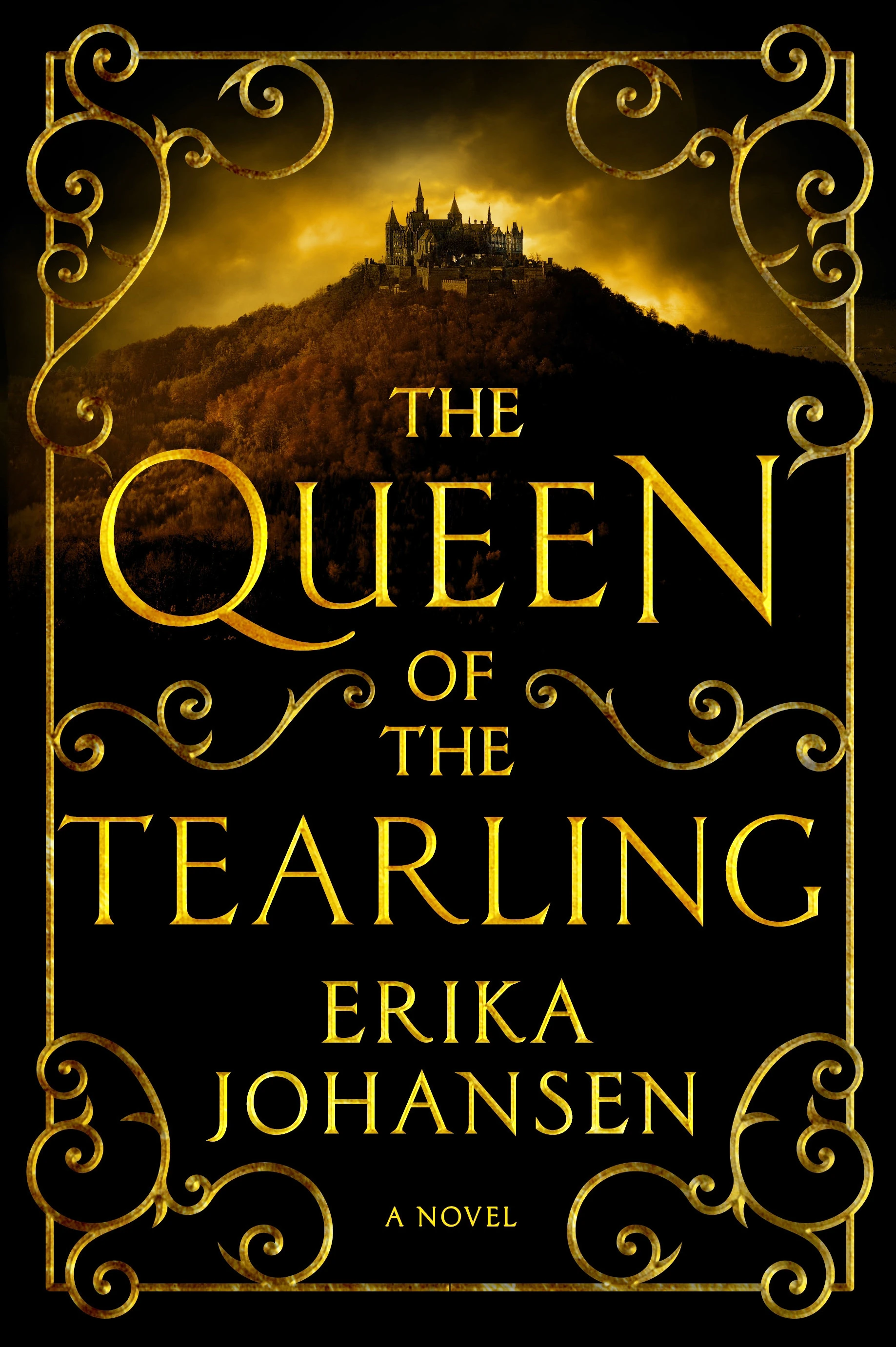
Review: The Queen of the Tearling

This book had come recommended by so many, and was on the list of books I was most excited to pick up for my Blogoversary in July. However, I didn't get the chance to really devote myself to its political intrigue and high fantasy world until I was finished with some of the busiest parts of my Fall... but after that, I was completely committed.

The Queen of the Tearling, by Erika Johansen, follows the journey of Kelsea, a young girl raised in secret, with the knowledge that she would become Queen some day. As she battles skillful assassins and treacherous court life in her quest to reclaim her throne and title, she finds that the realities of life in the kingdom she was raised to reign are even more terrifying than those who try to keep her from it. She'll be the one to change everything... whether or not her enemies are ready to keep up.  

This book is addicting: frenetic pace, quiet power, strong and driven characters... and, of course, high fantasy, which I love. Lots of twists and turns, and secrets-to-be-revealed. However, like I also said, it took me a while to get around to finishing this book. I wanted to read it, but I wanted to take the time to really read it fully, and in the end, I wasn't disappointed that I took it slow. When I did get the chance to commit to a page count, I soared through it, that kind of effortlessly enjoyable reading where you happen to glance up at the page number, and think, Wow, am I on Page Whatever already? Still, I had to set out to deliberately make the time for it. 

When it comes to the world-building, it was a pretty unique high fantasy novel, in background... yes, I'm talking about the 24th century slant. Yeah, this book has a setting that contains recognizable elements of the past, while also being set in the future! As it turns out, modern medicine and technology have died in a post-apocalyptic crossing voyage, a kind of utopian Noah's Ark event, that has plunged the world into a magic-laced Dark Ages. So... beat that. 

Another interesting angle to the novel, was that it has a deeply feminist slant, especially in the opinions of  Kelsea, our main character. I was actually a little surprised to hear people be skeptical about it for those kinds of reasons: they had heard it was very political. When I think of politics in high fantasy, I think of the court intrigue in Game of Thrones, and while there is quite a bit of that, what my friend was talking about was actually the strong political statements being made in the context of the narrative. 

Keslea is passionately feminist (yay!), but that passion is also matched with expressed strongly atheistic sentiments (enabled a little bit by some strong ecclesiastical subterfuge and corruption), and there's also commentary on issues of slavery, pedophilia (especially in terms of men in positions of power), extreme poverty, and more. Phew! That's quite a laundry list of issues represented in the context of one work. 

However, none of these political opinions are shoehorned into the story itself... they all make sense within the context of what's happening in the world at the heart of the story. Still, yes, it does feel a little political at times, but not needlessly. 

One thing I don't necessarily agree with is the classification of the novel as YA - which I've seen done in a couple of different places - as opposed to just regular Fantasy, mainly because of that kind of political nature, but also the brutality of the violence and overt nature of some sexual themes of the book. I just think it found more themes in common with Game of Thrones than Throne of Glass, but then again, members of both those audiences might enjoy this novel as well. 

Still, this book might be one of my favorite reads of the whole year, and it definitely wasn't a quick one. If I waited half a year to get my hands on the first installment of the franchise for my bloggoversary, you can bet one of the first things I'm doing after 2015 is over is getting my hands on its sequel.

Final Verdict: The Queen of the Tearling, though thick with detail and tough topics, is also a fierce adrenaline rush kind of read. You can't read it in one afternoon, but that doesn't mean you won't want to try. Definitely pick up a copy! 

Wednesday, July 8, 2015

Review: Simon vs. the Homosapiens Agenda


Real talk: I'll do my best impression of a car salesman to get you to read this book. I swear it will make you smile (the novel, I mean... the impression's kind of hokey). 

Simon vs. The Homo Sapiens Agenda, by Becky Albertalli, follows the story of Simon, a teenage boy who, after accidentally leaving his email open in the library, is blackmailed into helping one of his classmates land a date with his friend Abby. At stake: the threat of revealing both Simon's closeted sexuality, as well as compromising the identity of his penpal - and massive crush - Blue.

This novel was one of those I was most looking forward to checking out from the library... I even renewed a library card to a branch that is 45 minutes away from where I'm living now, to get at it without bearing through a heinous list of placeholders.

Then, once I got my hands on my library copy, I read it in one sitting. About 75% through, I looked up, and saw the clock had just started to turn the edge of 1:00AM. I just snuggled further down in my bed and kept at it.

To be honest, here's the long and short of my opinion of it: despite the heavy subjects handled within its covers, it's a big ol' happy, squishy, smiley fluffernutter of a novel. There are stakes involved, and you feel Simon's pain in a lot of it, but thankfully, they didn't make things as dangerous as they could have been, widely thanks to the more tolerant cultural settings we have nowadays, when it comes to making something a contemporary teen novel that handles sexuality. But trust me, this book will make you smile like an idiot.

Not to mention I got a massive craving for Oreos the entire time I was reading it. (This led to an unfortunate discovery: there is such thing, in fact, as too much of a good thing, and that thing is Mega-Stuf Oreos.)

To tell you the truth, one of the reasons I wanted to read this book, was because how vehemently it was hyped by Margot over at Epic Reads. Then again, it was also hyped on every list I saw during Pride Week, and accompanied by several adorable "Love Wins" hashtags the day of the Supreme Court ruling. When it comes to being even-handed and well-reflective of the realities of contemporary gay teens in America, I'm not the only one who thinks this title fits the bill.

Not only is Simon a fully formed character - and an absolute idiot, sometimes -  but so are his friends. I was so pleased to see this kind of book treated not in caricature, but with well-rounded and culturally-reflective characters, taking on the problems that still face LGBTQ teens today.

Being gay serves as the primary focus of the romance, as does Simon's blackmail at the hands of a fellow teen, but while the subjects are heavy, they are treated with the respect they deserve, alongside a sarcastic, tongue-in-cheek sense of humor that retains Simon's sense of reality and humanity. While diversity in YA is really stepping up their game these days, and it's amazing to see sexual orientation being handled, it's not his being gay that makes you want to read it, but who he is... and he is adorkably awesome.

I want so many people to read this book. In fact, I immediately thought of several people to rec it to while reading... I even sent my sister snapshots of pages of the book I thought she'd like (primarily because they directly reference Drarry fanfiction within the first 100 pages).

And, you know, it's just frickin' adorable. Seriously.

Final Verdict: Read this book in one sitting, like I did, while making yourself sick on Oreos. But don't worry: even if you don't have the opportunity to supply yourself with the appropriate snackage, this book is plenty sweet reading enough.

Friday, July 3, 2015

Bookish Grumblings : Classics Classism


 "'Classic' - a book which people praise and don't read."    --  Mark Twain, prolific author and humorist; "the Founder of American Literature," according to William Faulkner


I'm sure a lot of collegiate book bloggers would agree, there's a bit of a divide between the kinds of work we read for class, and the novels we read for pleasure. (Think less of a sidewalk crack, and more of the Grand Canyon.)

While it's true there are occasional classes offered here in Seattle at UW, which explore the broader cultural significance of Twilight and Harry Potter, or briefly delve into the Elvish languages of Tolkien, the facts of the matter are, there isn't a whole lot of YA, or science fiction and fantasy, populating the reading lists of most of my classes.

I don't need to tell you about the attitudes most of my professors express for current fiction, either. I once had a (otherwise awesome) prof. express an absolute incredulity about the popularity of the works of Jane Austen, because he didn't believe she was a strong enough author... imagine what he would have to say about Meg Cabot! 


"Do not suppose, however, that I intend to urge a diet of classics on anybody. I have seen such diets at work. I have known people who have read all, or almost all, the guaranteed Hundred Best Books. God save us from reading nothing but the best."  -- Robertson Davies, Canadian author, poet, novelist, playwright, and founding Master of Massey College (associated with the University of Toronto)


Reading classics is great... it's awesome that you've taken part in this wider dialogue, where scholars the world over have had the chance to pore over these texts, and you're always going to have a title in common with people. You're the one who will astound at dinner parties, with your detailed theories about works that have been under discussion for over one hundred years, and you'll always have a title up on the next person you meet... or at least almost always.

But you're missing out!

Reading YA and contemporary releases are awesome, too. You get more recent examples of developing narratives, and the works you read fit in better with the worldview of modern times. Your books are quick, entertaining for their length, and are widely accessible with a ton of people. You also get to surf the wave of hype, and get excited about new works from favorite authors, without the pesky classics problem of them usually being long-dead.

But you're missing out, too!


"I'm a big believer in pairing classics with contemporary literature, so students have the opportunity to see that literature is not a cold dead thing that happened once, but instead a vibrant mode of storytelling that's been with us for a long time - and will be with us, I hope, for a long time to come."    -- John Green, author of popular YA standalone novels, such as The Fault in Our Stars 


There is nothing to gain from reading the same kinds of books all the time. It's one thing to have a certain taste for reading, but it's quite another to firmly ensconce yourself in only one shelf in the library.

Variation breeds innovation... new ideas and ways of looking at things can come from reading new material. New perspectives bring new vocabularies bring reflections of cultures and lifestyles that wouldn't be covered in works you find in other sections of the Dewey Decimal System, but have found their place in the pantheon of all fiction safely between two typewritten lines!

Pick up a different set of reading glasses for a change, and that goes for both those who revel in the long-lauded tomes of the Classics, or shiny new paperbacks of recent releases and popular fiction. Chances are, you might find something you've been missing.

"I get letters from college kids who have read Percy Jackson when they were younger who tell me, 'I just passed my Classics exam.' The books are accurate enough that they can serve as a gateway to Homer and Virgil."   -- Rick Riordan, author of middle-grade Percy Jackson series, involving Greek and Roman mythology


What do you think: have you had enough of the Classics? Or is the problem that you just can't get enough? Let me know, in the comments below!  

Saturday, September 20, 2014

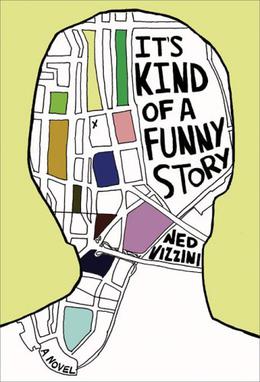
Review: It's Kind of a Funny Story


Earlier this summer, I was discussing the novelistic treatment of depression in YA novels with my two younger sisters, after comments from my friend Brandon about a certain book had me ruminating on whether just the mere presence this serious issue in popular novels was enough to prompt healthy discourse in the community. Those discussions were offset by my enjoyment of this book, which I believe makes a very positive stand for the treatment of the disease. Here's why...

It's Kind of a Funny Story is a contemporary young adult novel written by Ned Vizzini, about a boy named Craig, who, prompted by his increasing inability to eat or sleep, and consideration of a suicide attempt, decides to check himself into a hospital. Whereas he originally envisioned his bright future to consist of a linear path from right school to right college to right job, he finds himself mixing with new friends from all walks of life in his new surroundings, who ultimately help him confront the anxieties that landed him in the hospital in the first place, and construct a healthier life for himself.

To be honest, the narrative arc reminds me a bit of that of The Bell Jar - aka, one of my favorite books in the whole world - but it lacked that transportive nature of Plath's that made that book so special. However, it's not meant to get you into the mindset of a depressed person; it's a little more abstract in its approach, choosing instead to have the reader work through offhand comments or unfinished details to find the meaning behind some of what the main character is doing.

That isn't to say that some of the ways he describes depression aren't as true as Plath's. There were aspects of Craig's narration that directly correlated to real symptoms of the disease, just like The Bell Jar. Which makes a lot of sense, considering that Vizzini's writing, like Plath's, comes from direct experience: the novel is inspired and based around the events and people that he experienced during his own stint in a mental ward of a hospital, and the author himself ultimately committed suicide December 19th, 2013.

Like I mentioned in the introduction to this post, this book made me think about the many ways depression is portrayed and treated within the scope of Young Adult novels. It's important to discuss, especially due to its growing association with teenagers in the real world as much as the written one; however, the ways that the disease is treated in, say, Thirteen Reasons Why, or The Program, are not necessarily realistic nor helpful.

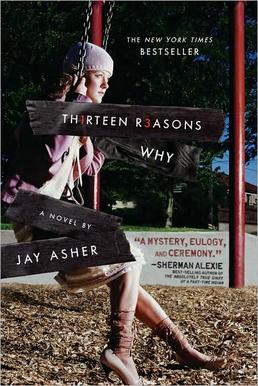
Thirteen Reasons Why, by Jay Asher, was the book Brandon brought up, which he said depicted depression unrealistically. Actually, I think his exact words were (about the character of the novel who commits suicide, and then leaves tapes for a young man to listen to, explaining her reasoning for the violent end), "She doesn't talk like a depressed person would talk." After conferring with both of my younger sisters, both of whom have read the novel as well, they said that they thought the novel was interesting, but had to agree: the character who is supposedly depressed doesn't express any of the actual symptoms of depression... just anger. Still, that doesn't mean that it might not bring about conversations about the events that led to her death instead, including sexual assault and the way that is handled in schools.


The Program, by Suzanne Young, however, takes a much more potentially damaging approach than simply ascribing the disease a different set of accompanying emotions or motivations, but instead, casting depression as a worldwide epidemic specifically targeting young people, leading to attempts by the government to wipe out the disease through forced amnesia on its sufferers. Instead of displaying depression as a very real problem, it twists it into a contrived science-fiction super-disease, one that not only makes you vulnerable, but makes you a pawn to others... not just weak, but something to be taken advantage of.

All three of the YA novels discussed have very similar ratings on Goodreads. Yet again, the argument may be made that just because some novels may not reflect something organically or true to life, doesn't mean they harm the growth of dialogue for that serious issue with teens.

I'm one of those people who believe that entertainment is always better backed up by fact. Enjoying a novel involves appreciating a sense of suspended belief... an illusion that is shattered when you confront something you know isn't true. For those who might be experiencing depression, and who find these kinds of narratives within works detailing depression, it not only suspends that belief, but may instead cause confusion with both them and their peers about what exactly it is they are experiencing.

Thirteen Reasons Why and The Program, as well as similar works like them -  because Lord knows there are more than three books tackling this topic - don't give either an acceptable description of depression, nor able ways to seek treatment. 

However, there are those that are doing it well, as well: if anything, when they are done, such as in It's Kind of a Funny Story, from a particular person's point of view when they deliberately seek help, it can promote a healthier discussion of the disease and it's options of treatment from a very rational standpoint.

Ultimately, while I think the topic of depression holds an incredibly important place in novels written for the teenage mindset, I also think there's a lot more care that needs to be taken in representing the disease not only more honestly and accurately, but with more options open to those under its oppression.

Tuesday, July 23, 2013

Top Ten Tuesday: Topics That Will NOT Make Me Want to Pick Up a Book

"Top Ten Tuesdays" is a weekly countdown meme, hosted by the Broke and the Bookish!

Way back in April, we counted down the Top Ten Topics that will make me want to immediately pick up a book, and now, it seems it is time for the opposite. Therefore, without further ado, here are the Top Ten most cringe-inducing, gut-clenching, and teeth-grindingly painful of those things that keep me far, far away from certain bookshelves at the library! 

1. Drugs/ Drug Abuse
I was raised from a young age to stay far, far away from anything that has the potential to alter your brain chemistry and was not prescribed to you by a doctor, and I honestly think that has translated into my reading habits.

2. Motherhood/ Pregnancy
Even when I am a mom, I doubt I'm going to want to read about someone else's postpartum problems, which, from my experience with the genre, tend to come in the form of  supremely terrible timing for some of life's worst issues, like cheating husbands, anxiety and depression, and a general inability to meet the needs of their growing family. Honestly, guys, don't moms already have it tough enough?

3. Spies, Hackers, Master Thieves, and Secret Agents (especially in YA)
I have just been disappointed time and time again by too many Gallagher Girls and even, yes, James Bond himself. I'll stick to the silver screen versions of jaw-clocking stud muffins in tuxes descending from the ceiling on microfiber cables, thank you very much (and especially that cutie Daniel Craig); you can keep your printed prep-girls in miniskirts and government equipment, and hormonally-vulnerable-yet-mentally-incomparable computer hackers, to yourself.

4. Chick-Lit "Hits" 
The Devil Wears Prada is one of my favorite movies, and yet, I will never read the book(s). It just won't happen. Same for the 50 Shades of Grey series, or pretty much any novel they talk about on The View.

5. Anything That Professes to Be the Next Anything (i.e., "next Hunger Games," "next Harry Potter," "next Twilight.") 
Speaking of the publishing hysteria induced by the now-oft-copied 50 Shades, I am fifty shades and twenty-one flavors of done, done, DONE, with anything that cannot stand on it's own story, and relies on the crutch of comparison to previously existing publishing triumphs to even make a case for the discerning consumer's approval. Boo and hiss.

6. Fairies/ Werewolves/ Shape-shifters/ and ESPECIALLY Vampires (Post-19th Century). 
Anyone who has been around for the insanity that gripped YA shelves in the past decade or so understands. Dracula may have given me nightmares for years on end, but at least he never divided the female population of my freshman class into warring factions of fan girls. (Curse you, Edward and Jacob!)

7. Authors Who Just Don't Understand How to Be... People
A Million Little Pieces, by James Frey. How to Be Famous, by Spencer Pratt and Heidi Montag (and yes, this is a real book). Honestly, if this hullabaloo about Orson Scott Card had been brought to my attention before I read the novel back in Fall 2008, I would probably have chosen to abstain from one of my favorite works of science fiction ever. But why should I pay into the pocket of a liar, a lunatic, or an all-around loser?
*Also, apparently Emily Giffin is not quite that nice, either.

8. Sports
Just not what I'm interested in. Basically, the only sports I understand or enjoy are baseball, soccer, and football, and I'm only ever down to watch a baseball game (preferably, with pretzels, Cracker Jack, and a Diet Coke). I don't care what goes on in the dugout, just the action on the field, and the party in the parking lot.

9. Thrillers
Mysteries? Yes. Murder mysteries? Even better. Overly-suspenseful slashers with a body count higher than the reading grade level, populated exclusively with easily-recognizable stock characters and overused story structures, for the sake of moving the plot along so quickly you might get whiplash? Pass.

10. Romance Novels (That Are Not Redeemable As Social Commentary). 
Pride and Prejudice, Anna Karenina, and Gone with the Wind, all have inherent cultural value, that reflect important aspects of the worlds, communities, and social stratospheres within such epic love stories flourished. But I'm guessing that the brick-shaped, bodice-ripping wads of sticky prose and steamy scenes sold in the supermarket checkout lines reflect a much different kind of sense and sensibilitiy, and involve worlds that I'm not too keen on exploring.

What sort of things make you keep away from certain books? Do you think there are any exceptions to your rules (or mine)? What's on your list? 

Sunday, June 30, 2013

Oh, Dear

The sun has finally come out again, and I was looking for something a little sunny to read; hence, I picked up this novel - Dear Lucy: A Novel, by Julie Sarkissian - of the top of my recent stack of Advance Reading Copies (ARCs) that have been piling up on my shelves. From the bright, colorful, and quirky cover, it looks like a cheerful, optimistic novel, and guessing from the chicken, it was about a young girl who lives on a farm. However, anyone making that assumption - fulfilling the dreaded adage of "judging a book by its cover," as marketing teams only love to assure that you do - would only be correct for about half of that sentence.

Dear Lucy is told primarily from the viewpoint of a young, mentally challenged girl named Lucy, who is looked after on a farm by two caregivers, named Mister and Missus, who are tasked to tend to her until her mother decides she can once again keep her in her life. Also on the farm is a young, pregnant woman named Samantha, who is equal parts loving of little Lucy, and secretive about her past, as well as several chickens that Lucy loves to oversee, and the left-behind words of Mister and Missus' daughter, Stella. The story follows Lucy, as she tries to make sense of her rapidly-changing world, with Samantha's due date approaching nearer, by attempting to understand universal concepts foreign to her, like the "secret of growing," or why the stories Samantha tells conflict so heavily with what others say is the truth.

The chapters intersperse themselves with the voices of the various characters, instead of just focusing on Lucy, which allows for a more rhythmic measuring and pacing of the slow-burning plot. It was a very calculated move, and kept the character development from getting too condensed, electing instead for special serving sizes of the unique and complex styles of story-telling in the various forms of each of the characters. While, after a while, this got a little too monotonous for me, and I had to fight the urge to jump forward a chapter or two to finally get a grip on the story, I refrained, and in the end, I think the novel was probably the better for it.

The narration styles were also refreshing and carefully constructed themselves, with each new voice coming through as distinctly their own. None of the characters themselves were carefully delineated as either "good" or "bad," and the setting and time period were similarly unmarked (Great Depression? WWII?). These balanced individualistic and ambiguous tendencies of description were both a hindrance and a help to the novel, allowing the reader to form their own opinions, but also making the constant moral weighing and attempts at association more difficult than they needed to be.

The most interesting aspect of the novel, by far, was the primary narrator, the titular Lucy, who is mentally handicapped. The effect is one-hundred-percent successful: it comes off as fully authentic and genuine in its application, completely earnest in sentiment, and allowed the reader to easily access the world of someone of a kind they haven't explored before, with the fuller breadth of outside knowledge to understand the things Lucy, herself, did not.

However, I did feel there was a severe detractor to such elements as the distinctly unique voice, the interesting and deeply morally involving story line, and the severe plights faced by some of the most vulnerable characters in the novel. Going into this book, there was no mention that Lucy was handicapped in any way (it actually takes you at least a few pages to really get the bigger picture). Similarly, the concept art is deceptively not-age-appropriate, and I cannot stress enough, the fact that the subject matter is positively brutal: themes like sexual assault, violence, suicide, etc. and, of course, the difficult topic of mentally handicapped children, populate the major story arcs of our characters, and there's a plot twist at the end of the novel, involving some unearthed facts about Stella, that literally made me throw my book across the room in disgust. In other words, the cover and description both don't explicitly lie about the contents of the novel, but they sure as hell don't tell much of the story, either.

Read this novel if you're looking for interesting voice, genuine characters, and a unique plot... just realize that you're getting a lot more baggage than you bargained for.

Tuesday, May 14, 2013

Top Ten Tuesday: Tough Topics

Top Ten Tuesday is a weekly meme hosted by book blogger (and evident alliteration fanatic) The Broke and the Bookish.

This week's theme deals with books that do their part to give some kind of broader form to some of the most difficult issues to understand. Through these peeks into the world of those falling victim to mental illness, those suffering under oppressive societal conventions like racism, and those trapped in terrifying situations, like war.

These are some of my favorite books dealing with harsh issues and tough topics.

1. The Perks of Being a Wallflower, by Stephen Chbosky. 
This is a wide favorite among many, simply because of its tender tackling of many different social and personal issues that affect many teens, including mental illness, bullying, understanding homosexuality, and feeling alone. It's a great novel, and the movie is pretty good as well.

2. Just Listen, by Sarah Dessen. 
I've seen lots of Sarah Dessen novels making it onto people's lists for today, and I understand why: she is able to deal with a wide range of true-to-teenage-life topics with understanding and subtlety. This book deals with the effects of bullying and sexual assault in the main character, as well as eating disorders in a background character,and is one of the first books I found that I could read, and cry about every single time.

3. Looking for Alaska, by John Green. 
I've also seen loads of John Green today, for similar reasons as to Sarah Dessen: these two just really get how to talk to and about teenagers. I wasn't sure what I was expecting going into this book, but the big tough topics really came like a slap in the face. It's a spoiler, so I won't give reasons.

4. The Bell Jar, by Sylvia Plath. 
I've already discussed this to be one of my favorite books on the whole planet. This is one of my favorite books, not only for the relatable nature of the heroine, but because of Plath's amazing talent, in mirroring the character, Esther's, thoughts and feelings perfectly in the mind of the reader. Dealing with depression, mental illness, and suicide, this is one of the greatest books ever written, in my opinion.

5. The Adventures of Huckleberry Finn, by Mark Twain. 
I'm immensely biased to be on Mark Twain's side in any given situation, due to the fact that he wrote my favorite novel of all time. This book is one of my favorites as well. While widely contested and popularly censored across the United States, this is one of the best examples of Twain's work, and is a vital description of slavery in the South.

6. To Kill a Mockingbird, by Harper Lee. 
Also one of my favorite books, this is yet another moving portrayal of civil rights abuses and injustices against African Americans in the South, set against one young girl's story of simply growing up. (Bonus points to the good folks at King's Books in Downtown Tacoma, who house a friendly cat named Atticus.)

7. The Things They Carried, by Tim O'Brien. 
This book sucks for many, many reasons, very particular to me, but it is a truly horrifying depiction of the war in Vietnam. It was a polarizing book in my senior year English class, because people either loved it for the war, or hated it; either way, it got us talking on another very important issue, especially when it seems like the wars in the Middle East have been going on forever.

8. Escape from Warsaw/ The Silver Sword, by Ian Serraillier. 
Okay, this is a bit of a random choice, it would seem, but actually, this moving portrayal of the flight of a group of siblings from Warsaw after German invasion in WWII, has stuck with me since I first read it in the seventh grade. (Even all of these years later, I still want to name a chicken Jimpy, after a pet rooster in the book.)

9. The Lone Ranger and Tonto Fistfight in Heaven, Sherman Alexie. 
This one was read as a summer assignment for junior year, and it ended up introducing me to one of the most unique voices I've ever read. Sherman Alexie is very good at what he does, which is depict the life of Native Americans in a very gritty and  real way, from varying viewpoints and through roundabout descriptions, so you really have to work to actively understand exactly what people are going through. Truly powerful stuff.

10. Animal Farm, George Orwell. 
I had a really difficult time picking out what my last book would be, simply because there were a lot of contenders for the position, but in the end, I had to go with yet another summer read for school - I think it was sophomore year - depicting the evils of governmental oppression and communism, as palatable for popular consumption. This is a quick read, but a powerful one.

So, those are some of my favorite books dealing with Tough Topics. What are yours? 

Saturday, March 16, 2013

Trapped Under Glass

Now, we're stuck in Dead Week again.

Last quarter, this was one of my favorite weeks out of the whole year. Christmas, and its related delights, hung its sugarplums almost within reach, and the whole house was quiet, as people with much more stressful schedules than mine buried their heads in their books, like ostriches bury their heads in sand. I was left to my own devices - specifically, my laptop and cell phone - to Pinterest away to my little naive heart's content. I had no cares for Finals, as I already knew I had them in the bag. All Dead Week was, for me, was a waiting game.

And now, it's morphed into something completely different.

Frantically jotting notes, tearing through past papers, trying to figure out exactly what was going on in that one tricky book section, and moreover, trying to avoid thinking about what kind of detrimental effect failing would have on my steadily-climbing GPA, are all I know now. Sleep is a luxury I too often abuse; food, the same.

However, instead of freaking out over it like I am wont to do, I wrapped myself in the pages of one of my favorite novels: The Bell Jar. I had known for a while that I wanted to profile it for a College Fashion article, and I thought this would be a great way to take out multiple birds with one stone, instead of taking out multiple UW peers with one angry toss of my increasingly non-supportive laptop.

For those who have not yet been sucked into the wild and chaotic mind of nineteen-year-old Esther Greenwood, The Bell Jar is the tumultuous tale of a prize-winning self-loather, whose disbelief in her own beauty and talent give way to a crippling depression, suicide attempt, and internment in a psychiatric facility in the 1950s. The novel holds a tragic legacy all its own, by way of the history of its author, Sylvia Plath, who wrote the book semi-autobiographically, and successfully committed suicide about a month after it was published for the first time.

The quintessentially mid-century feminist masterpiece tore open a new space for the discussion of the taboo topic of mental health issues in modern communication, and it is thanks to her expert descriptions of  the ultimate bleakness of the human mind,  that allow for more current, frank discussion of public issues like depression and suicide, as well as female sexuality and career and life opportunities for women.

The Bell Jar is one of my favorites for several reasons:
1. The narrative style is unique and engaging - being told in a surprisingly-organized narrative format, portraying what is a tragedy with uncharacteristic sarcasm, humor, and irony,
2. Which additionally enthralls the reader by way of riveting, fast-paced turns of events that simultaneously enrapture you in the plot further, while also proving to be as equally disorienting as engaging,
3. The topic is one not often discussed in modern literature - and definitely never communicated with such vividly excruciating detail,
4. And the novel simply fell into my lap (courtesy of my mother) at a time in my life when I really, really needed to feel like I had an ally. I did in Esther.

In adapting it for College Fashion, I had naively assumed that my own passion for the literature would be transcribed easily into an article. I forgot completely about how, despite the novel's success, issues like female empowerment by way of sexuality, and the precarious mental states of depression and anxiety, could reduce any competent person's conversation to a smoldering pile of wreckage like the twin taboo time bombs they are.

The first comment - quickly deleted by the swaddling comfort of my Editor-in-Chief - was received, and unfortunately, internalized just as quickly as it was removed. From someone named Stephanie, whose network address betrayed a link to Penn State's campus:
Thanks for your input, Stephanie. And while plenty of people chimed in after her now-invisible, malicious comment, talking about how great the article was, and how much they loved The Bell Jar, there were still plenty more commentators - much more proficient in the use of common grammar, punctuation, and capitalization than Stephanie - who were just as willing to claim that my actions were a mark against the iconic novel, accusing me of trivializing mental illness, and "dragging" fashion of the piece. One also tried to do my job for me, telling me why the outfits I had adapted out of themes for the novel were better off elsewhere, or simply made for the sake of chasing trends (then again, I am on a FASHION WEBSITE, so I don't see how they could fault me for that last piece of criticism).

Of course, it was gratifying when one of my detractors later admitted to never having actually read the novel (then WHY were you even involved in the discussion in the FIRST place?), those mild feelings of triumph were negated immediately when I received a second comment from our old friend, Stephanie: "WOW i like how you deleted my comment. Once again, THIS WAS TERRIBLE. and you clearly didnt understand the bell jar"

Wow, indeed. Out of the nineteen comments on the article, five were posted (as in, were deemed inoffensive enough to actually be posted) by those who disagreed with my work, three were posted by me defending my work, and nine were posted by those who loved my work. (If you can tell that the math doesn't add up, another posted about how she would read the book for the issues presented, regardless of my adaptation, and another was simply a rather impassioned plea for me to profile S.E. Hinton's The Outsiders).

SO, what was initially a method for me to achieve a happier attitude as well as strike out a deadline for CF, ended up opening a much larger and more impressive can of snakes than I had ever intended to belabor myself with during one of the most stressful times of Winter Quarter. I can't truly say that I'm happy with what I did, because I depend entirely too much on the good opinion of my peers. Maybe it's just because I know that this year's crop of Daffodil Princesses trooped to libraries across Pierce County today - one of my favorite Princess appearances! - but I feel like I'm missing out on a little lovin'.

Well, I'm certainly not finding it in any of these study notes.

Read my College Fashion article on the Bell Jar, and weigh the issues for yourself, here:
http://www.collegefashion.net/inspiration/looks-from-books-fashion-inspired-by-the-bell-jar/

Thursday, January 17, 2013

Bad Attitude

I've never really been one for negativity, barring that one 3-day goth-punk misadventure that occurred in the fifth grade (don't worry, I'm okay now).

Remembering to look on the brighter side is as familiar a concept to me as looking both ways before crossing the street, and when I do reach the other side of the road, I can be assured that my neighbor's lawn is no greener than mine. I always make sure to put on a smile, at the same time I'm putting on my shoes, because I know I wouldn't be fully dressed without either of them. And if anyone tries to rain on my parade, I simply wipe the fog off my rose-colored glasses, keep an eye out for the 9th cloud, and look for the silver lining in the forecast, because I know that, regardless of the weather, the sun will come out tomorrow.

And if all of those terrible cliches can't convince you of my optimism, then here's the proof: I've made it through J.D.Salinger's the Catcher in the Rye for the second time through, and have yet to get a tattoo, a new Tumblr account (in fact, I actually deleted mine!), or a sweet black electric guitar for my all new indie-grunge one-woman-show. Nor have I heard strange voices or attempted any homicides, but those are a little less likely reactions to the apathetic - as well as oftentimes straight-up pathetic - whining present in the novel.

The Catcher in the Rye is told from the viewpoint of 16-year-old East Coast flunkie Holden Caulfield, as he wanders around NYC for three days, to avoid having to tell his parents that he has been kicked out of yet another prestigious prep school. Over the course of the novel, he hires a prostitute - just so he can find someone to talk to - hits on a couple of middle-aged women in a nightclub, ostracizes himself from past friends, and basically takes part in drunken, dissolute behavior over the course of 277 pages.

Did I mention the book was published in 1951?

If I sound condemnatory, I don't mean to. It's easy to criticize this book; in fact, people have been doing it ever since the book was published over 60 years ago. Simultaneously the most-banned and most-read book in high schools across America, Catcher has always had the shadow of offended school boards and all-too-chaste parents hanging over it. People blame it for the suicide of Kurt Cobain, as well as for the homicide (actually, is it more appropriate to say assassination?) of John Lennon. It's really, really easy for people not to like this book, even by looking at the structure of the novel itself: there basically is none. No great lesson-learned at the end, he doesn't die or anything. Nothing happens. And the narration style is considered to be less-than-ideal as well. It sounds simply like you're having a conversation with a teenage boy in a retro time loop.

The thing is, that is my favorite thing about the novel. The fact that, even though the book was written in 1951, even though Holden's nightclubs involved trumpets, jitterbugging, and famous piano players, even though his world involves so much of what is antiquated and obsolete to us, you can still look at Holden, and see a teenage boy. While his surroundings may have changed drastically, he, himself is a universal: who hasn't felt like the world he was living in is superficial and shallow, like he is alone and under-appreciated, like his glory has yet to come? Readers may choose to condemn his frequent expletive-laced language and juvenile tone, but it just makes Holden that much more relatable and recognizable as a kid.

Furthermore, while nothing really happens over the course of the novel, maybe its enduring popularity and praise owes a little to those same feelings that he exhibited with such reality: it's enough just to be with someone who understands you, to be a little less lonely, for a little while. Angst-filled teenage readers have found a friend in Holden for this long, not because he undergoes this magical attitude-transformation, where he finds out he's a wizard and saves the princess from the tower and solves the whodunit mystery while nabbing the dastardly trainrobbers, but because he was someone, who thought like them, and sometimes, it's just nice to be with someone who understands. Like Holden.

So, while I don't feel the need to stage some kind of a demonstration in Red Square or set fire to anything anytime soon, I can't really say I got out of The Catcher in the Rye unchanged. It gives me a new appreciation for those other people crossing the street, those whose sun isn't as determined to shine as mine is. Those people who are just looking for other people like them, like I am.

(to check out my College Fashion post inspired by The Catcher in the Rye style, go here: http://www.collegefashion.net/inspiration/looks-from-books-fashion-inspired-by-the-catcher-in-the-rye/ )


Tuesday, October 2, 2012

Ice Cubes Melt

Pardon me for the lack of updates in the past more-than month or so. Unfortunately, I've been busy making the most of my freshman and sorority experience, which requires copious amounts of laughing, hugging, chocolate-chip-cookie-consuming, belly-dancing, spandex-skirt-shopping, and all around fun (as well as trace amounts of other substances, like sequins, headbands, and crying). So, my work on this blog has been neglected. Now that I'm reasonably settled into my roles as class-goer, homework-doer, weekend-dancer, and new Sigma Kappa (one heart, one way!) member, I actually found the time to crack open a book I did NOT buy bound in cellophane from the basement of the University Bookstore, and relax. Between late-night runs to the kitchen for more apple cinnamon caffeine-free herbal tea, of course.

Now that I've got you all settled into the notion that my life has become some fairy-tale-worthy amalgamation of a Spice Girls music video and a tampon commercial, prepare for the pain, because this book packs a certain emotional "one-two" that left me reeling. Maybe it's because I'm a born-and-bred American living in a new century, one who grew up almost without the concept of skin color as a friendship barrier, or maybe it was the fact that this novel is set majorly within the very limits of the city I now call home. Whatever it was that left me sprawled across the study room couch, fighting back tears, it's not fading terribly fast. Not when I remember having walked across some of the very pavement on which such atrocities were committed.

I knew about the evacuation from the West Coast, and the Japanese internment camps during WWII, because our teachers glossed over what bare bits of it we discussed about our WA state history, all the way back to the first grade. When you stand by the bridge near the Japanese Pagoda at Point Defiance at night, so I was told in whispers, behind the wooden shed on our Montessori-school playground, you can hear the quick patter of ghostly footsteps, of someone fleeing, someone who didn't want to be taken away. They were shot, and now, they'll be forever running. Grave and sinister, for someone so young, but we did what we could to understand that which we couldn't understand, subjecting it simply to the stuff of ghost stories, and moving on (completely dismissing the fact that the Park, and the Pagoda, are definitely closed to the public at night). I grew up side-by-side with those kids, whose parents spoke a different language, liked different foods, dressed a different way, or prayed to a different God, and it was never a problem. We weren't bred to war, so we simply couldn't comprehend. These weren't things we were taught in Molly's American Girl series. It wasn't until public school that I realized just how cruel people could be, and why no one in Tacoma ever wanted to talk about it.

Hotel on the Corner of Bitter and Sweet, by Jamie Ford (Ballantine Books, 2009), is set halfway in the 1940s, when those unjust sanctions against Japanese Americans were enforced, and halfway in the 1980s, when the repercussions of those actions are still being felt, by Mr. Henry Lee, a recent widower with a tenuous relationship with his grad-school son, and leftover memories of a girl named Keiko Okabe. Throughout the novel, the threads unwind to find that Lee had deeper ties to her than his son ever knew, and his son comes to realize that his father was less like his father than he had previously thought. It's a beautiful and moving love story, set across the backdrop of two different timelines, where two different people can find an imperfect love in their own hostile nation, and still feel the effects of that love after all the smoke has cleared.

An imperfect novel as well, as the presence of some anachronisms within the story pointed out. But I'll let 'em slide (still less cringe-worthy writing than my Architecture textbook. Yikes).

Whatever the case, the true takeaway from this novel, for me, was the fact that I was already so familiar with the setting. I've been to the Puyallup Fairgrounds, I've seen where they keep the livestock. Imagining a family of four, trying to live within the bounds of one horse stall? Not pleasant, not easy. Now take this description:

"...the quaint town of Puyallup, a small farming community surrounded by lush acres of daffodils." (Pg 153).

Holy hell. I'm a Daffodil Princess. Our HQ is in Puyallup. We're the Daffodil Princesses BECAUSE of that agriculture in the Puyallup Valley. This is all within a half hour of my house! Oh my gosh! (Describing my train of thought, here.) How horrifying is that? All of this kind of thing occurred within 50 miles (and about 60 years) of my doorstep! Not to mention Seattle... the entire reason my mom had me read this novel is because I'm now LIVING in Seattle as a student! She wants to have a field trip day with me, to go explore some of the real-life inspiration down in the international district, the streets named IN THIS BOOK.

How sad.

I'm not sure what it would be like for those who DON'T live in this city I've grown to care so much about since the advent of higher learning, but for me, it really struck home. Literally. My appreciation for the history of where I came from, and where I am now, is ever-increasing. I love it when a novel can involve you so deeply, that you feel the need to do extra background work afterwards, almost like you don't want the story to end, so you need to find out more of its beginning. I'll definitely be on the lookout for more locally-set works now, and my interest in the racism of WWII isn't dying down either. Sure, awful, truly-terrible, no-good things happened here, in Seattle, but bad things happen everywhere. I'm still just learning to appreciate the past, and how it relates to where I am now. And this novel definitely helped.


Note: Look out for my favorite character, the son, and the quote of his from which this post title was taken. It's been ringing in my head since finishing the novel, and I don't know why. :) 

Wednesday, August 29, 2012

Many Adventures

When flipping through the last few pages of The Adventures of Tom Sawyer, by Mark Twain, yesterday afternoon, and preparing to gather my thoughts for this blog post, I had to stop, and laugh for a moment. This book - this precious bundle of pages - is my favorite novel, of all time. Most people who learn this information are a little surprised, expecting something a little more... I don't know... romantic? British? More stereotypically fitting of the "classic" title? No. This book is my most beloved.

And I was laughing because I realized, that the first time I had ever read this book, was exactly a decade ago.

That's right. This little precocious reader first became acquainted with young Tom Sawyer at the age of eight, after having received his book as part of a Scholastic Book Orders (remember those?) bundle the year previously (it's companions being 20,000 Leagues Under the Sea, which I have actually yet to read, and My Side of the Mountain, which I hold in the utmost esteem). Upon my first reading - over a cumulative week of quiet-learning periods at our Montessori summer school - I found myself unfamiliar with about half of the words inside of it... and yet, still safe and snug in the flow of the story. Despite having only just graduated the 2nd grade, I not only followed, but rejoiced in, Tom's escapades, and wound my way through all of St. Petersburg, Missouri, with him, Huck, Joe, and Becky, while my classmates sat coloring, doing math pages, or practicing for spelling tests.

Little did they know what sort of trouble I was up to. Safe inside the pages, I was far from quiet. I was fighting in the forests and in the streets, filling the cat up with painkiller, creeping into graveyards in the dead of night, paying witness to murder, lying, plotting and scheming, running away from home to become a pirate, getting trapped inside a labyrinthine cave, from which I might not ever escape... and none of my desk neighbors would ever know the difference, unless an unchecked laugh made its way through the silence of the class. And so, the daughter of a Sunday School teacher - who was not even allowed to walk through the grocery store alone - found herself a world filled with possibilities, opportunities for behaving badly, and no one could stop her.

I've read this book every summer since. My vocabulary and comprehension have grown, as is to be expected, and my tastes in literature have varied as well, and yet, to me, this book always remains the same.

This book has stuck with me throughout three different elementary schools, middle school, and high school, and has traveled with me to campgrounds, slumber parties, Sun River, and even church camps, over the course of the past ten years. I have read it EVERY SUMMER, without fail, and even a bunch of times interspersed throughout the years as well. Every crack in its spine, ridge in its covers, stain or rip on its pages, marks another trip inside the wonderful mind of Mark Twain, and another encounter with the mischievous champion of childhood, Tom Sawyer. I. Love. This. Book.

And yet, it made me cry yesterday - no, seriously cry - after I was done laughing. I realized that yes, this is a book I've been reading for the past ten summers, since I was eight... but that means, I'm eighteen. I'm going to college in less than a month. I'm growing up, shipping off, moving out... saying goodbye. I'm far passed the age for digging for buried treasure, or believing in witches. I'm trying hard to become an adult now, there's no time for dwelling in the adventures of years past. I've got to be a big girl, no more kidding around. But... does this mean, I've outgrown Tom? Is a book I've spent a decade loving now simply something I have to leave behind?

It was a major Toy Story 3 moment. Looking down at the bent cover, the well-studied artwork, and dented and creased spine, I contemplated my future, trying hard to ignore my past.

Then, with a flick of the pages, I couldn't ignore it anymore, when the crackling, yellowed paper issued the scent of freshly cut grass, reminding me of reading the book on our back patio in the summer sun, while my dad mowed the lawn. Then came the scent of hot sand, when I took Tom along to Long Beach. The scent of strawberries, when the cousins came over for a Fourth of July party and we had strawberry shortcake, and I accidentally spilled a little on a page of my book. I smelled bug spray, and sun lotion, and chlorine from a pool. I smelled the peanut butter sandwiches my mom packed for me the entirety of the 1st grade, and the mix of perfumes from the Stadium girl's locker room. This book has been with me everywhere. If it has already stuck along for the ride this far in my life... why should I give it up now?

So I decided Tom and I were in for another ten years, at least. I can't think of another book that has impacted me in such a way as this novel has. This post isn't a review, and it's not a recommendation either. It's an overly-long post, filled with effusive praise and fond memories, made while reading my favorite book in the entire world.

Thank you Mark Twain, and Tom Sawyer. Happy Tenth Anniversary.

Saturday, August 25, 2012

Bump in the Night

I'm here, in one of the most beautiful places found across the entirety of Earth (according to me, at least), with the sun shining brightly, and the day passing as lazily as only the greatest of vacation days can. However, in a vacation home I've come to know almost as well as my own house, and surrounded by my very happy -and finally relaxed - family, you could swear that the world had grown a little colder. Maybe the sunshine shifted a little, causing the warmth to turn into a glinting shine that blinded your eyes, just for a moment. Maybe - once again, just for a moment - the breeze shifted, and you would have sworn that the rustling of the pines was, instead, the quiet hissing whispers of some unseen observers.

Maybe a curious girl - terrified into nightmares at the age of three by Ernest Scared Stupid, the same girl who went on "The Haunted Mansion" for the first time at the age of four, and the second, at fourteen - has decided to take a peek at one of her father's favorite Stephen King's collections, Night Shift. I'd thought that I'd grown out of my past poultry-flavored tendencies, and could successfully sleep through the night without fears of being attacked by vicious, spade-clawed Boogeymen, or sneaking, sloppy zombies. The only time I've become afraid of breaking that insomnia-free streak, was in reading this collection of short stories, from the master of horror himself.

This grouping of some of King's most famous short stories was published in 1978, with the majority of the stories first having been ran in publications as varied as Penthouse and Cosmopolitan, to Cavalier (who,  in running nine of them, was the real heavyweight). While the book itself was dug out of the dust cluttering some of my Dad's old college gear, the tales held within have lost little of their original appeal... or terror. With well known stories like "Jerusalem's Lot," "The Ledge," and "Quitters, Inc." as well as lesser known, but nonetheless thrilling tales, like "I Am the Doorway," "Gray Matter," and "I Know What You Need," this collection of all the aspects of horror, fantasy, suspense, and even sci-fi, found in King's best works are put on display, at their very most chilling.

While anyone who knows me would readily attest that I usually choose to abstain from partaking in the very scariest of movies, television shows, etc., I was never solely afraid of them. As a kid, I really did enjoy books from R. L. Stine's Goosebumps franchise, and I watched Are You Afraid of the Dark? so often, that even now, so many years later, I can recount some of my favorite episodes. The problem was, my imagination was just never great at delineating where fiction met fact, and no matter how I loved shivering to the tune of a haunted castle or a possessed doll during the daytime, I could never seem to sleep at night without both legs firmly tucked inside the covers (later, an encounter with Bram Stoker's Dracula, from the local library, led to a still-ongoing nightly necessity, of locking all windows and closing the blinds. But that was Dracula).

Regardless, reading King's stories led me back to those good ol' days, back when there were some Nancy Drew novels that still scared me. The horror - the kind that draws you in and makes you wait in dreadful anticipation, fully absorbed in the terrifying monster before you, unable to recognize any others that may be sneaking around the corner to catch you from behind - felt good to meet again. It keeps you on your toes.

(The best part is, age -and further fantastical reading - has given me a weapon: where I once quaked beneath covers at the slightest bump in the night, I find I am now able to OUT-THINK any demons my own mind may invent. I can use reality to my advantage, and prove my own monsters to be false, thereby slaying them with a sword crafted from the foundation of their existence. And poof! No more nightmares.)

 Besides, there are plenty of other things to better be afraid of... for instance, in this climate, a repeat of the red-hot sunburn of late July. Now that's scary to think about. :)

Thursday, April 26, 2012

The Things She Carried

Recently, we finished reading a book in AP English called The Things They Carried, by Tim O'Brien. It was the kind of book that your parents had to sign a permission form for you to read. The novel itself is about experiences within a band of soldiers in the Vietnam War, told predominantly in stream-of-consciousness style. The chapters within the book have tangled, circular patterns, and are very jumbled, which, coupled with the serious subject matter and often-used profanity, made the novel a pretty difficult read. I wasn't really enjoying it, simply because I don't necessarily approve of war, and the discussions we were having as a class on the topic, weren't either productive or helpful in analyzing the book.

Halfway through reading the novel, it got much more difficult for me to read about guns, death and loss. A great friend, one of my beautiful Princess sisters, the one with whom I was closest, committed suicide, on April 10th (the day of my most recent blog post... we weren't informed of her death until the next day.)
 She and I were together during our Princess Retreat, were in the same car group when driving to all of our many events, and she was my dancing partner. She had even came over to my house, and met my family back in February, the night before a big event, so she could practice the dance with me. She was right next to me every time we performed our dance, and was in the backseat with me on every car ride, and made every Daffodil event seem like the biggest party ever... she was a GREAT friend.

The sudden and tragic loss of her drastically effected my ability to simply go through life, let alone read this book. It was much more difficult to tolerate the guns, killing, loss, and death, often expressly and insensitively stated and approached within the novel. However, it was a school assignment, and my teacher was unable to realize that continuing to read the book was upsetting me, so I just read what I was supposed to, and tried to focus. Automatically, my brain honed in on how death was viewed within the novel - not as weakness, just, something that happens, like an inevitability, almost - and how the various soldiers reacted to it: some, with insensitivity, and almost disgusting behavior, and others, with a deep, dragging guilt, comparable to the state I was in. I left class more than once reaching tears, simply because it was too difficult to handle. (Of course, our English teacher follows up that book, with a poetry unit - the fourth poem we study being Richard Cory, by Edwin Arlington Robinson, because he's oblivious.)

In the end, I know that Alex will stay in my heart and memory forever, because she was one of the best parts about being a Daffodil Princess. However, while it was an interesting and thought-provoking novel, I don't think I'll ever want to read it again. The pain and emotions I'll forever associate with The Things They Carried will be too painful to revisit.

Princess friends forever. I'll never forget, and always love, you. See you in the stars, Alexandria. RIP.

#24. The Things They Carried, by Tim O'Brien.