Showing posts with label Classic. Show all posts

Thursday, November 1, 2018

NaNoWriMo 2018, Update #1: Let's Get It Started!


I've participated in NaNoWriMo several times in the past, and each has been its own individual experience. From writing while an active student, sorority member, and fashion website contributor in 2014, to completing the whole challenge in 17 days after a week-long vacation, and ensuing sickness, left me sidelined for the first half of the month, in 2016. Last year I won on Day 21, after having taken only two days off: one for a major surgery, and one for recovery from that surgery!

Each time I write for NaNo, I try to use it as an chance for something new. The best example of that was last year's challenge, which I took as an opportunity to tackle both a genre I had no experience writing in - Horror! - and a format that I wasn't familiar with - short stories! - in order to push my writing experience to the next level. By the end of the challenge, I had written three and a half horror shorts that I was justly proud of, and had accumulated such a slush pile of other soft ideas, that I ended up writing one and a half more stories on my own time throughout the rest of the year... as well as about fifteen full outlines for others.

But no matter how difficult or different I found that project, the time has come to choose a new one, and while I'm going back to the standard formatting of a novel, the genre and audience I'm writing for this time might be even more intimidating than last year's. 

Young Adult Contemporary. That's what I'm writing. A genre so completely outside my wheelhouse that my younger brother - and one of my favorite reading buddies - could not even muster it up as a guess when I prodded him into trying. A genre I don't even really read on my own time, at least since I was about in high school.

Not that that's stopped me before: the first two books I wrote for NaNo were both highly-satirical thrillers... something else I don't really read. And it's not like I seek out short form horror for the most part, either! So far, that writing advice of "write something you'd like to read" is a little wonky, in my case, and YA contemporary definitely fits that quota.

But its the idea I fell in love with first. It's something I haven't been able to evict from the residency it's taken up in my head, since I first spit-balled the idea during a random Top Ten Tuesday post from last year. The more I thought about it, the more I felt sure the idea was a good one, that could work, and was the sort of thing other people might want to read, too... until now, I am left with no other choice, than to pursue the whole thing myself!

And so this year's project is going to be an adaptation, which is new for me, too. I've never even written any meaningful fanfiction, and yet, here I am about to jump in on a novel that not only I love, I've never really felt prompted to focus in on, from a writing standpoint, all that much. Here I am in the past week, doing deep dives not only into historical and pop culture context, but major themes and motifs, authorial intent and personal life, but even a gosh-darned Tony-winning musical adaptation.

At this point, to decide not to pursue it, would be like acting against my own instinct. It would be denying the part of my brain that's prompted me to take part in these crazy writing challenges all along. The only way to keep developing my writing abilities, is to keep leaning in to the organic parts of the creative process... and I, like Mary Lennox, will "[become] stronger, by fighting with the wind."

And that, ladies and gentleman, is the book I am adapting to a YA contemporary audience: Frances Hodgson Burnett's The Secret Garden. The above quote also provided the inspiration for my working title, Fighting with the Wind. 

As of the moment I post this, I have not written a single word of it yet. I haven't even written a single word of the synopsis for my NaNoWriMo author's account yet, beyond the title. I just wanted to take the time to honor where I've come from through this yearly reflection, and how excited to find out what it's willing to teach me this year.

Happy National Novel Writing Month, everyone! I can't wait to see what we come up with this time.


Are you participating in NaNoWriMo this year? What is your story? Let me know, in the comments below!

Tuesday, July 24, 2018

Top Ten Tuesday: Books with Sensory Reading Memories

"Top Ten Tuesday" is a weekly bookish meme, hosted by Artsy Reader Girl!

This week's "Top Ten Tuesday" theme - "Books with Sensory Reading Memories" - kind of stumped me at first. What do you mean, sensory memories? I don't listen to anything while I read, because it distracts me, so that strikes out audible memories, and I eat way too much while reading, so there's too much information there to make anything meaningful out of taste memories.

It was only when I freed up my brain a little bit, and started thinking from the opposite angle, that I finally started to get somewhere.

For instance, what books made me think of summer? Instantly, Tamora Pierce comes to mind, as she's always been the first pick for vacation reading, starting when I was in middle school. Then, there's summer reading, completed frantically while staring out the window at the sunshine outside. Then, there was the old classic, the one I read every summer.

So, it seems that I do have some sensory reading memories, after all. It's just not the experiences that shaped my readings of the books... but the books that shaped the experiences!


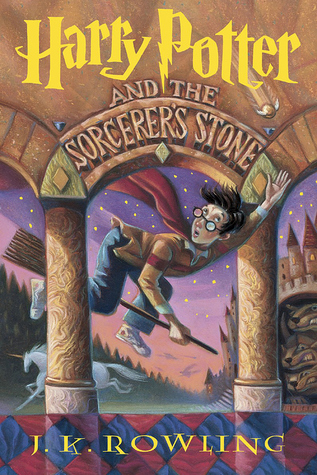
Image result for harry potter and the sorcerer's stone goodreads1. Harry Potter and the Sorceror's Stone, J. K. Rowling
My Dad was a prodigious nighttime reader, when it came to my sister and I. It's how all three of us first read the first two Harry Potter books: together. I can still remember when my younger sister and I shared a room, the two of us tucked under our matching bedspreads while my Dad read to us. Most notably, he pronounced the name "Hermione" disastrously wrong, but we wouldn't figure that out until the story hit the big screen.

2. The Phantom Tollbooth, Norton Juster
This children's classic will always and forever remind me of my Dad, because he might just be its greatest champion. Not only is this another from among the bedtime reading collection, but something he felt so strongly about, that each of us kids has our own collectible hardcover copy to fill out our own libraries. It has a full cast of characters taking part in the action, and for each one, my Dad gave it a voice in such a memorable way, that that's probably how I'll read them forever.

Image result for trickster's choice goodreads3. Trickster's Choice (Trickster duology), Tamora Pierce
This is exactly what I mean, when I said that Tamora Pierce's books remind me of summer. Older fans might sigh, because I read all of her works completely out of order... starting with the Trickster series, the summer after the 8th grade, while I was on vacation in Oregon. I had never read Fantasy like this before, and could frequently be found tucked up in the hammock swinging outside of our cabin, soaking up the words in every bit of sunlight I could find.

4. First Test (Protector of the Small series), Tamora Pierce 
Immediately after finishing the two Trickster books on that vacation, I needed more. Hence, why I could frequently be found reading Keladry's books underneath my desk in Geometry class, once I'd made my way to freshman year of high school. Thankfully, I had a fairly understanding desk partner, who would always make sure I was paying attention when it was important.

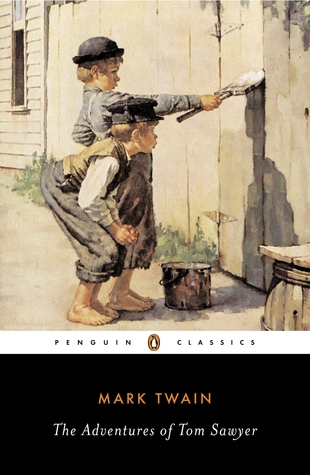
Image result for adventures of tom sawyer goodreads5. The Adventures of Tom Sawyer, Mark Twain
The classic answer for bookish memory-related questions will always be this one, because of how much there is to pull from: I've read this book every summer since I was about 8 years old, and there are so many experiences that run flush with what I remember of that particular season growing up. From sitting in Summer School quiet-time every afternoon in elementary, to laying outside by the kiddy pool with our nanny, Lindsay, to reading it while curled up in my bed, under the shade of a gloomy Washington June, there are just about as many memories associated with this book, as there are stains on the inner covers, or tears along its spine.

6. Wuthering Heights, Emily Bronte
The first of the two assigned summer reading memories I've mentioned, Wuthering Heights is notable for two reasons: I absolutely hated reading this book, and I finished both it, and the corresponding course material, within three days while on vacation in Sunriver, only days before my Junior year of high school would start. Frantically filling in notes sections on my Word document, and trying to skim over whole pages, only to realize I missed something and had to go back... this novel was an absolute nightmare, compared to the sunny weather I was watching outside.
Image result for into the wild
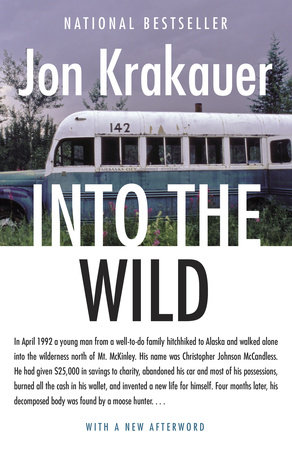
7. Into the Wild, Jon Krakauer
Yet another summer reading gig, but the one from the year before, when I actually was prodded by my mother into finishing the assignment ahead of time. In my tween-and-teen bedroom, one I no longer shared with my sister, I had a large set of bay windows that faced the afternoon sun, and a desk turned against it, so by the time we hit July, I was roasting with the sun at my back when I tried to work... so most of this book was consumed, while sitting on the white carpeted floor, away from the sun's gaze.

8. The Big Book of Pasta: Your Complete Guide to Cooking Perfect Pasta Every Time
This serves as a stand-in for every other book I read while puttering around the kitchen, opening cabinets and stacking ingredients, while making sure not to accidentally move the page as I move around. I cook for my family quite frequently, but due to the rise of Pinterest (all hail), that usually takes the form of me peeking at my computer screen now, than it does the pages of a book (all of which are usually library copies). This one, however, is the counterpoint, as evidenced by its numerous tomato stains, and the battered spine, broken to the exact page for my sister's favorite Spaghetti Bolognese.


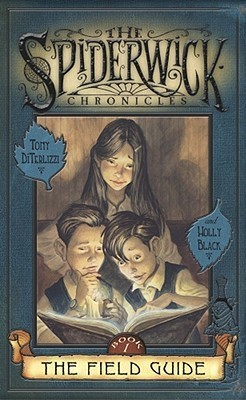
Image result for the spiderwick chronicles goodreads9. The Spiderwick Chronicles, Holly Black and Tony DiTerlizzi 
Funny enough, I can't remember the first time I read this batch of small, hardcover books, about children who discover the magical (and dangerous) creatures living around the forest-bound house that their uncle lived in. However, I do remember the second: sitting in quietest part of the school library, enjoying my last chance to read books before Thanksgiving Break, when they'd be doing an inventory of all the books that needed to be retired.

10. Pride and Prejudice, Jane Austen
Yet another repeat read that comes with a whole host of various memories to pull from, the most notable part of this book, for me, was that we read it in my senior year of high school. While that year was one of the most significant of all of mine so far, for a few very important reasons, my English class that year was a star standout. I can strongly remember reading this book for the first time, during class itself, as our teacher had us read various parts out loud to the class, but I sped ahead. Thankfully, I had friends there to nudge me when it was my time to read... especially when our teacher selected me to playact as Lizzie during the first proposal scene (I crushed it, in case you were wondering).


What's in your Top Ten? Let me know, in the comments below!
Friday, July 3, 2015

Bookish Grumblings : Classics Classism


 "'Classic' - a book which people praise and don't read."    --  Mark Twain, prolific author and humorist; "the Founder of American Literature," according to William Faulkner


I'm sure a lot of collegiate book bloggers would agree, there's a bit of a divide between the kinds of work we read for class, and the novels we read for pleasure. (Think less of a sidewalk crack, and more of the Grand Canyon.)

While it's true there are occasional classes offered here in Seattle at UW, which explore the broader cultural significance of Twilight and Harry Potter, or briefly delve into the Elvish languages of Tolkien, the facts of the matter are, there isn't a whole lot of YA, or science fiction and fantasy, populating the reading lists of most of my classes.

I don't need to tell you about the attitudes most of my professors express for current fiction, either. I once had a (otherwise awesome) prof. express an absolute incredulity about the popularity of the works of Jane Austen, because he didn't believe she was a strong enough author... imagine what he would have to say about Meg Cabot! 


"Do not suppose, however, that I intend to urge a diet of classics on anybody. I have seen such diets at work. I have known people who have read all, or almost all, the guaranteed Hundred Best Books. God save us from reading nothing but the best."  -- Robertson Davies, Canadian author, poet, novelist, playwright, and founding Master of Massey College (associated with the University of Toronto)


Reading classics is great... it's awesome that you've taken part in this wider dialogue, where scholars the world over have had the chance to pore over these texts, and you're always going to have a title in common with people. You're the one who will astound at dinner parties, with your detailed theories about works that have been under discussion for over one hundred years, and you'll always have a title up on the next person you meet... or at least almost always.

But you're missing out!

Reading YA and contemporary releases are awesome, too. You get more recent examples of developing narratives, and the works you read fit in better with the worldview of modern times. Your books are quick, entertaining for their length, and are widely accessible with a ton of people. You also get to surf the wave of hype, and get excited about new works from favorite authors, without the pesky classics problem of them usually being long-dead.

But you're missing out, too!


"I'm a big believer in pairing classics with contemporary literature, so students have the opportunity to see that literature is not a cold dead thing that happened once, but instead a vibrant mode of storytelling that's been with us for a long time - and will be with us, I hope, for a long time to come."    -- John Green, author of popular YA standalone novels, such as The Fault in Our Stars 


There is nothing to gain from reading the same kinds of books all the time. It's one thing to have a certain taste for reading, but it's quite another to firmly ensconce yourself in only one shelf in the library.

Variation breeds innovation... new ideas and ways of looking at things can come from reading new material. New perspectives bring new vocabularies bring reflections of cultures and lifestyles that wouldn't be covered in works you find in other sections of the Dewey Decimal System, but have found their place in the pantheon of all fiction safely between two typewritten lines!

Pick up a different set of reading glasses for a change, and that goes for both those who revel in the long-lauded tomes of the Classics, or shiny new paperbacks of recent releases and popular fiction. Chances are, you might find something you've been missing.

"I get letters from college kids who have read Percy Jackson when they were younger who tell me, 'I just passed my Classics exam.' The books are accurate enough that they can serve as a gateway to Homer and Virgil."   -- Rick Riordan, author of middle-grade Percy Jackson series, involving Greek and Roman mythology


What do you think: have you had enough of the Classics? Or is the problem that you just can't get enough? Let me know, in the comments below!  

Wednesday, June 3, 2015

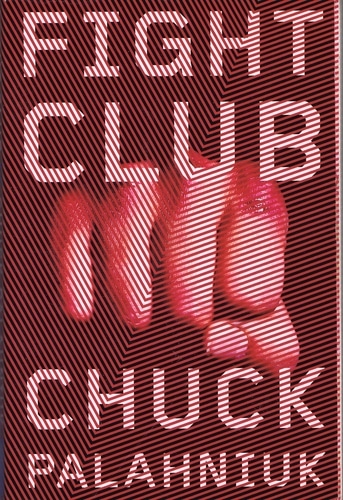
Review: Fight Club

It's like a car accident... an absolutely horrific, brutal reminder of your own mortal state, but there's no way you could think of looking away. Here's why this iconic novel made its way onto my TBR for 2015.

Fight Club, by Chuck Palahniuk, follows the story of a generic worker bee narrator, as he falls under the sway of Tyler Durden, a charismatic and damaged young man with a plan for the future, and a new kind of club, holding secret boxing matches in the basements of bars. This direct violence gives way to greater machinations of destruction, spiraling outwards until it effects way more than just some beat-up guys after work. Soon, our narrator is forced to confront the question, who is Tyler Durden, anyways? 

This prose was fantastic... I'm such a sucker for the stream of consciousness style, and this is probably one of the best examples I could draw from what I've read in recent years of it being really well-done. And the characterizations of every player in it was incredibly unique, too. I don't know if I've ever seen that many incredibly flawed, damaged and dangerous people gathered into one motley crew of a cast before.

To be honest, the first thing I did after I finished it was text my Dad, which just kind of seemed like the appropriate thing to do. Like, everyone's got to read Fight Club at some point? There are a couple of girls in my sorority, particularly my friend Taylor, who've been hounding me to read this guy's work basically since we found out we both like reading... isn't this some kind of social touchstone or something, regardless of age, gender, etc.?

The problem was, there were parts of it that were a little too gendered-out for me to fully appreciate the work as a whole. A part of those texts to my Dad, simply as a knee-jerk reaction to turning the last page of the paperback, was "This is why idiot suburban emo boys threaten to blow up their high schools." For the most part, it came off of as a big round of chest-beating, caveman chanting, which, yes, I get was a part of its satirical bent. Chances are, if something's being blown out of proportion, it's satire, but that didn't make it any less uncomfortable. I just couldn't take the testosterone... and you'd think that people who wanted anarchy so badly would have stopped making up so many damn rules.

It's definitely a novel of juxtapositions. There's all this despicable violence and grime and grit to it, so that you know you should turn away, but that's also what makes it so enthralling and un-put-down-able. Its violent take down of "special snowflake" ideology is brutally anti-individualistic, but almost every Tumblr kid I can think of has read, and loved, it, too. There's a fierce struggle in both the novel and its audience, brilliantly assimilated into the characterizations of its two male leads (*wink wink, nudge nudge*). So it's really no surprise that I'm so torn.

Final Verdict: At the very least, Fight Club should be required reading, because of its impeccable craftsmanship. Any additional ideas about its ideology you formulate yourself, you can go over with your therapist.

Tuesday, December 23, 2014

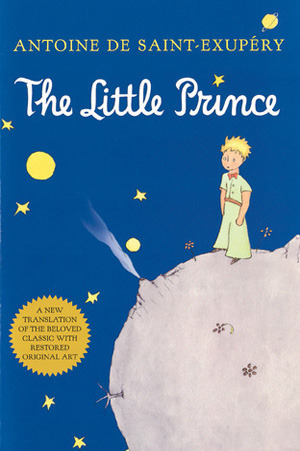
College Fashion Link Up: The Little Prince

The very first book my mother insisted I had to cover for my "Looks from Books" column, as soon as I had been informed of my position writing for College Fashion back in November 2012, was The Little Prince, by Antoine de Saint-Exupery. 

However, it's taken til the second-to-last post of 2014 to actually cover the classic source material for an upcoming big-screen adaptation, whose trailer was released just earlier this month, to international excitement. While the French version of the teaser is the only one available right now, I knew it was going to be making waves worldwide, and quickly got to work on translating it to some cool fashion looks. 

I hadn't read the book in a while, but it wasn't long before the whimsical philosophies and heart-touching truths covered by the short novel were zooming around in my head once again. If the movie does the book any justice at all - which it looks like it's going to - I'm going to be walking into that theater next year with a whole box of Kleenex shoved under my arm. 

But I don't need to tell y'all any of that. In fact, being that it remains one of the most-printed books worldwide, chances are you've already read it... and are probably as excited about the adaptation as I am. 

Here's my favorite look from the article, based around two of the novel's most interesting characters: the pilot who narrates the story, as well as the snake who brings about its climax. 


Thursday, July 17, 2014

College Fashion Link Up: Nancy Drew


Junior Year of High School, I wrote a research paper for my AP English class, about "Nancy Drew and Her Ties to Female Empowerment in the '30s and '60s." The assignment called for six pages of size 12 font, regular-margins typewritten exposition. My teacher, Mrs. Wyma, commended me on my work in front of the class, being that she loved Nancy Drew as well as I did. What she didn't remark upon, was how when I turned the paper in, I had paper-clipped to the back a second copy... this one twelve pages, with "My Best Work" written across the top in red pen.

I can call to mind the details of where I was and what I thought on the day I received my first Nancy Drews: we were in the dining room, I was sitting on the ground in front of the couches that were laid out parallel to our large front windows, and all I could look at were the large rectangular presents that I couldn't wait to tear apart. However, when I did, I was surprised: stack upon stack of shrink-wrapped yellow covers, all with an unfamiliar name - Nancy Drew - stamped across the tops of the spines. I remember feeling ambivalent at the time, but my mother and three aunts wouldn't stop cooing over my new collection.

I elected to stay in from recess at the Montessori school my sister, The Cheerleader, and I attended, to read on a daily basis, so that was nothing unusual; I just curled up on one of the mats in the corner and read. However, the day I brought in my first Nancy Drew was different: my reading was interrupted. Every time I saw an adult headed towards me, I groaned inwardly, knowing I would have to listen quietly while they talked to me about how much they loved the books I was, well, trying to read.

I remember just this past year, when my mother and I were attending the Bi-Annual Puyallup Antique Show at the Fairgrounds, and walking up to my favorite vintage bookseller's stand, I see the most heart-breaking sight ever: a middle-aged man, placing that distinctive cover of my much-sought-after, precious 1930s copy of The Secret of the Old Clock into his tote bag. If I had been five minutes earlier, I would have got it.

What I'm hoping to impress upon you, was not just how much I love Nancy Drew, but how much she has affected my life and the way I read, in general. It's because of Nancy that I'm obsessed with collecting Agatha Christie novels, and why I pressured my Dad to help fund the Veronica Mars Kickstarter campaign (we saw the movie in our matching tee shirts). I DVR the '70s television show whenever its on some flashback channel, even though it isn't very good; the 2007 version is continually downloaded to my iPod, even though that wasn't great either. It's just because it's Nancy. 

(And because it's kind of what I do, as if you needed another reason to click over, here's my favorite outfit from the post, oriented around updating old sleuthing favorites!) 

Thursday, July 3, 2014

College Fashion Post Link Up: Anne of Green Gables

I've already displayed some of my mother's more agonizing habits in recent posts - like her distaste for one particular book of my choosing, with The Devil in the White City - but don't let me lull you into thinking that her displeasure is strictly reserved for the scandalous. She has a pretty sharp disregard for what you'd assume would be innocent and innocuous things as well, like Micheal Cera. And, as it was recently revealed to me, L.M. Montgomery's childhood classic, Anne of Green Gables. 

Her argument lies in the declaration that Anne is too saccharine and chirpy for her tastes; however, despite the fact that I was raised to dislike the main character, I somehow found the book - and its sequels - in my possession when I looked among the family bookshelves, and after more than one request from CF readers, I figured, why not actually see if it's as bad as she says?

All in all, I found myself to be pleasantly surprised.

Perhaps I'm a bit of a sucker for the whole "moralistic pastoral children's stories with strong heroines thing" - that's totally a thing, right? It's totally a thing - but I really enjoyed it. I loved the setting of Avonlea, and I wished I grew up with a friend like Diana Barry, and yes, even Anne, came off as a very smart and capable girl (once she finally stopped talking). I actually plan on reading her further adventures once I've quite recovered from these recent ones.

And, you know, the fact that the novels were Duchess of Cambridge Kate Middleton's favorites growing up, that didn't sway my opinion by any means.

Check out my favorite outfit, inspired by Anne's affinity for flowers, as well as plenty more floral and fun summer looks in my latest College Fashion "Looks from Books" article!


Friday, January 3, 2014

College Fashion Post Link Up: Jane Austen's Emma

I, like quite a few of the bookish folk of the Internet, was enamored with last year's YouTube breakout webseries, the hit show that modernized the quintessential British novel in a way I have never seen done so successfully before, The Lizzie Bennet Diaries. The show followed the titular Bennet sister through 100 webisodes of the humor, drama, and miscommunication that we've come to expect from the old-but-never-antiquated tale of Pride and Prejudice.

Therefore, when I heard that Bernie Su, Hank Green, and the rest of Pemberley Digital were making another long-term series this year - after the not-as-interesting sojourn to Sanditon this past summer - I was primed and ready to fall in love with Miss Emma Woodhouse even more than the first time I watched Clueless (her name was Cher Horowitz then, but still, you know that was an adaptation, right?). Emma Approved did not disappoint in the slightest, and I'm already loving the new interpretations of old characters, as well as the fact that Emma's cheerfully domineering attitude perfectly translates to the life of a lifestyle blogger. I'd just manages to reach full-on obsession status with the show... when, after it's 24th episode in, it decided to go on hiatus for the month of January!

Not to be left alone with my feelings, of course, I grabbed my copy of Emma, and set about a send-up to the story in a College Fashion article, which, like I said yesterday, premiered on the very first of the year.

In fact, today, a year ago, was the day my very first article as a contributing editor premiered on the site... what an anniversary! This year, in my opinion, has made me a stronger writer and a more discerning reader, and has given me a better sartorial eye and a thicker skin (criticism has never been a medicine I've particularly enjoyed taking). I'm so happy to have written for such a great website for a full year, and I'm excited to do it again in 2014.

To celebrate, here's one of my favorite outfits from the Emma post: inspired by the verve, wit, and spunk of the titular heroine!

Wednesday, October 9, 2013

College Fashion Post Link Up: Wuthering Heights (Plus, a new feature: "Plot Playlists"!)

I'm fully expecting people to groan on sight of the book cover in the corner to my left: for a novel I've always professed to be my least favorite book in the entire world, I sure talk about it a lot, don't I? 

I mean, even over the summer, I was talking about how much I loved April Lindner's killer modern adaptation of the classic work, and just some of what I said about Emily Bronte's 19th century masterpiece in my introduction included that its two main characters were "two of the most despicable fictional characters of all time, who do nothing but mess up life for other people, and are wholly undeserving of true love." (And no, I still don't think that's too harsh. They still suck.) 

However, what I didn't expect was for my sister, The Cheerleader, to completely fall in love with the novel, during a summer reading assignment. And I didn't expect to have to read it for my new favorite class - English 333, The Nineteenth Century English Novel - this fall quarter, either. So, I'm now finding that, I'm gradually becoming an expert in what is still my least favorite book... or at least, I think it's still my least favorite.

Who knows. What I do know; however, is that I'm good enough at discussing its contents, that I decided to base my latest College Fashion "Looks from Books" post around it. So, hop on over to it, and judge for yourself, as to whether I let my bias impact some of those looks! Here's a sneak peek, of an outfit based around the questionable societal status of the "gentry" during the mid 1800s:
But enough about me. Since my sister enjoyed the novel so much, I asked her if she'd like to help me develop a new feature for Playing in the Pages, called "Plot Playlists": Utilizing themes, events, and overall tone of various novels, she - one of my favorite people to follow on 8Tracks, due to her seriously choice taste in music - would assist in putting together a playlist of ten songs that we felt fit perfectly to the work. And what she came up with for Wuthering Heights completely blew my mind! Let's have her tell her thoughts... 
***

When it comes to reading, everyone has their different habits. If you’re anything like me you like to accompany a book with the faint chirp of music in the background. But what music you chose to listen to can make a big difference.

Before I started making playlists I would put whatever music came to mind on when I would read. When I read the entire Hunger Games trilogy in one week, I listened to Passion Pit non-stop, not because they went well together, but because I had just purchased the CD a week earlier. This choice led me to create a connection between the two. Whenever I hear Passion Pit I think of the Hunger Games trilogy and whenever I watch the movie or re-read the books, I can’t help but wonder why I’m not hearing Passion Pit in the background.

This moment in my life has led me to the conclusion that every book, classic or modern, deserves a soundtrack to listen to while reading the book, or to bring back the emotions and story that occur in between the pages.

To start off the new "Plot Playlist" feature on Playing in the Pages, I made one for the classic novel by Emily Bronte, Wuthering Heights, called "Among the Heath and Hare-bells." While not all the songs are from the same genre of music, they all are similar in sound, with each being more dark and mellow with the theme of romance and struggle.

The playlist also includes specific songs that I believe tie in well with certain characters or scenes from the book. Here are some of my favorites: 
1)      “Hurt” by Jonny Cash, represents Hindley Earnshaw, and his struggle with alcoholism. Pushing his way through life, Hindley only appeared to have a sliver of happiness, in his wife. However, their love was short lived and with her life went his will to live, leading him to drink and hurt himself and those around him.
2)      “Blow (Deconstructed)” by Ke$ha, plays to go along with Catherine Earnshaw’s mental breakdown when she can’t find Heathcliff. With a storm raging in the background, Catherine panics, unaware that Heathcliff is safe inside, hidden. The raw, un-autotuned remix of Ke$ha’s song mimic’s the raw fear Catherine feels having lost her friend and the love she feels for Heathcliff.
3)      “Do I Wanna Know?” by Arctic Monkeys, was added to fit with the scene where Catherine is dying and Heathcliff breaks into Thrushcross Grange to see her. Their passionate embrace and heated words towards each other match the passionate, yet sinister vibe of this mellow rock song.
4)      “Bella’s Lullaby” from the Twilight soundtrack is not in there because it fits with a specific event or character of the novel per say; however, I felt the need to give a little shout-out to Twilight’s movie soundtrack, since Wuthering Heights was Bella’s favorite book, and I feel like it appropriately captures the Gothic tone of the novel. 

While these are just a few examples of the connections I made between the book and songs, the other songs have their meanings to me as well, but instead of me sharing mine with you, why don’t you take a listen andmake your own connections and comparisons? Enjoy!
***
So, what do you think of my College Fashion post on Wuthering Heights? And what do you think of my sister's amazing "Among the Heath and Hare-bells" playlist? Do you think my feelings for this novel will ever change? Let us know! 

Wednesday, August 14, 2013

College Fashion Link-Up: Rambling Man

Summer is winding down, and there's no better time than the heat of August for a great summer road trip. I should know; at this time, two years ago, I was scouting out Eastern Washington's colleges, and at this very moment, several members of my family are holed up at a hotel in SoCal, deciding whether my sister, The Cheerleader, could make it a home. (My guess is yes, being that they bisected the straight line traveling between universities with quick trips to Universal Studios and the Winchester Mystery House. I don't think her heart's ever going to leave the state now.)

Then again, while I may be enjoying the time I have left in my beloved Tacoma, I can still take this mental vacation, courtesy of Jack Kerouac, with On the Road.

The story follows the young recent divorcee Sam Paradise, through his cross-country adventures, and his relationship with the hedonistic and un-anchorable Dean Moriarty. Based off of the true 1940s travels of Kerouac and his fellow Beat man, Neal Cassady, the tale was written on a single continuous scroll of typewriter paper in 1951, and is lauded for its lyricism and jazz style, as well as being a manifesto of sorts for the rebellion and exploration of the Beat generation, of which Kerouac became the official mascot when it was published in 1957.

I'm not one to dwell much on the romantic ramblings of quintessential rebellious, moody American Manhood (Here's to spitting in your eye, Ernest Hemingway, the unofficial drunk uncle of this type of literature). The constant sexism masquerading as a lover's temperament was degrading and dulled the first half or so of the book, as well as all of Dean's relationships, and the racial romanticism and ill-depiction of the ethnic representation in the book was stereotypical and served little purpose. This all being said... this was a young guy, an aspiring writer, in a time where behaviors and themes like these were en vogue. Of course he was going to be an overly macho, woman-using, racially insensitive, over-thinking pavement chaser and un-tethered philosophist. This was, after all, the era of the Beats.

I was fully enraptured in, while not what he was saying, the way he was saying it. If you are ever misguided enough to ask me what my favorite style of writing is, I'm always going to say the flighty, floaty dreaminess, yet deeply mentally-focused practice of "Stream of Consciousness" style. While Kerouac was not really a "SoC" writer, he was definitely not one to be confined by typical writing practices of punctuation and grammar. It was as if the fact that he wrote the entire book in three weeks on a constant coffee drip (true story), had granted him enlightenment, in some fashion, and his every word was escaping off the page with his ascent into nirvana. It was, honestly, glorious, and I loved it.

I was so inspired by the prose - the sentences that stretched on like sections of roadway, the paragraphs that lasted as long as road construction in Washington and made just as much sense - that I ended up using the novel for my most-recent article on College Fashion. I even mixed in some of my favorite lines from the novel, as well! While you'll have to follow the link to see it yourself, here's a sneak preview at one of my favorite looks from the piece, involving the personal philosophies of the Beat boys of Kerouac's generation:

Pretty cute, huh? Unfortunately, I won't give away the thought process behind the outfit; you'll have to journey over to my "Looks from Books: On the Road" article yourself to read it. 

While I didn't necessarily love the narrator, or what he had to say, I really appreciated the structure - or is it more like mis-structure? - cadence and pacing of Kerouac's rambling tale, and that's enough for me. Fans of interesting and unique writing styles - as well as philosophical journeys towards what is youth, progress, love, and dependency - this book is a must. Best take it for a spin before school starts, and enjoy it in the remnants of the summer sun. 

Monday, August 5, 2013

Top Ten Tuesday: Books and Their Sequels

"Top Ten Tuesdays" is a weekly countdown meme, hosted by the Broke and the Bookish!

I don't think this topic needs much of an introduction: despite the fact that I much prefer stand-alone novels for their solidity and literary clout, sometimes, you just want to spend a little more time in a wonderful world with wonderful characters.

(Or, just to see how much more havoc might be wrought: what would happen after the funerals in Shakespeare's Romeo and Juliet? Would Montague and Capulet ever re-kindle their hatred-between-houses? Would the Prince ever get a handle on his city? And what of Rosaline? I've got to know!) 

Regardless, here are some of my favorite books, and their status with sequels these days. 

Books That Have Sort-of Passable Sequel Stand-Ins

1. Pride and Prejudice, by Jane Austen
Sequel: Death Comes to Pemberley, P.D. James
A mystery surrounding the inhabitants of Pemberley at the time of a party, and the description on Goodreads mentions the presumed murder of George Wickham (come on, don't tell me the last half of that sentence doesn't make you smile). And now, the BBC liked it so much, it's becoming a miniseries. 

2. Jane Eyre, by Charlotte Bronte
Sequel: Jane, April Lindner
It's a modern retelling, sure, but that doesn't mean you can't learn something new the second time round with a new perspective on things. 

3. Wuthering Heights, by Emily Bronte 
Sequel: Catherine, April Lindner
Ditto to #2. I swear, April Lindner works magic, and I'm not joking. Read my very recent review here

4. Beastly, by Alex Flinn
Sequel(s): rest of Alex Flinn's modernized fairy tales
Alex Flinn has a very specific approach to the tweaking and twisting of classic and iconic fairy tales to fit into the life of the average teen, and her magic touch extends to some perfectly sparked YA romance, as well. I'm okay with less of Beastly, if I get things like A Kiss in Time or Towering... for now. 

5. Peter Pan, by J.M. Barrie
Sequel(s): Peter and the Starcatchers series, Dave Barry and Ridley Pearson
This book series is already beloved, including by the fifth grade version of me, as well as fans of the Broadway stage. Therefore, while they could never compare fully to the original's iconic and emotional nature, they satiate our need for Neverland in current forms of entertainment. 

Books That Don't Have Sequels and Never Will, and That's a Real Shame


6. Poison, by Bridget Zinn
Why Not? Zinn, tragically, died from cancer before her book was even published. She never got the chance to see firsthand what sort of an effect her novel had on fans, but at least her family knew that her talent was appreciated. So, despite the fact that her book was so immediately embraced, there cannot be a sequel. 

7. To Kill a Mockingbird, by Harper Lee
Why Not? The Pulitzer Prize winner had originally planned to follow up her instantly classic novel with another, involving a mystery and a murder trial, but she never did. Critics guess that it may be that she knew she could never reach the fame TKaM did, but still, decades later, fans wish that we knew the woman Scout grew up to be. 

8. The Witch of Blackbird Pond, by Elizabeth George Speare
Why Not? First of all, do not mock me for still being hung up on a book I read in the eighth grade for English class. While there is not a shortage of spunky, spirited, ethically-minded young women in YA today, there are no books about "witches" nowadays that fill the bill left by an amazing portrayal of an ill-fought witch hunt without any actual magic occurring in it. Where are Kit and Nat now? Unfortunately, this book was published in 1957, and the author has since passed away. 

9. The Secret Garden, by Francis Hodgson Burnett
Why Not? There was a flawed 2000 movie (capitalizing on the 1993 successful adaptation of the original novel) called Return to the Secret Garden, starring a young Camilla Belle, but that doesn't count. At all. AT ALL. Does anyone other than me wonder what happened to the likes of Mary, Colin, and Dickon? And what happened to that glorious garden? 

10. The Great Gatsby, by F. Scott Fitzgerald
Why Not? Shut up, shut up, SHUT UP, you naysayers: Yes, I fully understand that he was the voice of the Jazz Age, that he perfectly captured the end of the American Dream before the Roaring '20s crashed with a whimper into the Great Depression... but the man died in 1940! What would it have been like, to hear the voice of Nick Carraway speaking through his masterfully-crafted words again, as the nation experienced success after hard times, with the economic uplift in WWII? After speaking so eloquently and famously about the downfall of American excess, what about the success of America's rallying cry? Instead of fighting the demons within ourselves, clamoring for "more, more, more," we're also fighting the demons we see across the ocean, similarly on the warpath for power and conquest! Am I the only one who thinks that sounds cool? 

What are your feelings about books and their sequels?

Wednesday, July 31, 2013

Daring the Heights

It is no secret to anyone that the book I like the absolute least in the entire world is Wuthering Heights, by Emily Bronte (sister to the author of one of my favorite books in the entire world, Jane Eyre, by Charlotte Bronte). Catherine Earnshaw and Heathcliff are two of the most despicable fictional characters of all time, who do nothing but mess up life for other people, and are wholly undeserving of true love. The only redeeming quality I see in the book is the fact that it is beautifully written; unfortunately, the story itself is awful enough to steer me away from the book entirely.

However, it is equally no secret that I absolutely loved April Lindner's Jane, a modern, young-adult adaptation of Jane Eyre.

When she released Catherine earlier this year - styled around Wuthering Heights' own Catherine, and recreating the tragic love story of Catherine, Heathcliff, and all of those innocent bystanders in the vicinity of their love whose lives get thrown into utter turmoil because those two specific people happen to suck THAT much - I was thrown into a quandary.

Fortunately for me, my loyalty to awesome new authors far outranks my distaste for those who died in the 19th century, and I took a chance on what turned out to be a really fabulous retelling. Therefore, April Lindner's Catherine, which transplanted Bronte into the wilds of the East Coast and her epic-ly awful love story into a battle in rock 'n' roll history, was officially on my TBR list (And, thankfully, on the YA shelves at our local library).

In case you haven't read the original, the lead romantic characters in Wuthering Heights, are, while undeniably iconic and usually unbelievably dubbed among the greatest romantic duos of all time, awful. In Catherine, they are not only made more human, but even moderately likeable, if not a little less selfish and stupid, and a little more worthy of my sympathy (in a "kicked puppy that grew up to be a vicious Chihuahua that bites the fingers of children that try to pet it" way).

Transition from classic-to-modern novel had a few more gaps and glaring dissimilarities than in Jane, but overall, I feel that the task was accomplished quite well: from the moors to NYC, from Wuthering Heights to  The Underground, from a brooding estate manager to a tortured nightclub owner, etc.

It is fast-paced, and its characters jump to conclusions that I'm not even sure that Evil Knievel would make, but if you already have a mental map left over from having read Wuthering Heights (like The Cheerleader did, for summer homework, lol), it's easy to orient yourself within the change of chronological description: the novel completely ousts Mr. Lockwood as narrator, and instead, utilizes Catherine's diary and the first-person narration of her daughter, clarifyingly-named Chelsea - instead of Less-Evil Catherine or Catherine 2.0 - to move the story. This allowed for me to connect to the two characters a bit more as well, as you are forced to sympathize with the storyteller, and I think that was probably the best change between the old and the new.

Chelsea, in particular, was impetuous and audacious, and her stubborn unwillingness to compromise what she loved for anyone perfectly mirrored the same qualities in her mother. Even though descriptions of both characters were few and far between (for starters, I'm still not entirely sure what they look like, because I certainly didn't picture the power-stanced girl on the cover), you could still see similarities in their attitudes, which I loved.

However, in the end, I don't think that the classic itself made the cut: the end result resembled less of the tried-and-tired English standby, and more of a new and unique (though still  flawed) young adult novel. We lost things that really bugged me, like the complete inability to relate to the lead characters, but we lost most of the Gothic nature of it all (that being said, there were a couple of creepy elements that I appreciated, but they were a little too brief for my spookiness standards).

Overall, it's a hip and exciting update on the dark-and-dreary classic, that keeps it all modern, while still hanging on to some ghosts, in more ways than one.

Monday, July 29, 2013

Top Ten Tuesday: Best Opening Lines of Books

"Top Ten Tuesdays" is a weekly countdown meme, hosted by the Broke and the Bookish!

There's nothing quite like a good book that can grab you, not by intriguing cover art or involving inner cover, but by a killer first line. If you've got a novel that hooks you like a fish within the open sea of an introductory sentence, you've most likely got a winner. Here are some of my favorite starts to some of my favorite books! 

1. "It was a dark and stormy night." A Wrinkle in Time, Madeleine L'Engle 
When you're ten, you have no idea what is lurking in the dark outside your window, and as I read along with Meg, I knew just how she felt, because I knew what kinds of things usually happened on "dark and stormy" nights... but what followed was something neither of us expected. 

2. "It is a truth universally acknowledged, that a single man in possession of a good fortune must be in want of a wife." Pride and Prejudice, Jane Austen. 
Perfectly cadenced and ringing of old country wisdom straight from a domineering mother of five eligible  young Regency-era women, this might be my vote for most perfect classic opening. If it weren't for...

3. "All happy families are alike; each unhappy family is unhappy in its own way." Anna Karenina, Leo Tolstoy. 
How much truth can ring in one sentence, how much can be hinted at the convoluted inter-workings of family dynamics, and how well can you encompass the work as a whole, with fourteen simple words? Well played, Tolstoy. 

4. "Marley was dead: to begin with." A Christmas Carol, Charles Dickens. 
And what a beginning it is. 

5. "I write this sitting in the kitchen sink." I Capture the Castle, Dodie Smith. 
I used to write in my journal sitting in my parent's bathtub (but that had more to do with Kyle XY than convenience or comfort). Still, I feel ya, girl. 

6. "Mr. and Mrs. Dursley of number four, Privet Drive, were proud to say that they were perfectly normal, thank you very much." Harry Potter and the Sorceror's Stone, J. K. Rowling.
Here it is: two of the most-hated children's literary characters in the world, who perfectly open up one of the most prolific book series in the entire world. Of course, we all came to know that the Dursley household was, by far, much less normal than they would like to be, but that was all the reason why there was a story to tell in the first place. 

7. "This is my favorite book in all the world, though I have never read it." The Princess Bride, William Goldman. 
This book is so confusing and silly and unexpected, and so is this line. 

8. "If you are interested in happy endings, you would be better off reading some other book. In this book, not only is there no happy ending, there is no happy beginning and very few happy things in the middle." The Series of Unfortunate Events, Lemony Snicket. 
And yet, this series gave all of us kids such joy, thus bringing us the first mass marketing technique of "schadenfreude for children" (Just kidding. The joy came from seeing the insurmountable obstacles in front of the Baudelaires, and watching as they kept almost-triumphing and trying-again, until the thirteenth book. We didn't rejoice in their sadness; we shared in their optimism and perseverance. We knew they could do it). 

9. "The sun sets in the west (just about everyone knows that), but Sunset Towers faced east. Strange!" The Westing Game, Ellen Raskin. 
The best part about this line, is that it not only hints at the enigmatic and surprising qualities of the mystery to-be-solved in this classic children's novel, but that, years later, as you write a blog post about opening lines in novels, and think of this one, you realize that the resolution to the mystery (and the naming of a certain character), had been hinted at from the get-go, with an emphasis on the confusion of major geographical directions. 

10. "There was once a boy named Milo who did not know what to do with himself - not just sometimes, but always." The Phantom Tollbooth, Norton Juster. 
There's already an interest in a book lovingly picked out for you and carefully read, while tucked into bed, by your father, but the only thing that could swallow your attention more, was a line like this, about a little boy, who was kind of like you. 


So, what do you think? What are some of your favorite opening lines? 

Tuesday, May 14, 2013

Top Ten Tuesday: Tough Topics

Top Ten Tuesday is a weekly meme hosted by book blogger (and evident alliteration fanatic) The Broke and the Bookish.

This week's theme deals with books that do their part to give some kind of broader form to some of the most difficult issues to understand. Through these peeks into the world of those falling victim to mental illness, those suffering under oppressive societal conventions like racism, and those trapped in terrifying situations, like war.

These are some of my favorite books dealing with harsh issues and tough topics.

1. The Perks of Being a Wallflower, by Stephen Chbosky. 
This is a wide favorite among many, simply because of its tender tackling of many different social and personal issues that affect many teens, including mental illness, bullying, understanding homosexuality, and feeling alone. It's a great novel, and the movie is pretty good as well.

2. Just Listen, by Sarah Dessen. 
I've seen lots of Sarah Dessen novels making it onto people's lists for today, and I understand why: she is able to deal with a wide range of true-to-teenage-life topics with understanding and subtlety. This book deals with the effects of bullying and sexual assault in the main character, as well as eating disorders in a background character,and is one of the first books I found that I could read, and cry about every single time.

3. Looking for Alaska, by John Green. 
I've also seen loads of John Green today, for similar reasons as to Sarah Dessen: these two just really get how to talk to and about teenagers. I wasn't sure what I was expecting going into this book, but the big tough topics really came like a slap in the face. It's a spoiler, so I won't give reasons.

4. The Bell Jar, by Sylvia Plath. 
I've already discussed this to be one of my favorite books on the whole planet. This is one of my favorite books, not only for the relatable nature of the heroine, but because of Plath's amazing talent, in mirroring the character, Esther's, thoughts and feelings perfectly in the mind of the reader. Dealing with depression, mental illness, and suicide, this is one of the greatest books ever written, in my opinion.

5. The Adventures of Huckleberry Finn, by Mark Twain. 
I'm immensely biased to be on Mark Twain's side in any given situation, due to the fact that he wrote my favorite novel of all time. This book is one of my favorites as well. While widely contested and popularly censored across the United States, this is one of the best examples of Twain's work, and is a vital description of slavery in the South.

6. To Kill a Mockingbird, by Harper Lee. 
Also one of my favorite books, this is yet another moving portrayal of civil rights abuses and injustices against African Americans in the South, set against one young girl's story of simply growing up. (Bonus points to the good folks at King's Books in Downtown Tacoma, who house a friendly cat named Atticus.)

7. The Things They Carried, by Tim O'Brien. 
This book sucks for many, many reasons, very particular to me, but it is a truly horrifying depiction of the war in Vietnam. It was a polarizing book in my senior year English class, because people either loved it for the war, or hated it; either way, it got us talking on another very important issue, especially when it seems like the wars in the Middle East have been going on forever.

8. Escape from Warsaw/ The Silver Sword, by Ian Serraillier. 
Okay, this is a bit of a random choice, it would seem, but actually, this moving portrayal of the flight of a group of siblings from Warsaw after German invasion in WWII, has stuck with me since I first read it in the seventh grade. (Even all of these years later, I still want to name a chicken Jimpy, after a pet rooster in the book.)

9. The Lone Ranger and Tonto Fistfight in Heaven, Sherman Alexie. 
This one was read as a summer assignment for junior year, and it ended up introducing me to one of the most unique voices I've ever read. Sherman Alexie is very good at what he does, which is depict the life of Native Americans in a very gritty and  real way, from varying viewpoints and through roundabout descriptions, so you really have to work to actively understand exactly what people are going through. Truly powerful stuff.

10. Animal Farm, George Orwell. 
I had a really difficult time picking out what my last book would be, simply because there were a lot of contenders for the position, but in the end, I had to go with yet another summer read for school - I think it was sophomore year - depicting the evils of governmental oppression and communism, as palatable for popular consumption. This is a quick read, but a powerful one.

So, those are some of my favorite books dealing with Tough Topics. What are yours? 

Thursday, May 9, 2013

Life in a Castle

So, confession time: I kind of have a thing for castles. Growing up, I was enamored with every fairy tale you could throw at me. In high school, let's just say I went to America's Hogwarts (and it was awesome). And now, my sorority house is shaped like a castle, too. So, let me just preface this all by saying I really, really love castles.

This novel was recommended for a review in the comments section of one of my very first College Fashion articles, and since I already had the book (thanks to last Spring's trip to Powell's City of Books in Portland, OR), I figured, why not? I mean, it's pretty clearly emblazoned on the cover that J.K. Rowling loves this book, so chances were that I'd love it, too. However, to tell you the truth, I wasn't entirely sure of how it was going to impress me.

And it certainly didn't help that I read the entire book within the space of four hours, confined to a stiff-backed chair in an absolutely silent Business Library, while my Big calmly did her Accounting homework in the seat next to me. That kind of self-imposed torture does affect the way you read... and it certainly helped me identify with a certain later event in the plot line involving Mr. Mortmain and the Tower (read it and you'll know what I mean!).

Alright, before I get too ahead of myself, let me just illuminate the story a little bit:

I Capture the Castle is a classic coming-of-age novel in England, set in the 1930s in between the wars, in the countryside a short distance outside of London. There lies the Castle, old and crumbling under mismanagement, within which resides the Mortmain family, living in genteel poverty, on the royalties their father collects from a best-selling novel he wrote over a decade ago. However, because of Mr. Mortmain's inability to publish anything else noteworthy, Cassandra - our seventeen year old writer-novice narrator - and her sister Rose - beautiful, ambitious, and discontented - as well as their brother Thomas, nude-model stepmother Topaz, and their resident farmhand, Stephen, are all forced to come to terms with... well, not much. Until the wealthy, handsome, American Cotton brothers come to claim their late father's estate, of course. It doesn't take long for the Bronte-and-Austen-obsessed sisters to make a plan for wooing the elder brother, Simon, and pretty soon, hilarity, embarrassment, misunderstandings, betrayals, forgiveness, family, and love are detailed across the pages of Cassandra's many journal pages.

All in all, this emotional journey of self-discovery, acceptance, and inspiration left me thinking long after Sara and I left the Library. It invoked a lot of important questions, like, what does it really mean to be beautiful? The differences between the sisters, Rose and Cassandra, were really what impressed me the most, simply because it reminded me a lot of the dynamic between me and my sister, The Cheerleader. The family depicted in the novel is wholly remarkable for their ability to stand by each other, even when everyone is doing different things and all caught up in their own individual problems, like Rose's relationship, and Mr. Mortmain's inability to write. Other members, like Thomas, factored in as a moral and objective viewpoint, while Topaz figured, for the majority as a form of comic relief... but even so, their personalities were formed by more than mere narrative tropes. Multi-faceted and perfectly flawed, the Mortmain family will probably stand as one of my literary favorites for a long time.

The fact that you could see Cassandra's narrative voice changing over time and journals, was pretty amazing, too, and a narrative form that I haven't really seen before. In terms of simply the structure of the writing, the journal format was interesting, in the way that I too have kept a journal for a long time, and I don't think that my hand would ever stand up to the workouts she impressed upon hers in writing so extensively. Still, it factored in both stream-of-consciousness and narrative stylings in a way that proved very engaging and interesting, and I really enjoyed Cassandra's voice.

And the castle in the story is pretty cool, too. :)

Monday, April 15, 2013

Top Ten Tuesdays "Rewind": Top Ten Childhood Favorites!

"Top Ten Tuesdays" is a weekly countdown meme, hosted by the Broke and the Bookish!

This week was a "rewind" - picking past Top Ten lists that we may have missed or wanted to do over - and since I'm new to the game, I decided to go with the first ever Top Ten List, "Childhood Favorites." Being that I am, essentially, always going to be a child at heart, and that some of my playtime favorites remain in heavy rotation on my reading list, the challenge wasn't that difficult.


Here -presented in no particular order - are the books that enraptured my young mind, ensnared my childish soul, and convinced a very shy and very curious young girl what sort of magic awaited those who dared peek between the pages of the well-written world:

1. The Adventures of Tom Sawyer, by Mark Twain
I've already waxed poetic on the many outstanding qualities of this life-changing book here, but I'll never tire of professing my undying devotion for this summertime staple. Here's to ten more of my years with Tom!

2. The Nancy Drew series, by Carolyn Keene
Nancy's the coolest. Anyone who doesn't think so, never hid under the covers late at night with a flashlight, trying her hardest not to wake the sleeping sister in bed beside her with her startled jumps and heaving breaths of suspense. I even ended up writing my Junior year research paper about my favorite intrepid teenage sleuth!

3. The Phantom Tollbooth, by Norton Juster
The book that will always remind me of my Dad, the same man who first read it to me, back when my brain was nowhere near developed enough to recognize the witty wordplay and smart storytelling. I recently reread it, and reviewed it here after being stuck in the doldrums for a little too long this Fall Quarter. (Bonus: A documentary on the amazing work is currently wrapping development after a successful Kickstarter campaign, so look out for The Phantom Tollbooth Turns 50 - A Documentary!)

4. The Moon Jumpers, by Janice May Udry (and illustrated by Maurice Sendak!)
Yet another book that's always going to remind me of my Dad. Never realized it was illustrated by Maurice Sendak, however. (You learn something new everyday!)

5. The Harry Potter series, by J.K. Rowling
Um, duh.

6. Miss Spider's Tea Party, by David Kirk
This book is pretty trippy to look at, but the illustrations were always the most beautiful part! Besides, who doesn't love a great tea party?

7. The Little House on the Prairie series, by Laura Ingalls Wilder
I am nothing if not an avid escapist in my reading, and if there was anything that could ever make a girl want to wear ankle-length prairie dresses and chop firewood, it was this. (All dreams were quickly eliminated with the use of the Oregon Trail video game in middle school, however.) Still, its some amazing work.

8. Sideways Stories from Wayside School, by Louis Sachar
Let's go ahead and blame this book for my love of everything wacky and un-explainable. As well as my suspicion of all things with the number Thirteen, okay?

9. The Percy Jackson series, by Rick Riordan
Okay, this may be stretching the definition of "childhood" favorites, because I was introduced to this series during the sixth grade, when my friends and I traded lunchroom copies like some kind of contraband. They might as well have been: there was not a single Social Studies lesson that went understood when I had one of these copies hidden underneath the table.

10. No Flying in the House, by Betty Brock
This book is the number one reason why I developed such an affinity for old copies: I had somehow gotten my hands on my mom's edition from when she was a kid, originally printed in 1970, complete with her name scrawled in the inside cover, and I don't think I've ever surrendered it since. (Sorry, Mom!)