Showing posts with label Realism. Show all posts

Monday, September 22, 2014

Review: Still Alice (and a Little Bit About Philanthropy)

I am a proud member of Sigma Kappa Sorority here at the University of Washington, and like every other sorority I know of, we spend a good portion of our time and effort during the course of the scholastic year dedicated to pursuing philanthropic projects in our free time. Therefore, when I found a book that would allow me to get a more in-depth look at the disease we raise money all year to fight, I jumped at the chance to pick up a copy. The fact that it was a best-selling novel written by someone lauded by the organization we donate to, was just yet another reason to read Still Alice, by Lisa Genova.

The novel follows the story of professor and cognitive psychologist Alice Howland, as she tackles the terrifying diagnosis of early-onset Alzheimer's disease. Slowly losing her connections to language, her memories, her family, and to reality, Alice must cope with her new form of life by relying on those around her in ways she never anticipated.

Alzheimer's is by no means a rare disease: more than 5 million Americans are currently living with some stage of it, and 1 in 3 seniors dies with Alzheimer's or some other form of dementia. However, it's not necessarily an easy cause to get people motivated for, especially young college women, who might not have any direct connection to it. I don't know how many times I've heard someone say, "think about The Notebook," when trying to get people to think more in-depth about the debilitating effects of Alzheimer's, but I knew there had to be a narrative that tackled the topic more completely than Nicholas Sparks.

That's why I was so excited to find Genova and Still Alice, which was not only produced from a very scientific viewpoint, and is a best-seller, but also is fully endorsed by the Alzheimer's Association as "Recommended Reading." 

Lisa Genova is - incredibly impressively - a neuroscientist, herself, which lends a very interesting veracity to the account (she got her PhD from Harvard!). Something that struck me, in the book, as having been done especially well, was that it lends an interesting perspective to the medical-hospital relationship with patients, as well as explores potential treatments and early detection for the disease without making commitment to the saving properties of these practices. Her attention to the reality of diseases is also notable in her other works, including Left Neglected (about a woman affected by hemispatial neglect following a traumatic head injury) and Love Anthony (about two women and their relationship with a boy named Anthony, who is Autistic), so you know that Genova is not only passionate about the sources of inspiration for her writing, but about portraying them correctly.

I feel like that's one of the reasons why Still Alice is not literature, in the typical sense: it's very dedicated to the disease itself, more than the story around the disease. But at the same time, the fact that it is impeccably well-written from a scientific standpoint makes it more than fiction, by sort of factoring in the affliction itself as a main character, building the story not just around Alice, but Alzheimer's, too. Does that make sense? This is definitely the second time in a row that I'm going to compare a book to The Bell Jar in a review, but the ways that Genova intertwines the narrative of Alice with a first-person experience at the hands of the reader draws you into her reality so completely, makes the disease easily understandable, even for someone who hasn't had a lot of exposure to it.

Obviously, the book is very sad. I've already said it is impressively realistic, and being that in our current reality, the cure for Alzheimer's disease does not exist, Alice is not prescribed a happy ending. However, the novel still ends - if not happily - then hopefully... and that's something that I did appreciate, just because it so mirrors the objective that our philanthropy is searching for. Alzheimer's can't be overcome, it can't be cured, but there are enough people willing to counter it with increased awareness and support that change must be just around the corner. 

And I do mean business when I say "awareness"... that's the reason my sorority sisters came out in full force at 9:30 in the morning this past Saturday for the "Walk to End ALZ" at South Lake Union. It's what Seth Rogen was striving for when he spoke in front of Congress earlier this year.

It's what I'm hoping happens as Still Alice's movie adaptation gains viewership (no for sure release date yet, from what I can see, but with Julianne Moore, Alec Baldwin, Kate Bosworth, and *spirit animal* Kirsten Stewart all part of the production, you can bet it will be headed to theaters near you soon!). And if it's already generating Oscars buzz, then you know it's going to be great.

Still Alice and Lisa Genova gave me more hope, for giving more people a chance to relate to a dangerous and destructive affliction they might not empathize with, but at least now they can understand. Together we can #EndALZ! 


To learn more about the fight to end Alzheimer's, head to Alz.Org! 

Saturday, September 20, 2014

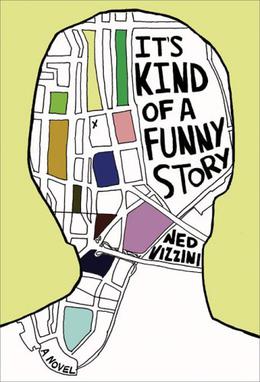
Review: It's Kind of a Funny Story


Earlier this summer, I was discussing the novelistic treatment of depression in YA novels with my two younger sisters, after comments from my friend Brandon about a certain book had me ruminating on whether just the mere presence this serious issue in popular novels was enough to prompt healthy discourse in the community. Those discussions were offset by my enjoyment of this book, which I believe makes a very positive stand for the treatment of the disease. Here's why...

It's Kind of a Funny Story is a contemporary young adult novel written by Ned Vizzini, about a boy named Craig, who, prompted by his increasing inability to eat or sleep, and consideration of a suicide attempt, decides to check himself into a hospital. Whereas he originally envisioned his bright future to consist of a linear path from right school to right college to right job, he finds himself mixing with new friends from all walks of life in his new surroundings, who ultimately help him confront the anxieties that landed him in the hospital in the first place, and construct a healthier life for himself.

To be honest, the narrative arc reminds me a bit of that of The Bell Jar - aka, one of my favorite books in the whole world - but it lacked that transportive nature of Plath's that made that book so special. However, it's not meant to get you into the mindset of a depressed person; it's a little more abstract in its approach, choosing instead to have the reader work through offhand comments or unfinished details to find the meaning behind some of what the main character is doing.

That isn't to say that some of the ways he describes depression aren't as true as Plath's. There were aspects of Craig's narration that directly correlated to real symptoms of the disease, just like The Bell Jar. Which makes a lot of sense, considering that Vizzini's writing, like Plath's, comes from direct experience: the novel is inspired and based around the events and people that he experienced during his own stint in a mental ward of a hospital, and the author himself ultimately committed suicide December 19th, 2013.

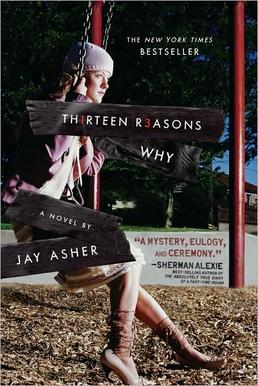
Like I mentioned in the introduction to this post, this book made me think about the many ways depression is portrayed and treated within the scope of Young Adult novels. It's important to discuss, especially due to its growing association with teenagers in the real world as much as the written one; however, the ways that the disease is treated in, say, Thirteen Reasons Why, or The Program, are not necessarily realistic nor helpful.

Thirteen Reasons Why, by Jay Asher, was the book Brandon brought up, which he said depicted depression unrealistically. Actually, I think his exact words were (about the character of the novel who commits suicide, and then leaves tapes for a young man to listen to, explaining her reasoning for the violent end), "She doesn't talk like a depressed person would talk." After conferring with both of my younger sisters, both of whom have read the novel as well, they said that they thought the novel was interesting, but had to agree: the character who is supposedly depressed doesn't express any of the actual symptoms of depression... just anger. Still, that doesn't mean that it might not bring about conversations about the events that led to her death instead, including sexual assault and the way that is handled in schools.


The Program, by Suzanne Young, however, takes a much more potentially damaging approach than simply ascribing the disease a different set of accompanying emotions or motivations, but instead, casting depression as a worldwide epidemic specifically targeting young people, leading to attempts by the government to wipe out the disease through forced amnesia on its sufferers. Instead of displaying depression as a very real problem, it twists it into a contrived science-fiction super-disease, one that not only makes you vulnerable, but makes you a pawn to others... not just weak, but something to be taken advantage of.

All three of the YA novels discussed have very similar ratings on Goodreads. Yet again, the argument may be made that just because some novels may not reflect something organically or true to life, doesn't mean they harm the growth of dialogue for that serious issue with teens.

I'm one of those people who believe that entertainment is always better backed up by fact. Enjoying a novel involves appreciating a sense of suspended belief... an illusion that is shattered when you confront something you know isn't true. For those who might be experiencing depression, and who find these kinds of narratives within works detailing depression, it not only suspends that belief, but may instead cause confusion with both them and their peers about what exactly it is they are experiencing.

Thirteen Reasons Why and The Program, as well as similar works like them -  because Lord knows there are more than three books tackling this topic - don't give either an acceptable description of depression, nor able ways to seek treatment. 

However, there are those that are doing it well, as well: if anything, when they are done, such as in It's Kind of a Funny Story, from a particular person's point of view when they deliberately seek help, it can promote a healthier discussion of the disease and it's options of treatment from a very rational standpoint.

Ultimately, while I think the topic of depression holds an incredibly important place in novels written for the teenage mindset, I also think there's a lot more care that needs to be taken in representing the disease not only more honestly and accurately, but with more options open to those under its oppression.

Saturday, June 28, 2014

Review: An Object of Beauty

7907803
I mean, I was on vacation for over a week before posting my accounts of The Best Books of Sophomore Year, or even a College Fashion Link Up Post for Mrs. Dalloway... but, surely I wouldn't be so careless in postponing the actual act of reading for pleasure, right? Well, wrong. It took me way too long to actually get back into reading "for funzies" again... but when I did finally pick up a new copy off of the stack, I almost sunk my own battleship before the struggle had actually begun, because this book sure was a doozy.  
An Object of Beauty, by noted author Steve Martin (more on that in a second) follows the living and livelihood of Lacey Yeager, an anti-ingenue in the not-so-much-bustling-as-trampling New York City art scene, ready to scuff the shining floors of Sotheby's with her own brand of sex appeal (all narrated by her impressionable and milquetoast friend vaguely unwarranted of mention). Through the late '90s into the current art climate, we follow Lacey as she climbs her way among the many ladders of fine arts culture, not caring about the faces she steps on along the way, knowing she could just as quickly win them back with a flash up her skirt. However, while art may be classified by the un-indoctrinated simply as beautiful, insiders know it to be daring, violent, graphic, and gaudy, in turn, and as it turns out, Lacey might just be the true artwork present in the novel.

First of all, let's talk about the elephant in the room; or, rather, the author name on the cover. I was positively tickled to leaf through the pre- and post- materials for the text itself and see no defined author photo, or even any kind of comprehensive "About the Author" page. I mean, I agree, Steve Martin should be a household name for most, but not so well known is his status as a writer of not purely comedic works, as well as his not-so-secret reputation as a bit of a fine arts aficionado. Finally cluing myself in by noting the listing of Shopgirl among his many authorial credits, I knew I truly had the right guy. It is this sort of hidden talent that emerges double-fold in An Object of Beauty.

Admittedly, despite my enthusiasm for the author, the plot moves a little bit slowly; however, the impression is deeply felt that this choice of pace was made for the sake of attention to detail, particularly present in the form of art history lessons no one would really have expected. The mappings of chronological developments, from the antiquities of ancient masters through the ironies of modern art, successfully enmesh fiction with factual descriptions of artists, their works and movements, and the intricate and entrenched filtration system for fine arts present in the layers of collectors, sellers, galleries, museums and more that exist within that culture. (One particularly welcome highlight of the work was the inclusion of many of the specific pieces of art around which he orients his narrative, rendered in color.)

I'd be hard-pressed to tell you which personalities present within the work were formed around real people - false names for friends or foes - simply because of the expertly quirky lens through which they are presented. They were as funny as fiction, but written as if real. Additionally, though the novel primarily served as an involving and breathing portrait of the New York City art playground and one girl's attempt to play it for all it was worth, the depictions of the landscape as its own kind of character made me almost want to visit the East Coast. 

Final Verdict: Intellectual, informative, and interesting - from both the plot-motivated story-side, as well as the history-encapsulating education-side - the novel effectively told the story in a detail-oriented way that still managed to be subtle in its emotional weight, while perhaps venturing a little bit into over-stimulation in some places in its minutae. An Art History 101 class with feeling, An Object of Beauty was a very complex way to kick off my summer.