Showing posts with label Historical. Show all posts

Thursday, August 16, 2018

Review: She Caused a Riot

Image result for shecaused a riot goodreadsOne of the squares on my summer library bingo was giving me a little trouble earlier in the season: It's easy enough to read by genre, but who goes out of their way to pick up something under the generic umbrella of "History"? As it turns out, easier than I had originally expected... especially when I swapped that "i" out for an "e"! 

Hannah Jewell's She Caused a Riot: 100 Unknown Women Who Built Cities, Sparked Revolutions, and Massively Crushed It, contains - as you might imagine - exactly that.

A collection of the life stories of "unknown" women of history, ranging from famous ladies who fought tyrants, to those who overturned gender norms; from those who made their name printed in ink, to those who wrote it in blood. Spanning continents and centuries, Jewell has truly pulled from the history books to find names that get little to no coverage in mainstream culture.

Of course, there were obviously some I recognized. Ida B. Wells, Cheng Shih, Phillis Wheatley, Hedy Lamarr, and Nellie Bly have all been favorites for a long time, some since my middle school days. Still, the amount of ancient and audacious historical figures, to recent fearless females who helped topple governmental systems, protected their people, broke with tradition, and otherwise significantly rocked the boat, was a really impressive feat.

This was done in a way that was meant to deliberately appeal to a young-ish audience. Not quite those whose interests might otherwise be suited with books like Elena Favilli and Francesca Cravallo's Good Night Stories for Rebel Girls, which skews for the elementary age. Instead, Jewell's She Caused a Riot, is geared more for high schoolers or college kids. Even though it contains a lot of the same names as Ann Shen's Bad Girls Throughout History, this one doesn't really come with pictures.

What I'm saying is, this book is one in a long list of many similar titles that have been published in the past year, detailing these kinds of stories... but the others you might purchase definitely don't come packed with this much slang, euphemism, or downright naughty details involved. PG-13, rating, kiddos.

To best translate the style of writing, essentially, it's as if a transcript of Drunk History was printed in a slightly more edited-down format. (The author was a staff writer for Buzzfeed UK, after all.) Humorous and engaging, but also lacking in consistent detail and maybe containing more than one inappropriate aside, these stories hold up the lives of these oft-overlook champions of history,

The popularity of these kinds of books has definitely been shaped by our political climate... because, in this kind of atmosphere, how the hell could it not be? One of the most telling elements of it, are the differences in title between the US and UK editions: while us Yanks get She Caused a Riot: 100 Unknown Women Who Built Cities, Sparked Revolutions, and Massively Crushed It, those across the pond get a more direct reference to the genus of this particular project, with 100 Nasty Women of History: Brilliant, Badass, and Completely Fearless Women Everyone Should Know. While the US version includes frequent use of the phrase "nasty women" in the introduction, it's fascinating that the US publishers wouldn't seek to use the same title across both publishing markets.

Final Verdict: All in all, a fun and surprisingly informative read, featuring the stories of really unique and exciting historical personalities, though the style did get fairly tedious after a point. Definitely would consider picking up a copy for myself or another her-storically-minded friend, though it would have to be one with a good sense of humor!


What's your favorite feminist read? Were you a history fan growing up? Let me know, in the comments below!

Wednesday, April 26, 2017

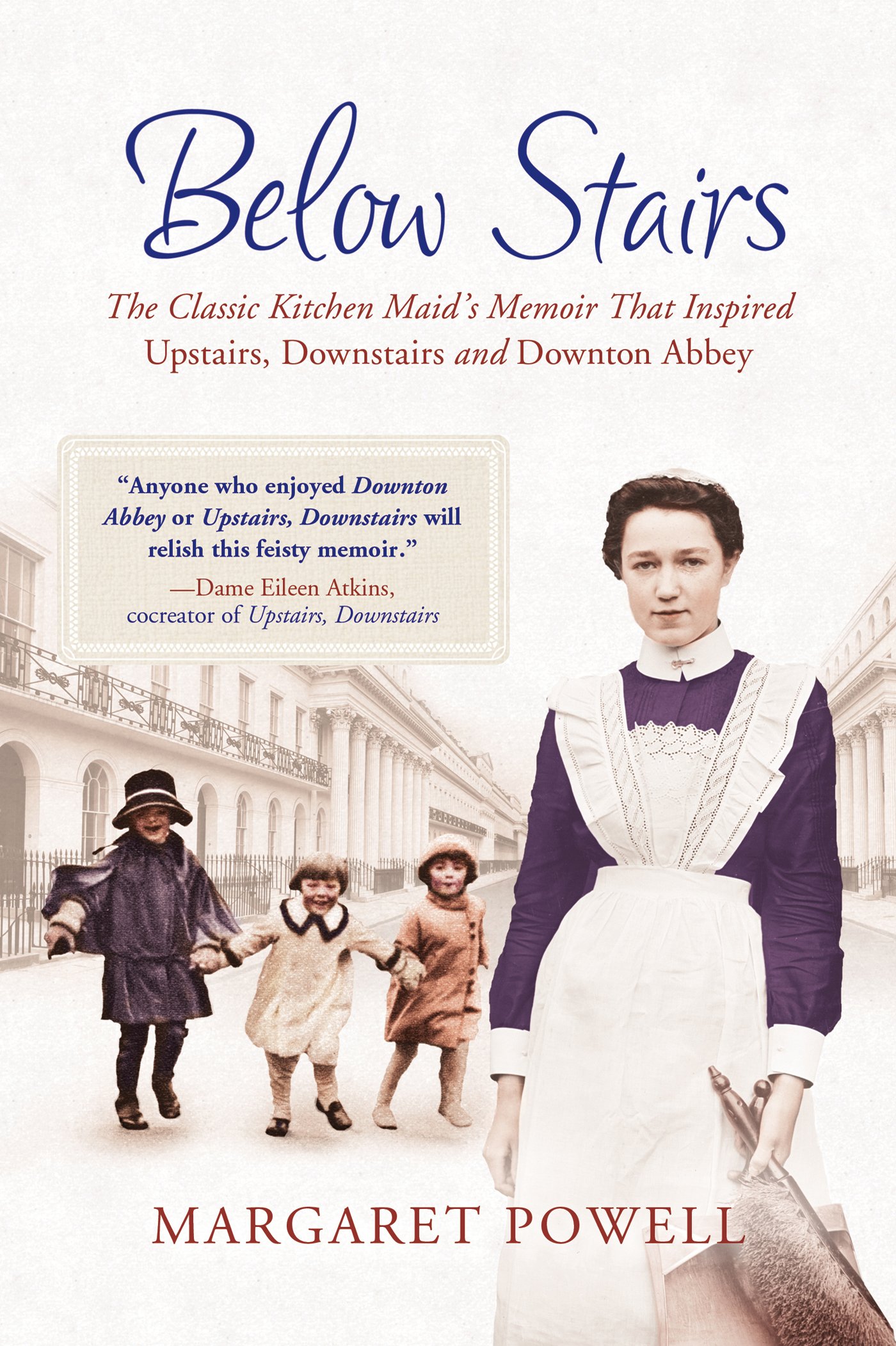
Review : Below Stairs

Image result for below stairs cover
Shoutout to all the librarians of the world, whose expertly-crafted displays entice even the most introverted of bookworms, who sure as heck aren't brave enough to ask you for a direct recommendation. Such a makeup was how I got my hands on this memoir, this past February! 

Margaret Powell’s iconic memoir Below Stairs provides a fascinating first-hand account of the back staircases and cramped servants’ quarters of the English elite, in the space between the two World Wars. Her vivid portraits of past employers, and powerful hindsight commentary applied to her unique experiences, have inspired the likes of quintessential British programming, such as Upstairs, Downstairs and Downton Abbey. 

This fiesty writer rose not just through the ranks of household staff in her places of employment, but also from her class position, in order to become a vibrant, humorous memoirist. I especially loved her determined spirit and incensed perspectives on both past and contemporary (at the time) expectations of working women. She focuses on both the disparity of social classes and the power complexities of being a young woman in a working environment with a seasoned eye that still comes across as quite modern for her time.

Her origins and evolution provide an intriguing background to the changing modernist dynamics of that time period: having been raised in relative poverty, to waiting on aristocracy, to interacting with artists and the elite, and then going back to poverty and charity reliance once she left the workforce again after she got married, still comes across as a saga. The deliberate points she makes to illuminate various facets of these struggles raises important questions about the relationship and interactions between social classes, even nowadays!

In one memorable section of the memoirs, she even calls herself a feminist by name. Raised in the time of the suffragettes and having written the book itself in the midst of the tumultuous sixties, this struck me as particularly valid. If there’s anyone who warrants that title, it’s those of her stripes, quietly (and not-so-quietly) struggling for those rights at a time where such behavior was unthinkable. Being that we can barely convince today’s Hollywood darlings and pop stars to own up to those kinds of titles that women like Powell worked so hard to bestow, the ownership of the phrase seemed particularly poignant. 

One particularly moving emotional moment – which occurred fairly early on in these memoirs – was that of Agnes, the parlourmaid, at Margaret’s first place of work. While questions about abortion are still carried on today, in even the highest courts of our country and others, the fact that this has been such a documented turmoil on behalf of womenkind for such a long time also lends the memoir a significant amount of feminist credence. When women were widely without protection or options, and men met little to no consequence, this kind of issue could ruin the lives of those with the least security, and hearing about Agnes’ silent suffering and subsequent dismissal were hard to read about, especially in 2017.

Same with the descriptions of Powell’s experiences with poverty, and the expected subservience of the poorer classes on multiple levels – such as demonstrating semi-fealty to community “charity” groups - despite the fact that either she or her husband was regularly working. Deliberate social constructs that kept both her and her sons from pursuing higher education were especially annoying to read about, because anyone could see that this girl was smart, and observant. Empathy should always remain at the root of charity and community, and these examples were perfect illustrations as to why: demonstrated suffering shouldn't serve as a requirement to being poor. 

(As Charlie Chaplin said, "Judge a man not by how he treats his equals but by how he treats his inferiors." No one escapes this book without Powell bestowing some well-deserved karmic payback.) 

Due to the unique nature of these perspectives - as well as the incredibly humorous, interesting anecdotes peppered throughout the work - I would love to read more about the interactions between servants and their employers during this time period. They really did know everything that was going on in a household, even things that their employers were working hard to keep hidden! 


Final Verdict: Below Stairs is invaluable reading for not just fans of the period piece or British writing, but those looking for uncommon perspectives on feminism and social equality.


Are you a fan of shows like Downton Abbey? What's your favorite period memoir? Let me know, in the comments below! 
Monday, February 6, 2017

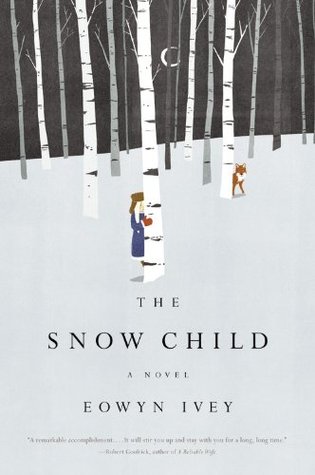
The Snow Child: A Review

Image result for the snow child
Truth time: I've honestly been saving up this book for a while now, in the hopes that if I waited long enough, I could read it when it was actually snowing outside! What a perfectly planned #bookstagram moment, amirite? Unfortunately, Washington hadn't seen much snow yet, and I got tired of waiting. 

Lo and behold, yesterday night, we got like five inches of frosty goodness, and now I'm writing this blogpost while my younger siblings are home from school, kicking myself that I couldn't have waited just a little longer, but totally loving the fact that the topic is still Insta-relevant! 

The forecast is still calling for a few scattered snow showers for the rest of the day, too, so there's still plenty of hope to fit in other frost-worthy reads. But, for now, here's The Snow Child! 

The Snow Child, by Eowyn Ivey, follows the lives of fifty-something homesteaders Jack and Mabel, attempting to start life afresh in the snowy expanses of the Alaska wilderness in the 1920s. Disheartened by the difficulties of starting a farm, and dismayed by the ever-increasing and lonely darkness that seems to cloud their lives with the onset of bleak winter, they start to lose hope. However, everything changes when one snowy night, the couple decides to build a little snow child in their backyard.

Blending magical realism with the lush and dynamic Alaskan landscape, this book really does a great job with evoking a spirit of connectivity and responsibility in the relationship between people and nature. In truth, while it may be a retelling of the original "The Snow Child," reveling in the magical realism of its Russian fairy tale origins, the true magic comes through in the captivating images of its wintry Alaskan setting. 

And, of course, as someone who lives for lifestyle descriptions, I had to focus on the food, too. What they ate, in particular, was integral to the setting, as it needed to illustrate the starkness of their surroundings while reorienting Mabel's role as a caregiver, as well as creating a definite measuring point for how well the little family was getting along: times of scarcity were reflected in unseasoned moose steaks and old potatoes, while times of plenty, in fresh vegetables plucked from a field, or berries foraged from the surrounding forest. Times of initiative were found in feeding flour to sourdough starters, while times of sharing were tins of homemade jam and swigs of raspberry moonshine right from the bottle. 

It honestly made me want to take up homesteading, until I remembered that it's not the turn of the 20th Century anymore, and that I like having access to grocery stores (and -without spoiling the novel- better healthcare). But the food sounded so entrancingly homegrown, sustainable, welcome and worth sharing... and the world around them so dynamic, blooming, and inviting. Beautiful, complete imagery of the nature through which our homesteaders hoped to carve a life, reminded me of Jean Craighead George's My Side of the Mountain, in the way that the trees and rocks and animals surrounding the story seemed to be a main character all in its own right. 

Speaking of the main characters... they annoyed me. As in, almost all of them. Mabel was defeatist and overly clingy, Jack was obtuse and uncommunicative in the worst ways of the stereotypes of grizzly mountain men, and Faina - our mystery blonde child of the woods, the frosty figure brought about by the magical transformation of their snow child (or so they think) that Mabel and Jack take under their wings - was a little too otherworldly to convincingly portray a young girl. 

In truth, Faina was less of a full character, and more of a plot point: she wasn't so much a real person, as a touchstone for multiple other members of the book. While the story went to significant lengths to diverge in narrator, giving voice to Jack, Mabel, and Garret - the young son of neighbors who help our couple establish themselves - the voice of Faina is left as deliberately ambiguous as possible, not even including full quotation marks when she speaks, but blending the sound of her voice as directly into the story as possible so as to make it indefinite. As a result, she served more as object than human: child, wife, fairy tale come to life, spirit of the woods and one with nature, but never truly herself. 

In this way, it was a little unorthodox of a fairy tale retelling. Typically, adaptations of that sort involve the re-framing of the narrative from the main character's point of view, but to have the orientation of the story essentially involving the erasure of the person-hood of its primary magical feature made it a little difficult to read. Especially the grammatical functions of positioning Faina as a pseudo-person.

Still, this allowed for the greater development of the magical realism the story was aiming for. The many conflicting narratives of how Faina came to be, and be found, and whether she truly was a lost little girl or a force of nature all in her own right, allowed for the sense of ambiguity that allowed her to fill all descriptions, instead of resolutely settling her in just one. She could be a little girl, because that's what Jack saw her as; she could be a fairy tale figure, because that's what Mabel saw her as. Their accounts couldn't fully conflict if she was never fully defined, in a sort of Schrodinger's paradox that allowed the story to move forward.

Final Verdict: While the main characters could get a little irritating, they weren't the dynamic focus point of this bewitchingly mystical tale. A solid adaptation of a well-known short story, this retelling finds its true magic in evoking the beautiful wilds of Alaska. 


What is your favorite snowy day memory? What book setting has made you want to travel?  Let me know, in the comments below!
Saturday, April 2, 2016

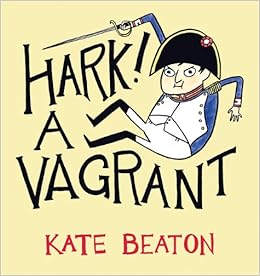
Review: Hark! A Vagrant and Step Aside, Pops!

Reading comics are not exactly considered a highbrow art form. In part, its because they're so accessible: everyone can find something to laugh at in the middle section of the Sunday paper, everyone understands the punchline of a Calvin and Hobbes or a Luann strip.

However, Kate Beaton has found the funny in the seemingly unfunny with Hark! a Vagrant, her long-running comics series, taking key events and players from historical and cultural knowledge, and turning them into sketches  that irreverently displace the academia with audacious humor. From historical Canadian-American tensions, to the relationship between Queen Victoria and Prince Albert, to the ridiculousness of some of those vintage Nancy Drew covers, Beaton draws from a wide range of subject matter, and manages to make them all downright hilarious.

One of my favorite things about these comics is that they're definitely a product of the Internet age: not only are the comics originally published online, on the author's website, but the kinds of jokes they reflect are arguably a byproduct of web humor. With deliberate irony and inclusion of anachronistic modern slang and perspectives, these comics have sometimes been turned into memes of their own, and can be found circulating on Pinterest and Tumblr.

Another wonderful element of Beaton's comics - and another indication of their inclusion of modern perspective - are their intermixing of the funny with the socially responsible: from her popular and overt "Straw Feminists" strip, to her skewering of female action heroine tropes with "Strong Female Characters," her Hark! a Vagrant series includes commentary and support of real portrayals of women, from the goofy to the glorious. In fact, a lot of the historical figures she portrays in her comics are female... and a lot of them, you've probably never heard of before, either.

I even included one of her comics in a report I did in an English class, my sophomore year of college, on "The Yellow Wallpaper," written by Charlotte Perkins Gilman. The iconic short story - reflecting themes of a woman's desire to escape the prison-like room her husband has confined her to while she's been ill, and her subsequent madness - is summarized in three panels, titled, "Either the Wallpaper Goes or I Do."

I credit the 4.0 my presentation partner and I earned to this strip, found on Beaton's website here.

To be honest, I've had a long relationship with comics. My grandmother used to take each funnies page out of the newspaper and put them aside for me over the course of the week, and I'd sit at her kitchen table during weekend morning visits and read my favorite strips sequentially, so that I could follow the complete story line. That love has never gone away, and with Hark! a Vagrant and Step Aside, Pops! I'd find myself curled up on the couch, with a mug of tea in the sunshine of a Sunday mornings, taking part in that very same pasttime.

Final word is, if you like comics, Internet humor, history, literature, feminism, or any combination of the above, these collections would be just the way to start your weekend!


Have you heard of Kate Beaton's comics before? What subject would you like to see her tackle? Let me know, in the comments below! 

Saturday, August 8, 2015

Review: Life After Life

I'd had this book on my TBR shelf for a while, and was looking for a good time to read such a hyped - and mammoth! - novel. Therefore, why not summer vacation, right? 

Life After Life, by Kate Atkinson, follows the story of Ursula, born on a snowy winter's day in 1917, who dies shortly after birth... and then is reborn again, given another chance at life robbed so quickly. Then another, and another. In fact, every time Ursula dies, regardless of whether that point is at the age of 4 or 40, she gets another chance. Set in a time period that intersects with WWII, the choices Ursula makes impact a lot more than just her own life, and it's up to her to make those decisions, even if she's not entirely aware of the consequences... and even when she's made the same mistakes before.

I used to think that being immortal would suck, because you'd lose your friends and family and just outlive everything you cared about. But I'd like to revise that statement: living your life over and over and over again - in the manner of our narrator and main character - seems like it would kind of suck, too.

(Then again, that might also just be the time period talking. Books set in Europe with a focus in WWII probably have a solid stake in making it seem like life kind of sucks in general.)

Even when Ursula's life has gone fairly well, or successfully - she's lived past the age of 60, she's got a family to dote on, she's accomplish major goals - it starts all over again, regardless... which just begs the question, what is the purpose of her life anyways? If Ursula is slated to be reborn the very second of her death, then what exactly is the final goal of her living in the first place? What is she supposed to achieve?

Basically, it's like dying over and over in a video game that doesn't have any primary directive. In that special way, it definitely raised a couple of philosophical questions in myself, as to what I was trying to achieve in my own life. Nothing to make you rethink mortality, the inevitability of death and the inscrutability of life's purpose like a little light reading on a warm summer's day.

But actually: there are so many book lists out there touting titles that "will really make you think," and this is definitely one of them. I read this book a handful of weeks ago, actually, but there are still bits and pieces floating around in my head that I can call to mind almost immediately. Ursula didn't just live one life, but many, and thus transforms her into many different characters, with different views of the world, different friends, etc. It's a pretty awesome thing to watch how those transformations come about.

As an after-effect of Ursula's chronic habit of dying, the book is oftentimes told in a non-chronological order, in a manner of speaking. While this sometimes made it a little confusing to follow, it also lent it its uniquely circular flow and direction. The overall composition of it was very well-constructed - as this kind of narrative effect would probably cause confusion in most readers, but it managed a good cadence, for the most part - and I was really, really impressed as to how everything was laid out so gradually. I want to know how Atkinson managed it, because I've got to figure a wall full of index cards factored in somehow.

Final Verdict: Windy, plot-twisty, and almost meditative in its circular narrative, this is a good thinking book. Maybe not a beach read, but something that should definitely be sitting on your bedside table come Fall.

Monday, February 17, 2014

Review: Something Strange and Deadly

 I'm one of those people who believes that you can stake a lot of a person's character, simply based on the people they ally themselves with. Not like in a political leanings kind of way - though I guess that's pretty reliable, too - but in a "what's your best friend like?" kind of way. Maybe it's the sorority girl in me, just because that's my favorite Recruitment question to ask, but it tells you a lot about what people value most, in human form. For instance, my best friend is super girly, incredibly sarcastic, hilarious, much more socially attuned to what is "cool" than I am, emotionally invested in the same things as me, and enjoys pulling me out of my comfort zone. (And she's getting an obligatory mention today, because it's her 22nd birthday!!!)

So, Susan Dennard, the author of the Something Strange and Deadly series, is best friends with my personal spirit animal S. J. Maas.

How am I just supposed to ignore something like that? As soon as I saw that the novel was stocked on the shelves of my local library, I had to dive right in... and I can definitely tell you that my "friends-as-litmus-tests-of-awesome" theory is as strong as ever.

Something Strange and Deadly follows Eleanor Fitt, a high ranking member of Philadelphia's Old Money, hiding a couple of terrible not-so-secret secrets... her family is actually poor, her mother has never been all that stable since her father's death, and, worst of all, her brother has disappeared! Only Eleanor knows the truth about that last part... after a terrifying encounter with the walking dead, she knows that her brother has been held hostage by the necromancer causing the rising of the Dead in Laurel Hill cemetery. Thankfully, the intrepid Spirit Hunters are holed up at the Centennial Exhibition nearby, and she thinks they can help. If only she could get the smile of that handsome inventor, Daniel, out of her head...

Dude! Zombies. 1874. Centenniel Exhibition. A super-cool, kick-butt-and-take-names heroine. A dreamy-but-stubborn love interest, and a dreamy-but-tortured love interest, and an overall love triangle that doesn't make me want to gouge my eyes out. This book seriously has it all.

I mean, I'm not going to say that some of it wasn't predictable. There were points that, as soon as they were introduced, that I knew where they were going. But I think that was mainly because I was thinking of the most awesome and perfect possible outcomes for each of the plot points that I thought were obvious, and they ended up happening. So, it was predictably awesome, I guess. 

I really enjoyed getting to know Eleanor, because she came off as very relatable - incredible accomplishment, being that I don't live in the 19th century or wear a corset, but feel like I "get" Eleanor - and I thought she exhibited a couple of characteristics of heroics that we don't necessarily get to see all that much in YA heroines. She was curious, and maybe got into a few scrapes that way, but was never hopelessly reckless. She was naive to some of the ways of the world, but definitely exhibited common sense, and was never an idiot. She had integrity, but never put off anyone with some kind of misplaced nobility. She was a smart, sensible, but still fun and open-hearted, person, and I wish there were more of her in YA.

And, to be honest, the setting did a lot for me, too. I feel like the whole East Coast Money thing has always had a stake in YA, but antiquated East Coast Money, in a not-so-Anna-Godbersen way? That's unique. And it was never historical in a wardrobe-explicit way - which is how I feel a lot of other wannabe historical fictions operate - but it detailed what was going on in a lot of different ways... technology was touched on, and so was architecture, world cultures, the development of America... it was all-inclusive, and I loved that Dennard tried really hard to form such a specifically historically accurate world, while also letting her imagination run wild in other places... with the Running Hungry Dead, most specifically.

But dude, seriously. Zombies. And that's something I loved, too: anyone who's seen good zombie media, from Zombieland to The Walking Dead, knows there are rules to these kinds of things, and Dennard's got zombies done right. (Go for the knees.)

Overall, Something Strange and Deadly was a great example of how to do YA, historical fiction, world-building, and zombie fiction, right, and it provided both an amazing heroine and a love triangle that didn't suck. Even the fact that it was a little predictable kept it grounded in awesome. Go read it now! 

Tuesday, January 21, 2014

Review: The Chaperone

What can I say, I'm a giver. So when I saw that my mom's birthday was coming up towards the end of 2013, I wanted to give her a present that reflected both her tastes and mine, and got her a copy of Laura Moriarty's The Chaperone. However, what with my mom's Fellowship, and my constant need for new reading material, she handed it back to me - alongside a stack of other as-yet unread novels - and actually I ended up reading it before she did. Oops. Well, isn't it the thought that counts, anyways?

The Chaperone, by Laura Moriarty, follows the story of Cora Carlisle, a bored, middle-aged Southern woman who agrees to accompany a burgeoning dancer, the fifteen-year-old girl who would become movie star Louise Brooks, to New York for one hot summer in the 1920s, as her chaperone. However, she didn't bargain for Louise's headstrong and impertinent nature, nor did she factor in the importance her own motivation for the trip would play in her journey, and as the two try and track their dreams around the bustling city, the generation gap closes as Cora learns a little more about what it means to be young, free, and in love.

If any part of that synopsis I wrote up there sounds in the least preachy, self-serving, or over-moralized to you, that's because it was. By the end of the novel, I honestly had to put it down and say to myself, "Wow. I expected a lot less sentimentality from a New York Times Bestseller." Personally, I thought it came off as saccharine and overdone, like a Costco-bought sheet cake with three clear inches of frosting that nobody needed.

I may sound a little harsh. Good. Remember, this is a book that I felt confident in - assured by both NYT and USA Today that it was a #1 pick - enough so to recommend it to my own mother. It promised a character-driven fictional narrative detailing the life of tabloid-maker Louise Brooks, and was set in a terrifically promising time and setting... I mean, who doesn't love New York in the Roaring '20s? However, instead of gritty, historically accurate realism, I got a Lifetime Original Movie. What was marketed as delving into "rich history" and a peek at the "burgeoning movement for equal rights and new opportunities for women" was really just an excuse to exploit past tragedies and inequalities for a new and more involved use. 

One of my biggest problems with the novel was the lead character, who, promised in most marketing blurbs to be sparkling, cynical beauty Louise Brooks, was in fact the dowdy, over-condemning Cora Carlisle. And the book didn't so much as focus explicitly on the summer in New York, but use it as a specific focal point for illuminating on the rest of the book, detailing Cora's depressing past, and dingy future. It shouldn't have been so, either: Cora's life is not at all a bad one, in fact, she essentially gets everything she wishes for, only to find herself discontented with what she does have. Her insufferable whining wasn't even that well-written, either... If I had gotten the impression that her character was meant to be so needy, self-involved and self-important, then I would have lauded it as a solid characterization via inner narrative, but the fact that I think we were actually supposed to root for this egotistical biddy was a major source of annoyance.

I understand that a lot of people liked this book. I didn't. It just lacked anything to really recommend itself to me... no cultural realism, distinctly unlikable characters, misuse of solid plot points and setting, and poor fulfillment of hype really broke it for me. Even if I hadn't gone into it with such high hopes, I still wouldn't have liked it all that much. All in all, I'm going to have to say I wish I hadn't sprung $11.59 for this paperback, because I could have gotten my mom something a lot better.

Tuesday, January 14, 2014

Waiting on Wednesday: Boy, Snow, Bird

Waiting on Wednesday is a weekly feature created by Jill at Breaking the Spine, that gives bloggers the opportunity to highlight upcoming releases about which they are extremely excited. 

This week, I'm getting really pumped about a mature re-imagining of a classic story, transplanting a well-worn fairy tale into 1950s suburbia, called Boy, Snow, Bird, by Helen Oyeyemi, set to be published March 6th

The story follows ex-New Yorker Boy Novak as she fruitlessly searches for the kind of beauty that she couldn't find in the big city - or in any other place, for that matter - until she lands in a small town in Massachusetts. Once there, she quickly falls for a widower, and suddenly finds herself the new stepmother to young, beautiful Snow Whitman. However, in a new and dramatic twist on the classic tale of crippling disgust for an aesthetic aberration on the part of an evil stepmother, Boy's condemnation of her new family stems from the birth of her own daughter with distinctly dark skin... resulting in the revelation that the Whitmans themselves are actually light-skinned African Americans, only passing themselves off as white to survive in the heated social scheme of mid-century East Coast life. This is the 1950s, and America is far from colorblind, but Boy has to look deep into the mirror for herself to figure out how much reflection really matters. 


Why I'm excited? 
Um, if you know me, then you definitely know that fairy tales? They're my jam. And not just the Disney version... I 4.0'd my class last quarter on Hans Christian Andersen's Fairy Tales without bothering to go to half of the actual classes (and if you don't think that stuff is dark enough for you, go look up "The Story of a Mother." Seriously, I dare you). I feel like Oyeyemi is reinventing the fairy tale in such a revolutionary way here, by harkening back to the darkness of "Snow White" in a way that's totally modern, calling out the horrifying aspect of violent familial aversion through the scope of one of the darkest periods of America's sucky track record for social equality. 

Also, it's supposed to be beautifully written, and I believe it. Helen Oyeyemi is a British-raised, Nigerian-born novelist and playwright whose take on the subject will be very noteworthy, I can just feel it. 


What novels are you waiting on this Wednesday? 

Tuesday, December 17, 2013

Review: Timebound by Rysa Walker

(This novel was purchased through Amazon's new Kindle First feature, which allows for editor's picks of upcoming ebooks to be purchased prior to their release date. Timebound will be available on January 1st.)

So, I mentioned recently that I went on a bit of a book-buying binge a couple of weeks ago, as a means of distracting myself from Finals preparation. Now that I've gotten over those woes and am on Winter Break, I can finally read those books (and no worries about my classes... I 4.0'd English and got a 3.8 in Fairy Tales)! I was most excited about Timebound, by Rysa Walker, so I decided to give that one a go first, out of the many books I have on my Winter TBR list, because, honestly, with 3 weeks off of school, a lack of time was no longer a problem for me.

Timebound (first in the "Chronos Files" series) details the story of sixteen-year-old Katie Pierce-Keller, a normal girl with divorced parents, who finds out, one day, that she's never existed. Well, not in this timeline, anyways. But if that's true, then it means everything her grandmother has told her, about the organization CHRONOS and the genetically-determined ability to travel through time, is true. Suddenly, Katie has to cope with a present where her best friend is part of a cult, her mother was never born, and her new boyfriend is the guy who took her place when she disappeared. But when it comes down to it, can just a normal teenage girl make the difficult decision, of which time stream is correct... and which one is right?

I initially approached this novel with no small amount of trepidation, due to the typical tricky nature of building a cohesive and fully-integrated world oriented around the concept of time travel. There's a lot of rules to explain, fundamental issues to address (um, why are things randomly disappearing?), and we can't forget the tweaks to the time-old idea that makes the concept individual... and it's difficult to make such a popular plot device your own.

Ultimately, all of my questions about how, exactly, this was going to work were answered; however, in citing the age-old adage of "actions speak louder than words," I wish there had been a little more demonstration than info-dumping. The benefit of having a clueless protagonist who is learning information at the same rate as the reader is that there's the opportunity to explain... I just wish it had been done in a less drawn-out and monologue-like fashion.

To be real, I almost DNF'd at around 25% of the way through the novel. I just found the pacing uneven, the constant descriptions to be pretty droll, and the relationships too unrealistic (not because of the time-travel thing, but because of the whole insta-love thing). The novel - though containing a lot of interesting historical factoids - was unfortunately written in a more basic style as well. Probably a good choice, due to the already confusing nature of what is being discussed, but boring. And honestly, for a novel that builds up to the 1893 Chicago Worlds Fair, they sure took their sweet time in getting there.

However, once they did, things finally got interesting. Really interesting, actually, and really quickly. The plot - finally straightened out and fully operational after all of that exhausting and extensive back story - takes off with a bang, and the stakes are made clear. The endless pages dedicated to the construction of, well, everything, form a complexity of interwoven webs in the time stream where, all of a sudden, we jet directly to the action, and it's nothing but a race to the finish line.

The book was hard to get through in a lot of places, but in the end, I really enjoyed it. Walker tackled a subject that's both been overplayed as well as over-hyped and wrote a book that utilizes the topic of time-travel in a totally new and engaging way. The book leaves off at a pretty interesting moment, and it's primed and ready for the next book in the series to completely blow us away, like the second half of this first book did. Walker took her time building the car... now let's just see how fast it can drive.

For fans of historical and science fiction for the YA set, as well as evil cult-ish religions manipulated for secret purposes and lots of Princess Bride references, I would recommend Timebound, if just for the adventure that's clearly in store with the next novel in the series.

Friday, September 6, 2013

God Help the Girl

There's a distinct difference between "historical fiction" and "period fiction," at least in my mind. "Historical fiction" deals more with ties to the direct historical elements within the context of known chronological time (ie. having a book told from the point of view of a historically-iconic persona, or involved in important historical events), like I just read in Katherine Longshore's Gilt and Tarnish (which I just finished and will be talking about soon!). "Period fiction," however, deals more within conjunction to a time period, without retaining more concrete ties to fact, more than fiction, like The Girl Is Murder series from Kathryn Miller Haines. 

The books follow fifteen-year-old Iris Anderson, as she assists her father in his ace private eye detective business, during the early years of World War II. After the bombing of Pearl Harbor left her father without a leg, and her mother's suicide left her family without any support system, Iris is forced to move from the Upper East Side to the Lower, from a posh public school to P.S. 108, and that's only the start of her troubles.Through her search for clues, she breaks out of the prim and proper, and into a world filled not only the cheating husbands her father tails, but murderers, Nazis, and the seedy underworld of '40s New York. 

There's an additional difference between "historical" and "period" fiction on the part of the reader, one that was highlighted in this series. While in historical fiction, you have to level some kind of an assumption that the author has done their research (lest they incur the wrath of history-nerd readers who actually know what they should be reading about), with period fiction, there is no such reassurance that we won't wind up with anything anachronistic or out-of-place. For a while, this series worried me, being that the 1940s and wartime aren't really discussed outside of the American Girl canon of novels (Molly, my favorite). 

That unique element of the time period is what initially drew me to the novel, being that the '30s and '40s were some of the most interesting periods in American History to me, and it was such a departure from the influx of Roaring '20s YA we've been seeing recently. I feel that the time period was halfheartedly established, and there should have been a little more of an ambiance and mood to the novel. You are, after all, talking about an iconic stock character: the hard-boiled, fast-talking 1940s ace detective, only transplanted into the body of a high school girl. The avenues for successfully pursuing this type of feel would be either making it into that hyper-stylized noir, or an ultra-realistic period drama. Instead, what we mostly got were kitschy slang phrases bantered around with few descriptions of setting, appearance, etc. and little-to-no distinct style. 

The plot was a little on the murky side, as well. Especially in The Girl is Trouble, where the unanswered questions - on both the part of the narrator, and the reader - came aplenty. In some ways, this was rightfully so, because the mystery was one of the puzzle-like variety; unfortunately, not like the shiny, well-fitted, just-out-the-box variety, but like the kind you find in quaint, off-the-beaten-path cafes with low-lighting and spaced-out tables, that usually have half the board missing and the rest miserably chewed up by a long-gone dog. It was old and worn with antiquated plot points, it was holey with questions that were answered by convenience, it was unnecessarily confusing due to the fact that Iris just wouldn't stop jumping to conclusions, and at the end of it all, I still didn't know entirely what I was looking at. It was only when told what I was supposed to be seeing - courtesy of a wrap-up on the part of Iris, her father, and her Uncle Adam (also a detective) - that I got the picture. 

(I consider the first in the series to be much, much better, so I'm tempted to say that this is just a part of the natural "sophomore novel slump," but I don't know.) 

I appreciated the characters, which all had their own individual flaws and functions, and weren't pure products of stock. They didn't act like much less than stock characters - ie. they never did anything that unexpected, their actions were pretty predictable - but at least they all had definable, distinct, personalities and traits that made them unique. Also, the stakes were higher and the suspense more forceful than would be expected, as well, and I love, love, love fast-moving plots in YA. These were what the series did really right, and I appreciated that. 

For fans of 1940s detective movies, wartime intrigue, and simplified story-telling that's big on suspense, read this book. But if you're a mystery enthusiast with a good knowledge of how the game works, without patience in waiting out less-than-efficient story lines, maybe sit this one out. 

Tuesday, October 2, 2012

Ice Cubes Melt

Pardon me for the lack of updates in the past more-than month or so. Unfortunately, I've been busy making the most of my freshman and sorority experience, which requires copious amounts of laughing, hugging, chocolate-chip-cookie-consuming, belly-dancing, spandex-skirt-shopping, and all around fun (as well as trace amounts of other substances, like sequins, headbands, and crying). So, my work on this blog has been neglected. Now that I'm reasonably settled into my roles as class-goer, homework-doer, weekend-dancer, and new Sigma Kappa (one heart, one way!) member, I actually found the time to crack open a book I did NOT buy bound in cellophane from the basement of the University Bookstore, and relax. Between late-night runs to the kitchen for more apple cinnamon caffeine-free herbal tea, of course.

Now that I've got you all settled into the notion that my life has become some fairy-tale-worthy amalgamation of a Spice Girls music video and a tampon commercial, prepare for the pain, because this book packs a certain emotional "one-two" that left me reeling. Maybe it's because I'm a born-and-bred American living in a new century, one who grew up almost without the concept of skin color as a friendship barrier, or maybe it was the fact that this novel is set majorly within the very limits of the city I now call home. Whatever it was that left me sprawled across the study room couch, fighting back tears, it's not fading terribly fast. Not when I remember having walked across some of the very pavement on which such atrocities were committed.

I knew about the evacuation from the West Coast, and the Japanese internment camps during WWII, because our teachers glossed over what bare bits of it we discussed about our WA state history, all the way back to the first grade. When you stand by the bridge near the Japanese Pagoda at Point Defiance at night, so I was told in whispers, behind the wooden shed on our Montessori-school playground, you can hear the quick patter of ghostly footsteps, of someone fleeing, someone who didn't want to be taken away. They were shot, and now, they'll be forever running. Grave and sinister, for someone so young, but we did what we could to understand that which we couldn't understand, subjecting it simply to the stuff of ghost stories, and moving on (completely dismissing the fact that the Park, and the Pagoda, are definitely closed to the public at night). I grew up side-by-side with those kids, whose parents spoke a different language, liked different foods, dressed a different way, or prayed to a different God, and it was never a problem. We weren't bred to war, so we simply couldn't comprehend. These weren't things we were taught in Molly's American Girl series. It wasn't until public school that I realized just how cruel people could be, and why no one in Tacoma ever wanted to talk about it.

Hotel on the Corner of Bitter and Sweet, by Jamie Ford (Ballantine Books, 2009), is set halfway in the 1940s, when those unjust sanctions against Japanese Americans were enforced, and halfway in the 1980s, when the repercussions of those actions are still being felt, by Mr. Henry Lee, a recent widower with a tenuous relationship with his grad-school son, and leftover memories of a girl named Keiko Okabe. Throughout the novel, the threads unwind to find that Lee had deeper ties to her than his son ever knew, and his son comes to realize that his father was less like his father than he had previously thought. It's a beautiful and moving love story, set across the backdrop of two different timelines, where two different people can find an imperfect love in their own hostile nation, and still feel the effects of that love after all the smoke has cleared.

An imperfect novel as well, as the presence of some anachronisms within the story pointed out. But I'll let 'em slide (still less cringe-worthy writing than my Architecture textbook. Yikes).

Whatever the case, the true takeaway from this novel, for me, was the fact that I was already so familiar with the setting. I've been to the Puyallup Fairgrounds, I've seen where they keep the livestock. Imagining a family of four, trying to live within the bounds of one horse stall? Not pleasant, not easy. Now take this description:

"...the quaint town of Puyallup, a small farming community surrounded by lush acres of daffodils." (Pg 153).

Holy hell. I'm a Daffodil Princess. Our HQ is in Puyallup. We're the Daffodil Princesses BECAUSE of that agriculture in the Puyallup Valley. This is all within a half hour of my house! Oh my gosh! (Describing my train of thought, here.) How horrifying is that? All of this kind of thing occurred within 50 miles (and about 60 years) of my doorstep! Not to mention Seattle... the entire reason my mom had me read this novel is because I'm now LIVING in Seattle as a student! She wants to have a field trip day with me, to go explore some of the real-life inspiration down in the international district, the streets named IN THIS BOOK.

How sad.

I'm not sure what it would be like for those who DON'T live in this city I've grown to care so much about since the advent of higher learning, but for me, it really struck home. Literally. My appreciation for the history of where I came from, and where I am now, is ever-increasing. I love it when a novel can involve you so deeply, that you feel the need to do extra background work afterwards, almost like you don't want the story to end, so you need to find out more of its beginning. I'll definitely be on the lookout for more locally-set works now, and my interest in the racism of WWII isn't dying down either. Sure, awful, truly-terrible, no-good things happened here, in Seattle, but bad things happen everywhere. I'm still just learning to appreciate the past, and how it relates to where I am now. And this novel definitely helped.


Note: Look out for my favorite character, the son, and the quote of his from which this post title was taken. It's been ringing in my head since finishing the novel, and I don't know why. :) 

Wednesday, September 5, 2012

In the Beginning

I was raised by a man with a healthy and enthusiastic regard for the super.

Under his guidance, Spiderman was the first PG-13 movie that ever became my favorite, and the first hero I ever fell in love with. As a kid, he had connected to Peter Parker's less-than-cushy upbringing, and the idea that power can come without want or warning, and yet, should still be wielded with the utmost care and wisdom. In Peter's story, the iconic radioactive spider - by which he was bitten, and transformed into the superstar web-slinger overnight - serves as a demarcation between the nerdy, bullied high-schooler, and the wisecracking, wall-climbing wonder kid. There wouldn't be a Spiderman at all, if it weren't for one tiny bite, from one tiny spider.

For Batman, it was the bats, the murder of his parents, and his nearly-unlimited bank account, that assisted in the creation of his superhero status. For Ghost Rider (Johnny Blaze), it was the attempt to save someone he cared about, by means of an all-too-costly deal, that formed the basis for his flaming counterpart. And Superman's an alien, for crying out loud.

I realize that this intro, when paired with the above photo, may cause a little confusion. However, the point I'm driving at is this one: there's a reason why those superheroes are all so amazing. It's the same reason why Cinderella made such a great princess, and why Genesis is one of the most-quoted chapters of the Bible. It's that nothing beats a great origin story.

And like those superheroes of legend which we were just discussing, the books discussed in Celia Blue Johnson's Dancing with Mrs. Dalloway: Stories of the Inspiration Behind Great Works of Literature, have achieved a iconic status in their own field.

In this carefully-curated collection, of some of the most compelling geneses of the world's most beloved stories, you can find the likes of Cervantes' Don Quixote sharing space with Capote's Holly Golightly (from Breakfast at Tiffany's), and Tolkien's hobbits pages away from Lewis' Susan, Edmund, Peter and Lucy. Here, Johnson relates the flashes of lightning, or the slow-smoldering embers, that sparked the creative flame of some of the world's best storytellers, leading them to craft such places, people, and things, that could capture the hearts of people around the globe.

For some, like Mary Shelley's Frankenstein, it was a game: her monster was born form the idea of horror itself, his bits and pieces belonging to an overheard conversation on the topic of the reanimation of bodies. For others, like Arthur Conan Doyle's Sherlock Holmes, the steps of the cerebral sleuth had been tread by another, as the masterful detective was based off of - at least partially - a one time medical professor of Doyle's. For C.S. Lewis' Narnia books, the inspiration came at the age of sixteen; the final product, at forty. For Robert Louis Stevenson's Treasure Island, he knew the geography and topography of the tropical island before he even began to think of its inhabitants.

The book itself is clear and well-written, which allows the magic of the stories BEHIND the stories to really shine through. When dealing with a lot of layers, its sometimes best to just stick to what's most easily understandable, and for this collection of brief anecdotes, the simple presentation allows for full comprehension of the information it relates. Which is helpful, and interesting.

And, seeing as though it is a book about what inspired books, I'm glad to hear about Johnson's own origin story: after a repeat re-read of Woolf's Mrs. Dalloway, she was intrigued by the underlying history, and this interest led to a veritable scavenger hunt through literature, to find out how some of her favorite books came to be. It shows to me, that the enjoyment of reading is improved immensely, when you get to know it a little better. :)

Monday, August 6, 2012

Egyptian Beach Party

Desperately seeking a change of pace and the feeling of sand between our toes, the family recently fled to the sunny shores of Seaside, Oregon. However, once the weather turned aggressively, oppressively hot on what would be our second day on the beach, I opted to hang back at the condo and nurse my angry, red, sunburned skin, instead of lugging the volleyball out to fry another day. After trying fruitlessly for over an hour to understand the complex code of button-pushing that would operate our rental condo's DVD player, I tossed aside Disney's Tangled, and dug out a book.

However, my beach reads are not equal to everyone else's beach reads.

Instead of installing myself out on the condo patio with a good slathering of aloe and some bit of marshmallow fluff unstuck from the Teen shelves of our semi-local Barnes and Noble, I chose instead to turn to the tops of recent nonfiction lists for a bit of educated reading (the aloe, unfortunately, had been left at home, so none of that either). Most of the selections were a bit of a downer, or too funny for serious reading - and I'm still patiently waiting for my Mom's edition of Rebecca Sloot's The Immortal Life of Henrietta Lacks to be returned, so I can, in turn, sneak it out from her stacks - so I narrowed my search down to a historical biography (one of my Top 5 fave genres). Fate had previously sent Stacy Schiff's Cleopatra: A Life onto the well-stocked shelves of Target, then into my already over-laden shopping cart back in April, and now, it pushed the hefty Pulitzer-winner into my beach bag as well.

The crowded resort town of Seaside could just as easily have been the bustling ancient city of Alexandria. The crystal blue waters in front of me could have lapped the banks of the river Nile. And that heat definitely could have qualified as borderline Saharan. So, I slid on my sunnies, laid back, and made like the most enduringly enchanting ancient historical female of all time (minus being fanned by palm fronds, unfortunately).

The legacy of Cleopatra is lasting, despite the many inconsistencies in the documentation of her history, and the varied portrayals of the ancient monarch's character.  Whether your opinion of her, is that of an educated and strategic thinker, or some kind of hieroglyphics-writing hussy, or even simply as a pop culture fixture, made icon by the likes of the Egyptian craze of the 1920s or Elizabeth Taylor, then you could definitely do for a read of Schiff's complete and detailed history of the long-gone, never-forgotten pharaoh queen. The format is easy to follow, chapter lengths are just the right size, and the heft of the book itself is not at all daunting. Chock-full of information, yet enrapturing and downright beautiful to read, rightly crowned by the New York Times as a "Best Book of the Year" in 2010, Cleopatra: A Life strips away all of the mythology set in place by the likes of Shakespeare and Shaw, and leaves us with a relatable, remarkable woman, who could really rule, despite the odds stacked against her. Her dealings with the encroaching cultures to the West, or the bad behavior of her ambitious, murderous family, make any of your problems seem downright trivial, and the passion with which she lead her country is inspiring, thereby cementing Cleopatra in the public conscious as an intrepid, educated strategist, and a moving example of a female leader.

Whether or not your typical beach reads consist of quite as much substance as this one, I would firmly recommend checking Cleopatra: A Life out, in order to explore the dramatic, beyond-mythical story of the brave Egyptian queen... or just to impress any cute towel-dwelling bookworms nearby. :)


(Oh, and if you're wondering about the title... it was stolen from one of my favorite episodes of The Adventures of Jimmy Neutron: Boy Genius :) Look it up, kids).


Wednesday, June 6, 2012

Back Track

I've been kept busy by quite a bit recently, which is something I wouldn't necessarily expect from the end of the school year. However, seeing as though I'm a graduating senior in high school, I shouldn't be so surprised that my schedule is in such an upheaval.

Prom is over. Final projects are being completed as we speak. The last issue of our school newspaper - of which I have been the Editor in Chief for two full years now - was delivered to classes last Thursday (sob). Senior Awards night was on Monday; I was awarded the Paul Healy Scholarship - for excellence in literature, poetry, and writing. And at this exact time, next week, I will officially no longer be one of the multitudes in the sea of backpacks, heaving textbooks in my high school.

Am I excited to graduate? Absolutely. But I can't help but get all introspective and reflective, looking back at how much I've changed in these past four years. My high school experience directly affected my growth as a human being, and I have to acknowledge how much I've learned in those hallways, whether they were applied to the fields of reading, 'riting, and 'rithmetic, or how to talk to people, and how to make friends.

However, this sounds just like the sort of thing I'd like to avoid thinking about, lest I lose all of my tears before graduation. So, instead, I'll tell you a little about what I've been reading.

It hasn't been that great.

Spurred on by the immense amount of excitement I experienced upon first viewing the trailer for Baz Luhrmann's The Great Gatsby, I decided to reach for something with a decidedly Roaring flavor. However, unable to approach Fitzgerald with the right mindset (ie. I needed a little bit of easy lifting in a time of so many heavy thoughts), I headed directly to the teen section of my local library to pick up Anna Godberson's Bright Young Things

I've referenced this series on my blog already, in relating them to the Flappers series, from Jillian Larkin. However, I didn't quite realize exactly how similar they would be: both involve sets of similarly-aged girls, in the bright spotlights of New York City, all with paths that connect and secrets that don't stay secret. They all live for the fashion of the era, and the books utilize similar connection pieces for the time period: namely, slang terms, clothing styles and options, and the most ideal hangout spots (the delicious local speakeasy, of course). In fact, both series prominently include main characters whose biggest dreams are to sing on the bright stage of such an establishment! Bootleggers and bombshell blondes galore... in both. In some respects, it almost felt like I could be reading the same book twice.

However, Godberson made some writing efforts that I will not let go unrecognized: unlike Larkin, she focused on varying aspects of a Prohibition-era NYC (from the country clubs to the city stages) - making the change more drastic when one of our main girls flip-flops between the two - and even drew the main characters from one of the overlooked regions of that time period, the Midwest. Furthermore, one of the main problems I had with the Flappers series was that the male lead characters were, while not quite transparent, pretty much comparable to an ottoman or a clock: they simply furnished the novel, without any real emotional growth or impact. In the Bright Young Things series, Godberson brings the men distinctly into the foreground, and the dynamic leading studs are some of the driving forces within the plot.

So, while I didn't necessarily enjoy it as much as the Flappers series, it was still a decent fluff read, and there are plenty of things that Godberson is doing really right. However, maybe the Great Gatsby trailer simply raised my expectations too high. All I know, is that Fitzgerald will definitely be making a resurgence on my summer reading bookshelf this year.

#26. Bright Young Things, by Anna Godberson.

#27. Beautiful Days (a Bright Young Things novel), by Anna Godberson