Saturday, August 24, 2019

READING ROMANCE: EASY, BREEZY, INTERSECTIONAL FEMINISM & THE HEROINES OF JASMINE GUILLORY

Something I've really been loving recently, is the coverage of the fifth anniversary of the #WeNeedDiverseBooks movement, and the progress achieved across the scope and genres of publishing since then. One such read was this article from Bustle, which checked in with people across such boundaries, providing testimony for the kind of change being enacted in this vital section of global media. Naturally, I immediately forwarded it to a handful of bookish friends, so we could all share in the celebration! 

While the article specifically highlights authors and publishers specific to audiences like Young Adult and Children's book enthusiasts, they're far from the only ones undergoing some measurable changes. In particular, the Romance genre has been making room and taking a stand, across several different popular series and authors... and the trend started a lot earlier than just five years ago. The rise of the African-American period romance - thanks in no small part to Beverly Jenkins - began in the '90s, and has since carved out a path in what was otherwise a fairly White genre, while more and more casts of multiracial, varied-perspectived characters can be found throughout shelves every year, like in Alisha Rai's Hate to Want You series (a personal favorite). These developments not only serve to better the plots of stories, and the perspectives of their reader, but also lay the groundwork for increased diversity and visibility for authors across publishing in the future.

However, dissenters abound, as they do in opposition to every major movement, and these kinds of new, necessary stories have their haters, too. What was wrong with the way things were? Romance, as a genre, has long been held up as a haven of escapist fiction... could inviting complicated discussions of things like race, jeopardize that status, or turn off new readers? 
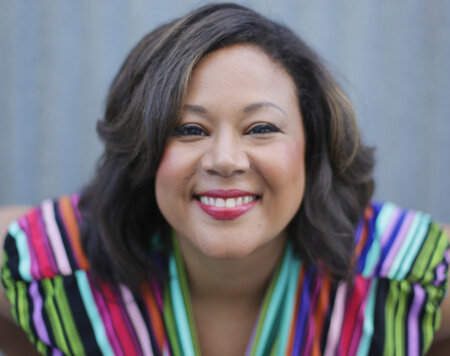
Photo of Jasmine Guillory
The lady herself!

Enter Jasmine Guillory. Conversations about racial differences are an expected subject in each of her novels, and yet, they're lauded by everyone from the best-seller charts, to Reese Witherspoon. Her books are wonderful, and draw a stark line through such criticisms of the #WeNeedDiverseBooks initiative. Why? Because they're not just well-written romances, with compelling plots, quick pacing, and a lovable fleet of characters, but because she approaches her subjects with a stunning degree of empathy, tact, and understanding. In short, her books are so good, and her moves so subtle, that you might not even realize you're reflecting on these kinds of issues while reading. 

Here are just a few of the ground-level ways Jasmine Guillory uses her books - like The Wedding Date and The Proposal, as well as recent release The Wedding Party - to prioritize intersectional feminist narratives within the Romance genre: 

  • Each of her books is led by a black woman main character, which not only centers race in the narrative, but provides plenty of room for empathizing and personalizing situations that arise over the course of the story. 
    • For instance, during The Wedding Date - when the lead character Alexa gets an unexpected invite by a stranger to be his "plus one" for, you guessed it, a wedding - one of the questions she asks, is whether there will be anyone else who looks like her at this event. The answer is no, and the plot progresses from that point with ease... but it's a question that brings attention to that detail, and emphasizes a social point which, up until she asks, might not have even been on the reader's radar. The fact that the answer is a negative, highlights a mental cue for the reader to observe and understand. 
    • Meanwhile, in The Proposal, Nikole ends up meeting Alexa while on a double date, and excitedly asks her confused love interest why he didn't mention to her that the other woman in question would also be black. Any confusion as to why she'd need that information, is answered when Nikole and Alexa share a sweet bonding moment, specifically referencing their shared perspectives. While it wasn't a point of importance for either of their dates, its a vital one for them. 
  • At the same time, this is also an example of Guillory's ability to write characters whose internal monologues realistically reflect on their own identities in real-time, which, in turn, effects how they approach these interactions, or make decisions that affect other people. 
    • In The Wedding Date, Alexa undergoes a series of difficult situations, as men from various social events she attends specifically target her for her race: an inebriated wedding guest makes unwanted sexual overtures involving her status as a black woman, while attending a party results in a conversation containing the cringe-y "Where are you from?" question. In both situations, we watch Alexa reckon with her personal feelings, and attempt to navigate the resulting differences as gracefully as possible, in a way that feels transparent and clear enough to translate to those who have never had to undergo those kinds of experiences. 
    • In The Proposal, we see Nikole grapple with why her boyfriend of only five months, dopey blonde actor Fisher, has asked her to marry him in a embarrassingly public display (the Jumbotron at a Dodgers game, on which her name is misspelled). Not only does Nik reflect on what her relationship with him was like, but her mental re-organization of how both of their backgrounds played into his decision to propose, highlights why this difference was important. In the end, Fisher acknowledges this himself: he confesses that no one takes him seriously as an actor, and that he thought being with Nik - a successful black writer - raised his reputation and credibility. 
  • Guillory has received plenty of accolades for centering her romances around black heroines, but her entire cast is similarly filled with compelling and relatable side characters from a wide variety of backgrounds, all approached with the same level of care. With special attention paid to diversity in perspectives across race, gender, sexuality, etc., each of the cast is involved and empathetic in regards to the romantic plight, defying tokenization and playing key roles in the development of the primary relationship. 
    • For instance, in The Proposal alone, Nikole's two best friends are Korean-American and plus size, and African-American and lesbian, while the love interest's family heritage is Mexican-American. Their backgrounds play deliberately into the plot, and all participate in openly reflecting on such elements of their own lives, while helping our heroine navigate hers. Their advice, reflections, and experiences benefit those of Nikole, and - despite the fact Guillory's audience might never have come into contact with anyone from those backgrounds before - they are realistic and relatable enough to connect to readers, as well. 
  • Destructive, anti-feminist tropes get a swift boot, via her uplifting and abundant emphasis on the importance of female friendships, as well as the robust and active career lives of women. Not only are Guillory's characters women, but they are strong, unique women, who are not afraid to confront not only racial discrimination or stereotyping, but also antiquated perspectives on catty competition, or gender roles. 
    • Positive relationships with women are a priority for Guillory, who spoke to Hello Sunshine Book Club earlier this year about why her own friends served as such strong influences in how she wrote The Proposal. Both Alexa and Nikole are surrounded by networks of ambitious, caring women, who challenge them out on their mistakes, and support them in the moments where they're needed most. Even situations that start out as fodder for the kinds of mean-girl moments that are romance novel bread-and-butter - like the bouquet toss of a wedding, or a party held by a new boyfriend's ex-girlfriend - end up progressing in meaningful ways, with new friendships made, instead of enemies. 
    • Both Alexa and Nikole are, individually and by their own effort, successful career women, and both ambition and female entrepreneurship serve as strong focuses among secondary characters. Alexa serves as the chief of staff of the mayor of Berkeley, who not only has the skills to succeed in her job, but lift others up with her, championing the cause for local community art projects for disenfranchised youth. Nikole's career as a freelance writer is thrown into jeopardy - due to the negative connotations associated with turning down a public, viral proposal - but not only is she able to navigate the situation with aplomb, but she write herself a comeback, by covering a female-owned gym that she has begun attending regularly for self-defense classes. Not only are they in strong job positions, but it is important for both to use these roles to lift up other women, as well. 
    • (There's a good reason for it, too: Guillory herself is a Stanford Law graduate.) 

Clearly, Guillory has made intersectional feminism a focus of her personal writing style, and it makes for not only compelling and enthralling romance novels, but important reads for issues of that nature. Interactions between characters demonstrate effective problem-solving, and model productive conversations, about the intersections of race and relationships in a positive, easy to understand way, which readers can observe and empathize with. The women - and men - who fill the pages of these novels represent complex and multi-layered perspectives of race, gender, sexuality, socioeconomic background, etc., but none of those boundaries block any of them from pursuing the reason we covet this genre so much: True Love. 


33815781. sy475 There's definitely something effortless about the way Guillory writes romance, like in THE WEDDING DATE, but that's not to say that the plots themselves lack deliberate care. Instead, the realistic nature of the stress that tests her main characters' relationship - misinterpreting signals, lack of clear communication, focus on jobs and family - lends a sense of relatability to the proceedings, that almost make it was pulled from real life. Maybe it all feels so effortless, because it could have been inspired by any number of real relationships playing out across the LA area, like hers do.
Intimate, personable, and immediately engrossing - like hearing about the new guy your friend's been seeing over drinks - the story drives forward because of how tangible the characters feel, no doubt helped by Guillory's tendency towards fully-fleshed, unique and understandable casts.


37584991. sy475  

THE PROPOSAL is an airy, un-bothered LA romance that was sunny and sweet, without requiring much mental exertion to keep the plot moving. The main characters are well-off and well-settled in their metropolitan landscape, and are free from any more intense issues plaguing their lives, than coping with bad press (which Nik does easily), and Carlos' cousin's difficult pregnancy (which resolves mainly without his input). This frees them both up to fall in love with each other rather easily. 
 My one disappointment, was that I was a little bummed that the title event of the novel is tidily wrapped up within the first twenty pages or so. There is no lead up to the event at all, with the whole thing transpiring within the first few pages, and very little explanation as to why Nik and Fisher were together in the first place. Still, the event got its closure, in a way that was relevant to Guillory's theming, and it allowed Nik to move on... to a much, much happier ever after! 


Have you read any of Jasmine Guillory's books before? Which is your favorite? Let me know, in the comments below!

Friday, August 16, 2019

READING ROMANCE: HEAs, FORMULA PLOTTING, AND MY LADY'S CHOOSING


One of the primary claims leveled by literary critics against the romance novel genre, is that it's formulaic: chop up a few tropes you prefer, warm over either a slow burn or blistering heat at your fancy, sprinkle in a couple social conventions and haphazardly constructed hurdles, and you'll find yourself cozied up with a new steamy read in no time, right?

The problem isn't necessarily the claim itself, because claims of literary merit or lack thereof don't really bother the one of the top performing literary genres on market... especially one you can reliably find standing right alongside the other top performing genre, Mystery/Thriller, on the mass market paperback ledges of grocery store checkout stands across the country, a genre that is leveled its fair share of similar criticisms. 

However, the issue of this condemnation does arise when the pursuit of a happy ending is portrayed of some form of social conversion, or emotional bondage. When the idea of romance novel heroines (or heroes) achieving happiness is equated with oppression, overly aggressive patriarchal values, or gratuitous feminine submission, then it becomes a very clear and direct problem, indeed.

If these sorts of grandiose doomsday comparisons sound crazy to you, then please don't pin their origin on me. I'd like to welcome you to the absolute-dealing world of romance novel literary criticism, where past critics of the genre have leveled such claims as these:

In her 1970 work of literary criticism, The Female Eunuch, Germaine Greer criticizes that “the traits invented for the hero in romance novels have been invented by women cherishing the chains of their bondage.” According to this line of thinking, all romance heroes are not only homogeneous, but they are united in their objective: to conform the reader to accepting subjugation. 

In Leslie W. Rabine's 1985 piece, "Reading the Romantic Heroine: Text, History, Ideology," she comments specifically on a particularly publishing house with a standardized format rising to popularity in the genre at the time, claiming that, “Harlequins work to recuperate women’s subversive fantasies into structures of patriarchal power.” In this way, romance novels utilize tantalizing scenes of deviant behavior, as a reaffirmation of specifically male dominance and traditionalist social organization. 

 Janice A. Radway's 1991 essay "Reading the Romance: History, Patriarchy, and Popular Literature", touches on the typical happy ending of the romance novel specifically, stating that it “reaffirms its founding culture’s belief that women are valuable not for their unique personal qualities, but for their biological sameness and their ability to perform that essential role of maintaining and reconstituting others.” If this argument is correct, all romance plots must result in a directly heterosexual breeding relationship, one that ideally ends in offspring. 

However, each of those sharp-worded dismissals of the formula, the stereotyping, and the "Happily Ever After" (HEAs) was written a minimum of two decades ago! They are firm in their convictions of epilogues long past, but do their words still ring true now? What can formulaic plot progressions and HEAs look like in the 21 Century? 

Well... it doesn't get much more formulaic than a Choose-Your-Own-Adventure novel, now does it? Enter Kitty Curan and Larissa Zageris' 2018 "Interactive Romance Novel," My Lady's Choosing. 

Relying on typified plot progressions, easily recognizable character tropes that don't require additional backstory, familiar dialogue, all building to any number of acceptable HEAs... it sounds like a good place to get a base reading on what kinds of plot building blocks and generic endings might be typical of the genre these days.

And to be clear, this book can tell you a lot about happy endings: it's got over twenty. 

To briefly explain the plot: this novelty novel is set in the conventions of any popular period romance, and follows you, a shy and cowed lady's companion with a heart of gold, attempting to escape the dreary life of one among the ton of London, by way of the following presented main romantic avenues:
  • Benedict, a kind of Pride and Prejudice Darcy stand-in commonly found wandering the bookshelves of the historical romance section... a verbal sparring partner whom your character can easily match, parry for thrust (wink wink). 
  • Angus, a sweet-meaning Scot, whose peers in the genre have been gaining popularity in the historical romance section since the popularity of the Outlander TV show. (It's about the kilts, isn't it?)
  • Craven, a brooding Gothic hero who comes complete with all of the Bronte accessories. like an open waistcoat, untamed locks, a crumbling castle, and a neglected ward. Will you be the one to soothe his tortured soul? 

Each of the three is a model specimen, cut from a specific literary figure, one that is easily recognizable to those in the genre. Not only are they expected formats for a hero to take, but they have their own particular brand of paratextual street cred. Who you might not necessarily expect, is the fourth romantic figure... 

  • Evangeline, a brazen, blonde beauty with a penchant for Egyptian hieroglyphics, is a much more modern kind of lady. Also, kind of like if both Brendan Frasier and Rachel Weisz's characters in the Mummy movies were combined.

If Benedict, Angus, and Craven are models based off of heroes long known, Evangeline shines a greater light on the kinds of novels growing popular in the genre today, as LGBT-centric storylines begin to really take a foothold. But so what does one different kind of hero(ine) have to do with anything? That doesn't mean that the stories don't end with generic, patriarchal, reproductive-oriented endings that reassert the dominance of traditional romance novel structures. 

Do all 20 patterns of the happy endings you can achieve in this novel subscribe to the kinds of claims being leveled at the genre? Do any? 

In short, no. In long, here's a list: 
  1. The hero you expect, might not be the one who wins you over in the end. While the plot lines presented four neat pathways to pursue, each contained at least two or three alternative options, including side characters, villains, and more. No more standardized alpha male format, nameless six-pack-bedecked torsos upon which to fit swappable handsome heads: varying widely across the spectrum, your choices beyond the main characters included a meek librarian, villainous phantom, or a brooding mercenary, among many others. In fact, the most deliberately erotic and explicitly happy ending, was with a well-meaning, eager-to-please and moderately socially-mobile nerd! 
  2. The heroine doesn't have to end up married (let alone with kids). I was actually surprised at a number of happy endings that resulted in the main character making the choice to fly solo. Often these were structured around the existence of a male counterpart - choosing to con around America with a man you neither love or plan to marry, or becoming a spy against the Bonapartists for the English military with an ex as your partner - but an emphasis was placed on remaining an independent woman, if not in proximity, then in mind. And naturally, one of the final endings you could achieve, resulted in your character marrying extremely old and disgustingly rich... only to have your husband collapse from a heart attack shortly after the union, leaving you a very, very wealthy widow.
  3. In another surprise move, there were examples where the heroine did not even end the book as the main character anymore. This is a hell of a way to circumvent claims of standardized endings, which would typically assume the the character of most importance at the start of the book, would surely finish the same way. However, there were several endings - usually after pursuing a romance with the side characters - where the reader was deliberately noted as having given up the position of the main, taking the backseat of a self-referenced fictional series or two to help support one of the other flashy characters in the story line, effectively becoming a background character in someone else's story. There might be the argument to this point, that this actually bolsters claims of subjugation, but I offer the counterpoint: in doing so, you aren't just given the freedom of choice... you can also have the freedom to remove yourself from the expected narrative entirely. 
  4. Morality standards - especially those in line with patriarchal values - don't exactly apply to all happy endings. In fact, there are multiple options where the main character is given the opportunity to take a not-exactly-morally-sound route out: not necessarily just in choosing to romance a villain instead, but also running off with your a band of pirates, or deciding to invest in opening a brothel, using one of your new bookish acquaintances as your first employee (Not kidding). 
  5. And finally, just because something follows a trope-heavy path, doesn't necessarily mean that that's restricted to one solitary outcome, which according to critics, would require marriage to the primary hero, and constraint of the female main character to traditional feminine roles. But the prospect of a Choose-Your-Own-Adventure novel betrays that very assumption, by not only veering away from one expected answer, but instead, throwing as many at you as possible! For instance, my favorite set of endings for a main story line revolved around our Gothic hero: as a result of various choices, you can end up exorcising a ghost, defeating an evil butler, turning into a werewolf, and marrying a vampire, or, alternatively, the village postman. It also gives you the out of fleeing the estate entirely, and starting up again on one of the other romantic paths. How's that for formula plotting? 
In total, My Lady's Choosing doesn't just refute antiquated claims of the lesser nature of romance novels, due to their supposed pre-determined progression and anti-feminist endings, but it dismantles them entirely, leading the reader to question the myriad of ways a story can end while still considering it to have best serves the heroine. The format of the Choose-Your-Own-Adventure romance, as it turns out, only encourages something we already knew. As romance novelist Suzanne Simmons Guntrum posed in "Happily Ever After: The Ending As Beginning": "So why read a novel when we already know how it is going to end? Because it is the process, not the conclusion, that we are reading for." 

36054958. sy475 My Lady's Choosing relies on tropes and stereotypical conventions of the genre - the mysterious revelation of parenthood, finding a hidden diary, espionage and handsome rogues, etc - in order to keep the pacing of the novel going, despite its frequent starts and stops. Very tongue-in-cheek, self-referential, and more than a little silly on the meta-text, the language is very familiar to romance novel enthusiasts, with plenty of euphemisms to keep readers laughing, perhaps in an attempt to excuse the difficulties in following along seamlessly. Flipping between pages may grow frustrating, but at least its easier to follow when characters are easily identifiable; for instance, one plot line plays host to a villain by the name of Caddington... shortened to Cad.  
On one hand, I was impressed with the levels of detail and difference between each of the contrasting story lines, while on the other hand, the limited amount of space they have to develop these plots into anything further or more substantial leaves them a little unfulfilling. In some ways, these elements of the novel - obvious and bold cardboard characters, fast-paced and humorous plots with lack of meaningful development, deliberately filthy humor - line up not necessarily to the real practice of romance novels, but instead, what's expected of them. It's not the genuine article, but the knock-off everyone's so quick to judge... which for a novelty novel like this one, makes for a good laugh, and an entertaining afternoon. 


When's the last time you picked up a Choose-Your-Own-Adventure novel? How about a good romance? Let me know, in the comments below!

Thursday, August 8, 2019

TAYLOR JENKINS REID: DAISY, EVELYN, AND MEDIATED INTIMACY


Daisy Jones and the Six and The Seven Husbands of Evelyn Hugo are both enormously popular recent works from novelist Taylor Jenkins Reid, published within the last couple of years. The former was released just this last year to immediate fanfare, quickly climbing best seller lists (with a popularity no doubt bolstered after having been optioned the summer before its publication, for an Amazon miniseries produced by Reese Witherspoon). These novels are award-winners, critical favorites, and both boast Goodreads ratings above a 4.2.

Their overwhelmingly positive receptions and popularity are not the only things these two books have in common, though. In fact, there's something notable about Reid's construction of their narratives that these two bestsellers share.

In terms of plot and theming, there's already plenty of points of comparison. The two female main characters - Daisy and Evelyn - occupy settings that serve as obvious similarities: both of their stories involve attaining success in a major entertainment industry (music and movies, respectively), during a specific cultural zeitgeist (the '70s California rock scene, and '50s Hollywood). Most importantly, both of their stories are told as retrospectives.

In fact, each book's past-gazing narrative is relayed through a deliberately mediated format: for Daisy, it's an oral history of the band's meteoric rise, as told by its members, crew, production, and family, while for Evelyn, it's a long-awaited memoir, detailed firsthand, by an aging screen siren. Instead of orienting the narrative specifically in the perspectives of Daisy and Evelyn, their firsthand accounts are couched within the greater perspectives of those to whom they detail the story, with the band's account transcribed and arranged by a narrator who remains unidentified (until the very end), and Evelyn's story kept mostly intact, by a magazine writer interviewing her.

As it turns out, both of those frameworks were chosen very deliberately, with references made to real nonfiction works. For instance, one of the influences for Evelyn, was revealed by Reid, to be the notable memoir of the legendary actress Ava Gardner, whose candid and catty reflections on her ex-husbands and peers of the big screen, told to journalist Peter Evans, were only published after both of them had passed. Meanwhile, Reid's inspiration for Daisy and the Six's oral history was similarly straightforward: as the author told Rolling Stone earlier this year, "I wanted it to feel like the three-hour 'History of the Eagles' documentary."

Another similarity? Each of their narrators is teased to be linked to both Daisy and Evelyn's accounts, in some capacity, but the connection is only made known in an eleventh hour reveal. To avoid spoilers, I'll try casing it in as rudimentary terms as possible: both are daughters, related to the main narrative by an outer spoke on the wheel of social connection, one not immediately related to either Daisy or Evelyn.

This generational and social circle displacement is tied to the sense of offset connection displayed throughout the text. And to be clear, this sense of distance, is one of the elements of both of these novels, that makes them so successful in telling engrossing, emotional stories. 

In this way, Daisy and Evelyn, while given the opportunity to tell their own stories in their own words, are not the primary narrators. And yet, both Monique and the band's narrator are still kept separate from these main characters, too, but in the foreground of the story itself: a generation and social connection removed, ties kept secret, but the mouthpieces through which the story is voiced.

And yet, this emphasis of removal and distance, belies and enables a very particular sense of intimacy, truth, and personality. Everything about their narrators and narrative style speaks to mediation - especially in the specifically mediated format of interviews - but the main character perspectives themselves are what draw you in, make you feel like you're privy to some grander truth. It's just that their personal stories, which no other narrator can speak to experiencing, are told through the lens of a different narrator entirely, one whose relationship to them is kept in the dark.

It is this duality that makes Daisy Jones and the Six and The Seven Husbands of Evelyn Hugo feel so compelling, like having someone whisper a secret, while still holding you at arm's length. It leaves room in the story structure for interest, big reveals and plot twists, because either the framework or the narrative isn't ready for you to have access to that particular piece of the puzzle.

Without this sense of mediation - if Evelyn was simply published containing only a firsthand account of her story, or if Daisy only illustrated her place in the band through her own eyes - you would miss out on not only the greater perspective on each of these characters, outside their own self-image, but you would lose the capacity for movement, embellishment, reaction, and dynamics in the story, without jeopardizing the integrity of the firsthand sense of truth. But with the imposed framework and structure of mediated storytelling, Reid was able to create these opportunities, for making the story greater than just just one limited view.

As the narrative resolves at the end of each book, so too do those cages disappear, with connections between the narrator, and their respective storytellers, having finally been established clearly. The whole truth is told. The limelight Daisy and Evelyn chased is finally enough to light the whole stage, so you can see the complex context of its major players, and the all of the twists, characters, lies, and intersections, for what they are: a damn good story.


40520251. sy475 Daisy Jones and the Six allows each character to tell their own story, without losing any of what's hidden behind the dialogue. The novel is told in a really unexpected form of what I'd have to classify as epistolary format: a group interview that spans a catalog of specific, unique characters, in a riff on a band documentary, telling the collective story of fictional '70s California rock outfit, Daisy Jones and the Six. Through their various interviews, all six members of the musical group, plus Daisy, family, friends, production, and assorted backstage members of their various entourages are all given full-fledged personalities, motivations, interpersonal relationships and faults. 
One of my favorite elements of the novel was that while the rampant drug and alcohol use was obviously a forefront issue, for the most part, this story didn't have a true blue, cut-in-an-image consistent villain. Daisy might be interpreted as a kind of primary antagonist, as she's the one ruffling the most feathers, and lead singer Billy might be slated in the same role, as his actions and characterization can come off as the most abrasive or detrimental, but neither is working towards any kind of negative goal. They're both absurdly narcissistic and tunnel-minded, and end up creating their own issues, but the villain that emerges more is a lack of a sense of communication, and an unwillingness to listen or empathize... a smart choice for a book that re-mediates a form of communication itself, and calls on its reader to derive emotion from a challenging perspective. (Definitely for fans of movies like Almost Famous or A Star is Born.) 


32620332. sy475 The Seven Husbands of Evelyn Hugo - the fictional tell-all of an aging starlet, as told to a young reporter - clips along somewhat benignly, until it hits a major curve, and you think, "Wow, that's a  little early for a plot twist." But that's how life is: surprising things happen along the way, but the world keeps turning. It means a lot that the major drive of pacing for SHoEH feels less catalyzed by major character decisions or plot contrivance, but by the gentle gravity of things falling together. As one character remarks of Evelyn's star beauty, it feels "inevitable." Reid does an excellent job of not only making things feel real, but feel that that's really the way things would have worked out, had the story been grounded in reality.  
If anything, reality was the biggest problem I had with this book. As with any novel set in a defined space and time, with key cultural and historical factors addressed within its pages, there comes the frustrating act of shoving a new piece into a puzzle that is already completed. Reid does an excellent job generating a world - Hollywood of the second half of the 20th Century, of course - that closely mirrors that which already exists... but this sense of believability made it near impossible to shove in alongside information you already know and have. Besides, there's too much opportunity for comparison: for instance, Evelyn's litany of husbands being clearly influenced by Elizabeth Taylor's, had me constantly mining for clear or tagged in-jokes. While some pieces of the puzzle are obvious - Vivant as a stand-in approximation of Vogue, most readily - it makes the less trackable pop culture twins stick out. Still, I read this book, for the most part, on a camping trip, while huddling in my sleeping bag, desperate not to scratch the mosquito bites that had sprung up along my chest and arm. The fact that I could be trapped in those conditions, and yet still transported to the Hollywood of a long-ago decade, should tell you enough about the success of Reid's world-building. 


Have you read any of Taylor Jenkins Reid's works? What do you think about this kind of narrative framework? Can you think of any that ring similar? Let me know, in the comments below!

Wednesday, July 31, 2019

WHAT I READ WHILE I WAS GONE: PLAYING REVIEW CATCH UP

In my previous post - uploaded on my ninth anniversary of having founded my blog! - I mentioned that I want to do things a little differently around here. Less fluff, less topics I post just for the sake of posting, less of the kinds of things I wouldn't bother reading on someone else's blog... more of the kinds of topics I want to cover. More writing that I enjoy writing, about books I enjoy reading. 

I really hope you're as excited for that kind of content as I am, I really do. I've already got so many ideas about genres, series, novels, and authors I love, all amply worth writing about. However, it also wouldn't do fit to abandon what my blog has been for nine years entirely: this corner of the Internet was originally shaped to be the place where I could, enthusiastically, share my thoughts and feelings about books in as unadulterated a manner as possible. 

So while I'm stoked to get to the special interest pieces, it's still really important to me that I catch you all up on a few other titles I've been dwelling on, as well. They might not warrant their own individual posts or deep dives, but they're still what I've been reading recently. 

Here are a few of the books I've enjoyed (or not!) so far this year: 


30 BEFORE 30, Marina Shifrin

36742983. sy475
This memoir contains a brief collection of essays, detailing the author's attempts at meeting a certain set of goals prior to their 30th birthday. 

For everyone, those goals look different, but for writer and viral content creator Marina Shifrin, the list included everything from the seemingly mundane (riding by bike across the Brooklyn Bridge, meeting a local radio personality from her youth), to the somewhat explosive (the intricately intertwined "Quit Shitty Job" and "Become Famous" chapters, which she tackled in one go with a popular video of her leaving her abusive workplace, to the tune of Kanye West's"Gone," back in 2013). Some she admits she fails at, while others are much more successful, but the same sense of energy, action, uncertainty and bewilderment at their completion permeates them all.

That isn't to say that they're redundant; they're just familiar. What 20 or 30 something doesn't dream of living in a different country, falling in love, or flying first class? Shifrin's voice speaks to plenty with ambitions and interests, and abundance of opportunities that are maybe unmatched with a cohesive sense of direction.

But Shifrin sorts through that madness, using the goals of a narrative structure by which she can detail some of the lessons that life has doled out along the way, from the importance of knowing your personal value, taking time to understand your roots, and finding a place in the world where you feel a sense of belonging. Yet, she is also the first to acknowledge that not everything in your 20s has to be imbued with some sense of deliberation or intention: she chooses to forego an essay for one chapter, and instead, glibly admits, "Holy cow, not everything was a lesson."


SPINNING SILVER, Naomi Novik

36896898. sy475
A poor girl takes the reins of her family's household, and turns around their dwindling livelihood. Unfortunately, her tendency to "turn silver into gold" has caught the eye of a local otherworldly king. 

A beautifully written and absolutely enchanting fantasy tale... one that perfectly matched with the snow falling outside my window when I read it, during Seattle's "Snowmageddon" this past February. 

Naomi Novik excels at world-building, as well as bringing unlikely characters together across that world. Not only are all the moving parts lovingly rendered, but they come together in glorious pieces that enmesh themselves completely, laying out an intricate and complex tapestry of a narrative that fits seamlessly with a high fairy-tale aesthetic. 

In terms of specific reasons why I appreciate Novik's fractured or re-imagined fairy tales in a Fantasy genre that almost regards such things as passe, I really love her focus on well-fleshed female main characters, and even supporting female characters, as well. None fall into the trap of being too much of any one thing - too girly, too strong, too helpless, too overpowered - and while all have good intentions, it never keeps them from being too "good" either, frequently falling into jealousy, or anger, or selfishness. They are allowed to be heroes and humans, but all at once.

Something about her writing also feels really old-school, while still being very contemporary, in the best kind of way... like, it follows the classical construction, with characters that feel well-established, without relying on tropes or convenient plot formulas, but who else is integrating elements of Jewish faith into Fantasy? 

LESS, Andrew Sean Greer

39927096. sy475
Emotionally distraught by a wedding invitation from his former lover, a writer decides a little upheaval and world travel is just the thing to get his mind off of the disappointment. Maybe along the way, he'll figure out how to revive his floundering career?

[Thorough and unrepentant spoilers and significant personal emotional responses abound here, folks. I am not talking down to anyone's point of view, especially if you enjoyed this book... these are just my feelings. I have a lot of them. Strap in.]

To put it bluntly: this book did not deserve the 2018 Pulitzer. In fact, the fact that it won the Pulitzer, makes me like Less less. It wan't that it was BAD, necessarily, just that it wasn't up to par, especially when judged against other books that have achieved that sort of recognition in the past.

I understand what the book was attempting to do, especially in nestling the story within a story at the hands of the authorial main character. It made me consider how much of the narrative itself was autobiographical, if anything.

The main character is comically gifted with a litany of things that make him overburdened with goodness in his life: He has no problem pulling guys much younger than him, he's in better physical shape than most, he's experienced success as a writer that has kept him paid (even if his recent writing isn't as successful), he is hosted in countries around the world for arbitrary reasons, wins an award along the way, has an absolute embarrassment of friends, and good relationships with his exes (AND, as it turns out, his ex's ex-wife). And he gets his guy in the end! What the hell did he feel like he needed to pay all of this emotional penance for?

It did raise the interesting question of how LGBT writers perform gayness in their written works - something I haven't considered a ton before - in the main character grappling with being described as "spoony" in a review, or the claim being made against him by another another that he was "being a bad gay" when making his main characters suffer needlessly for the sake of a redemptive gay love story. 

I did finish it. I liked the ending; I thought it was sweet. Various repetitive elements / callbacks / motifs within the frame of the narrative were cute... it was a gentle reminder that nothing in the world exists in a vacuum; there will always be "signs" from the universes that remind you of the path you've walked this far.

Honestly, though, I can't help but consider what kind of reception this book would have gotten if its main character / author was a woman. It would have been lambasted as overly-gratuitous navel-gazing! She would have been called a mopey Mary Sue! She would have been decried as unlikable and unrealistic! Ugh. 

The Pulitzer!!!

PRIDE AND PREJUDICE, Jane Austen - Audiobook

18619998
Boy meets girl. Boy insults girl. Two rejected proposals later, Girl realizes she might have made the wrong call. You know, that old tune. 

I've read this novel plenty of times in my teenage and adult years, but after I couldn't quite find the time to finish it this past Spring, I turned to alternative means of making my way to the final page.

I was wholly unprepared for the unexpected and complete joy of listening to this classic on audio book, and found myself going for long walks alone in the morning, because I'd been looking forward to it so much the evening before. As someone who's never particularly enjoyed this format before, and never thought about the amount of time I spend listening to various media, it was a wholly happy surprise. I drove to and from Seattle for a sorority advisory event listening to this audio book, and found myself so enraptured, I sat in my driveway for five minutes after arriving home, listening to a chapter. 

As it turns out, Darcy and Elizabeth hold up no matter the format, and listening to everything Mr. Collins says out loud, with a nasally inflection, might be even funnier than reading it yourself.

WINK POPPY MIDNIGHT, April Genevieve Tucholke

23203106
Three teens, one summer, and endless dark and whimsical shenanigans in a remote, affluent town, with little parental supervision. Is it a fairy tale, or the start of something more sinister?

Sometimes it's nice to read books that are pretty, aesthetically written, and don't make you work very hard.

Welcome to Tucholke's PNW, where the teenagers are beautiful, prose is flowery, and consequences don't matter. The parents are absent, which is half of the reason why everyone seems to have such mental complexes, and even the foods everyone eats feel like something out of a Zelda video game (strawberries still warm from the sun, golden turmeric milk, slabs of gingerbread cake, basil and mozzarella sandwiches eaten on the porch in the dying light of day).

When these teens aren't wandering the woods and local haunted houses and cemeteries with impunity, they're toeing a weird sort of line between childlike wonder and rampant sexual behavior. Existing in this weird in-between of youthful whimsy and climbing-in-windows-naked, you're asked to consider for yourself which of the characters is a Hero, which is a Villain, and which is a Liar.

However, even once all of those questions have been answered, you'll remain with the most important one of all: What the actual hell?

So, they're a bit of a far cry from my typical review format, but they're something I'm still trying to figure out. All I know for sure, is that there's plenty more where this came from! I hope you are enjoying the difference in how I choose to write on this platform... but just in case you haven't detected all that much of a change yet, I hope you stick around for next Wednesday! 

Wednesday, July 24, 2019

NOW WE ARE NINE: NEARLY A DECADE ON THE INTERNET (aka, Back to Blogging, and What I'm Doing Differently)


As of this afternoon, I will officially have been owner and operator of this blog for nine years. Nine years! And yet... this is the first time I've posted on here since May. To be very honest, if you had asked me what my plans were for this today a month ago, I would have told you, "I'm deleting everything." But, as you can see, I've changed my mind.

Here's how I started, what went wrong, and what I'm doing next... plus, some of the best things to come out of this blog, from nine years of writing. Happy Anniversary to me!


WHY I STARTED BLOGGING


My first ever post, in case you were wondering
what teenage Savannah was like.
I grew up as the eldest kid of four in my family, and learned to love reading, very, very quickly. A practice readily prompted by the Montessori school I grew up attending, driven by a personal desire to be left alone for as great a period in the day as possible, I made it a daily habit early on in my childhood.

The writing part came about a little differently: As a kid who could reliably be found agonizing over folded pieces of white paper, sketched over with design scribbles and articles I'd painstakingly transcribed from American Girl, it was only a matter of time before my magazine-oriented mind found its way into the blogging world as a teen.

I started my blog primarily because of how much I truly adored following them. I collected a handwritten list of urls in an old composition notebook, rife with notable fashion and food bloggers, including, over a decade ago, both Cupcakes & Cashmere and The Pioneer Woman (and they remain on my list today, as well!). I knew I wanted a space of my own, but my parents would never have agreed to support this sixteen-year-old's sartorial or culinary endeavors... what I could do, instead, was expand upon something I was already passionate about: books.

Within a few days, I had a domain of my own. (My computer-savvy Dad has remained the biggest supporter of this space over the years.)

But, let me bring you in on a secret: I didn't even follow a single other book blogger online until I was in college... and didn't get a Goodreads account until my sophomore year, in 2013. Before that point, I allowed a total of three people to follow my blog, all of  whom were family.

For a really, really long time, it was just me and the Internet. Until, of course, things got a little more social.


WHEN IT BECAME DIFFICULT


I've blogged through heartbreak, depression, and a college education. I've blogged for resume clout, putting that past runway interest to literary use in a book-inspired College Fashion column that ran for two years. Even when I wasn't reading anything particularly inspiring, I found that I could still scrounge up low-impact content: slump-beating tips, "haul" purchases, or even taking part in various memes like "Top Ten Tuesday," where I'd talk about books I'd read in the past.

In part, those kinds of ideas only came about, because they were already featured so prominently elsewhere. BookTube, as a concept, exploded during my college years, and I quickly found myself being drawn to big personalities with extensive industry networks and jaw-dropping bookshelf backdrops. Bloggers with fancier custom website designs than just my stock Blogger template became a reliable news source, taken in with my morning tea. Instagram and Twitter held their own sway with snarky soundbites and gorgeous visuals, leading me to eventually make my own Instagram account for this blog last summer.

Writing is all about building a community, reaching out into the ether, providing a sense of connection, right? I was finally connecting.

But after nine years of writing, the focus had begun to shift. As a sixteen-year-old, I served as lord and master of my corner of the Internet, but lived in terror of it ever being discovered by anyone I actually knew. It was important to me, because it was such a sandbox: I could build what I wanted here, and no one would know, or have anything to do with its construction, but me.

At twenty-five, I realized it had somehow become desperately important, somewhere down the line, that I really, really wanted people to read what I had to say... even if I wasn't actually saying anything worthwhile. I had started buying into the superfluous flotsam and jetsam that came with the "bookish Internet person" name tag, but was no longer thinking about whether this was truly motivating me to read or write more often, or with greater purpose. On the Internet, you're rewarded for posting frequently, with high click-through content, displayed alongside snappy labels and trendy tags, but the practice of generating this kind of material wasn't developing my authentic voice, or inspiring me to pursue challenging or interesting reading material.

I would regularly rack up more than 50 likes on a carefully stylized photo on my 450+ follower Instagram on multiple days a week, but the numbers felt somewhat soulless, especially when my own content on my preferred platform was only reaching about ten to fifteen people. My writing was floundering, with lackluster content only posted when I could drive myself to do so, widely inspired by formats created by online creators. I wasn't involved in this work, intellectually or emotionally... nor was I by my reading material. Reading fell out of practice as a daily endeavor.

So, I made my stand this past February, which, at the time, no one but me recognized for what it was: one last attempt. I redid the layout and color scheme based on what was trending. I painstakingly selected a relevant font to service the "unique audience" I made up in my head, after watching one too many "targeting your clients" videos on Skillshare. My content posting schedule had been lagging, but thanks to a coinciding SEO-booster that same weekend, I cobbled together a solo reading marathon dubbed "Readchella" back in April.

But it all still didn't feel like enough. I was putting a lot of effort into making the blog seem marketable, because that's what I thought my focus should be, and the numbers weren't yielding the kind of social reward I'd expected. Eventually I asked myself the question: If I was still that kid, back at sixteen, would my own blog have made my handwritten list? The answer was no.

I stopped writing my blog, and I stopped updating my associated Instagram, back in May. The system I had in place was not sustainable... I wasn't creating content I felt passionate about, and therefore, it was easy to stop trying so hard to create it.

I mulled things over, and tried to figure out where I would go from here. My ninth anniversary was coming up the very next month, and the only way I could think to honor that, was to shutter this project for good. At least then, I'd be able to switch the domain over into something I could use for professional writing projects, or a digital portfolio, right?


WHAT MADE ME COME BACK


Truthfully, part of the reason was my friend Kayla. She doesn't read my blog, but she does follow me on Instagram, and in turn, I follow her @readkaylaread account. She doesn't invest any time in aesthetic props or contrived filter settings... not even anything more than just the book's cover, accompanied by, hands-down, some of the most entertaining book reviews I've ever enjoyed on the Internet. She has no posting schedule, doesn't put any more effort into the visuals than a simple Google Image search, and only writes the things she absolutely feels like writing, when she wants to.

Kayla's writing is absolutely inspired, but by nothing more than personal reflection and her own inclination towards humor. After a brief scroll through her feed yielded several recommendations and a good belly laugh, It felt like just enough to inspire me to get back to... whatever this is.

I still don't think people read this blog, and to be clear, I really don't think this post is going to be what convinces them to. I think this is still as much of a shout into the void as I did back when I started, back when I refused to let people know that I blogged at all. But I'm trying to care less.

First and foremost, I need to get back to writing for me, back when I didn't want anyone watching. I want to keep writing, and I want to keep writing about books. And that's it! SEO-optimization, Pinterest-friendly shareable headers, labor-intensive photo editing, industry advantages and Advanced Reader Copies, and all that hullabaloo should have no bearing on something I'm not doing for anyone else... I'm just doing it because I like reading, and writing.


Here's the plan: from this point on, I'm only going to generate content that serves me. ME. I will write once a week, if I can, and the topics I cover will be a lot more interesting and in-depth, like some of the best content I've done in the past. That's it!

So, to celebrate this anniversary, I just wanted to tell you I'm back. I'm back to blogging, if not for good, than as long as it serves me, and gives me a reason to make something cool with what I can.


THE BEST OF ME


If you're wondering what kinds of content I'm talking about, let me highlight some of my favorite posts of the past. Here are eleven posts and two series from a total nine years of blogging here at Playing in the Pages, all of which I count as some of my favorites:

the "Reading Romance" series (2018) 
Up until last June, I had never, ever read a romance novel. I decided to take the plunge by way of a structured program: I'd dedicate each month of the summer into exploring a particular subcategory, and report on my findings. Needless to say, the entire project was an absolute joy.

As someone who's been a rose-wielding member of Bachelor Nation since my college days, crammed onto a sofa with sorority sisters after weekly chapter meetings, it's a lot of fun to get a behind-the-scenes peek into the minds of popular show leads... and villains. I honestly hope more of these glossy-haired TV-lebrities start publishing memoirs; I'd read anything Rachel Lindsay has to say.

I've mentioned my siblings on-and-off throughout the run of this blog, originally only referring to them in nicknames, due to my parents' fear of detailing too much personal info online. However, as this blog has gotten older, so have they... and they've been all too willing to add in their two cents, like when my family all saw Love, Simon when it premiered last year, or my teenage brother read Twilight for the very first time.

The only other member of my family with whom I share a comparable bookish appetite, is my teenage brother. However, not all YA is created equal... and this deep dive into why that is, including how a passion for reading has developed into a pseudo gender-distinctive trait, proves why I find giving him recommendations more than a little difficult.

As it turns out, this one wasn't as much an original idea on my part, than an expanding on various techniques that already exist, for how to sort through a large assortment of books quickly to find your next novel. Still, it's one of my favorite things to do on a slow afternoon... and has convinced me to read more than a few books I've loved!

Reading and Leading: What Arts and Education Have to Do with the Election (2016-17) 
Everyone reacted to the 2016 Election differently, in my family. My choice was to write about my feelings; in particular, how the values promoted in Arts, Education, and especially Literature, are more valuable now than ever before.

I played Dungeons and Dragons - in a party that included both my sorority sisters, and my actual sister - for about two years, starting in my senior year of college. That time served as not only two years of apartment- and sorority house-hosted eight-hour-long sessions, but a crash course in narrative development, compelling character creation, and collaborative world-building... the kind that any fan of Fantasy would enjoy!

In my Freshman year, I read Jennifer Egan's A Visit from the Goon Squad as a part of our mandatory Fall "Intro to English" credit. It became one of my favorite novels of all time. Three years later, I was severely depressed, had failed two classes, wasn't graduating on time, and felt like all of my friends were moving away from me... so I read it again. The context of these two reviews, to me, says a lot more than just their respective messages, as well as a lot about the power of this book.

Anything you spent an entire Quarter carefully cultivating is bound to stick with you, especially when it's your key to graduation... but it wasn't just that. My mom asked me the question earlier this year, what I would spend my life doing if money wasn't an issue, and the answer was "Writing T.S.W.'s biography."

For some reason, this three-year-old blog post feels even more relevant today, after the most recent attempt at revitalizing the girl sleuth went under, as Ellen DeGeneres' produced movie was sent straight to DVD. Nancy Drew will be one of my favorite literary fixtures forever, and her utter inability to successfully translate to screen - with one extremely notable exception - is, to me, a part of her magic.

Honorary mention: the poem I wrote for my HS graduation!
Girls in Space: This Year's Nebula Award Winners (2016)
I'm not as up on the Science Fiction genre as I'd like to be - despite a whole college class to the contrary - but as I've started to explore more recently-published titles, it's started to improve... in part, thanks to more diverse authors being published in the past few years. However, that wasn't exactly welcomed within the given audience of these kinds of books, as evidenced by the 2015-2016 Hugo and Nebula award drama.

Anyone who went to high school with me would probably be shocked to no end, that the girl who wore a North Face and jeans to school every single day of both Freshman and Sophomore year, ended up writing for an internationally-read fashion website for two full years in college. It still surprises me, too.


I hope you take the time to explore some of my past work, and maybe leave a comment on one you've particularly enjoyed. Nine years is a lot of time to dedicate to something, and the potential of having a specific place for generating this kind of content in the future is part of the reason why I'm refusing to let it go just yet.

If you've visited my blog, at any point, during the past nine years, thanks so much for being a part of something so important to me!

Saturday, May 18, 2019

REVIEW: OKAY, FINE, WHATEVER


35397338To be clear: I am a self-defined coward. In almost all areas of my life, I am in some form of constant terror. While my baby brother finds this amusing, and my childhood best friend finds it infuriating, it's been such a reliable presence in my life that I have even developed a tendency to freak out when I don't feel it. Needless to say, whenever I see a memoir that mentions Anxiety with a capital "A" in the blurb, it winds up in my hands. 

Okay, Fine, Whatever, by Courtenay Hameister is a memoir of Anxiety, chronicling her attempts at breaking through the stress of daily life, by embracing stress in its more exaggerated forms, too. (It's one thing to get over an instance of stage fright, but quite another to visit a professional cuddler, you know?)

Of course I was immediately drawn to Hameister's story, of trying new things and working through fear over the course of a year. However, the trap of being compelled to pick up a memoir of someone you think is very much like you, is that you inevitably get turned off when, eventually, they reveal themselves to not be like you at all.

Hameister portrays this memoir as one oriented around trying new things, and she does: from an isolation tank to water aerobics, to getting high, and getting an MRI, she attempts quite a few new experiences, most of which would spook most people.

The difficulty comes when the majority of them seem to fall into one specific category: Romance. She attempts online dating in three different chapters - chronicling several failed dates within each - and some of her other exploits include doomed romances within the polyamorous spectrum, explorations with public sex, and an instructional fellatio class. Even some of her tamer excursions still find ways to relate to intimacy or sexuality, like getting a Brazilian wax, and visiting the aforementioned professional cuddler.

At times, it felt like the book wanted to tell two different stories, one of Hameister's mental health and working through her anxiety, and the other of her romantic history, as a sort of "getting her groove back" memoir.

In some ways, Hameister does a good job at communicating how her Generalized Anxiety Disorder affects her life; especially in the form of her "stress balls," which weigh in her stomach and balloon small issues into greater ones, like with worries over her career and health. And I did relate to some of her candid accounts of her romantic history... it was just at all the stops after that, she totally lost me.

(Also, side note: she is INCREDIBLY funny, which made the book a little easier to read, too.)

In conclusion: I didn't love the book so much as the idea behind it, and I couldn't stop thinking about how much more I'd enjoy it if it was someone a little more relatable, or if her journey was made a little more clear.


What is something brave or new you've tried recently? Have you read any other memoirs about anxiety? Let me know, in the comments below!

Friday, May 3, 2019

READCHELLA REVIEWS: THE BOOKS THAT SAVED ME FROM THE SLUMP


Hey, remember when I was bemoaning my major reading slump a couple of weeks ago? Remember when I invented a whole readathon weekend in order to compel myself into breaking it? Well, I've recovered - kind of - and despite the fact that this blog post has now mysteriously deleted itself twice, I'm finally ready to review the books I read!


Book #1: The Darkest Part of the Forest, Holly Black

A fave from my college days - lent to me by a serial book-lending friend - that has resurfaced in my reading habits every once in a while since, this book was absolutely perfect to kick off my reading weekend, because it matches a fast-paced plot and action-oriented characters, with a sense of familiarity. 

I maintain that one of the best ways to break out of a slump is with a title you know really well, because if you know the narrative and what's going to be happening around the corner, and you already love it, well, that's going to make you want to keep reading, don't you think?

And what's not to love about this YA Contemporary Fantasy? Hazel, a feisty teen with a big secret, strives to save her faerie-adjacent town from a malevolent force in the forest, alongside her brother, Ben, and his changeling best friend, Jack. Together, they have to track down an immortal prince, who has suddenly disappeared from his glass casket, without incurring the wrath of any of the tricksy figures of the woods, who are beginning to get much braver in their efforts to antagonize the humans of Fairfold.

Not only is it an old fave of mine, but its structure and theming reminds me of some other media I love, too (Check out its place in my reading recommendations for fans of Gravity Falls!). Revisiting it once more was made even easier by doing so in a different format: having it on my Kindle, with a backlit screen, portable size, and easy click-through pages, made getting back into reading easier than if I had tried to do so with a physical book.


Book #2: Nancy Drew #18: The Mystery of the Moss-Covered Mansion, Carolyn Keene (1941)

I have typed and retyped and retyped this section at least three times, but to sound like the cagiest person ever: this simple, antique mystery novel, opened up a whole new mystery for me to explore. Reading it as a part of this challenge invigorated me, partially because it definitely set me off reading quite a bit into its history, as well. In fact, I'm actually going to be covering it as a part of a separate blog post! So, no review for now... you'll be hearing plenty more about it in the future!

But to be clear, some of the reasons it was perfect for a readathon, were its size, and slightly younger intended audience. I still felt like I was reading a real book, because it was an antique copy and over 200 pages... but it didn't really require much mental effort at all. On to the next!


Book #3: The Proposal, Jasmine Guillory

I've been meaning to pick up this Reese Witherspoon book club pick since January, and thankfully, its availability on my library holds lists coincided perfectly with my reading weekend! An airy, un-bothered LA romance that was sunny and sweet, this next read really didn't require much mental exertion to keep the plot moving, either.

When her boyfriend of only five months makes a spontaneous proposal at a Dodgers game - while misspelling her name, no less - Nik needs a way out, and fast. Thankfully, Carlos and his sister are there to help whisk her out of the stadium posthaste. Nik's friends claim he's a perfect rebound candidate, but she isn't so sure... until a few chance meetings - and, well, not-so-chance meetings - later, when she realizes she actually might be falling for the guy instead. But are either really ready for a relationship?

One of my favorite things about this book, was that the conflict or tension was... almost nonexistent. The main characters are well-off and well-settled in their metropolitan landscape of Los Angeles, and are free from any more intense issues plaguing their lives, than coping with bad press (which Nik does easily), and Carlos' cousin's difficult pregnancy (which resolves itself without his input). They have very little baggage to lug onto this particular love train, you know? This frees them both up to fall in love with each other rather easily. In fact, the high point of tension in their relationship, is whether either is actually willing to be in one!

While the lack of conflict may be unrealistic, the cast of characters is much more representative. Guillory has received accolades for her romance reads centering black women in a romance landscape, but I was excited to see that her entire cast is well-fleshed out with people you'd actually find in the real world: our heroine's two best friends are Korean and plus size, and black and lesbian, while the love interest's family and heritage is Hispanic.

My primary qualm with the novel, was that I was a little bummed that the title event of the novel is tidily wrapped up within the first twenty pages or so. There is no lead up to the proposal at all, with the whole thing transpiring within the first few pages, and very little explanation as to why Nik and her d-bag boyfriend Fisher were together in the first place (especially when, spoiler alert, his intentions are later revealed to be kinda racist).

Other than that, it was basically the equivalent of setting your brain on E! channel mode for a few hours... which has made it my go-to beach read recommendation for 2019!


Book #4: Space Opera, Catheryne Valente

Alright, it's the Sunday morning of your readathon weekend, and you stayed up past midnight to finish your romance the night before. What do you reach for next?

Why not something completely different?

This popular, 2019 Hugo Award finalist is a total work of balls-to-the-wall science fiction, in the style of Douglas Adams. Taking the concept of "Intergalactic Eurovision," and decking it out in all the glitter, pizzaz, and gratuitously explained science-ish lingo it can, what results is a fast-paced mad-cap dash into the outer reaches of scientific exploration to save the human race with a failed, aging glam punk band... with significant heart and humor along the way, of course.

In some ways, this was the perfect book to pick for a readathon weekend, because it blasts along at such a frenetic and upbeat pace, that it's hard not to giggle all the way. In others, it was the worst: long and complex alien technological and biological explanations, and surprisingly subtle character moments, had me slowing down, rereading chapters, and trying to find the threads that ran through the narrative. It almost straddles the line, of wanting a little more information about some things, while having absolutely too much about others. For instance, wanting to hear more about the human relationships - which is trotted out piecemeal over the length of the story - versus the detailed descriptions of alien planets and competitions past.

In the end, I was so incredibly happy to have finally gave myself a reason to pick up this read, because on the whole, it did exactly what you wanted it to: it showed me a damn good time. 

I actually was originally recommended this novel via #askalibrarian on Twitter, with my query being "light-hearted science fiction," and this read absolutely delivered. It makes me want to check out more of those responses I got!


So, what do you think about the results of my personal Readchella 2019? Do any of the books on this list appeal to you? Let me know, in the comments below!