How could something so promising resolve itself so poorly? How can a narrative completely dismantle itself after the 80% mark? Who the hell edited this? Answers to these questions - and more! - I'd really like to have explained.... and here's why!
Belzhar is the first young adult novel written by NYT Bestselling author Meg Wolitzer, who also wrote The Interestings.
This novel follows the story of a girl named Jam - as in, Jamaica - Gallahue, who is sent to a boarding school for emotionally fragile teenagers in order to recover from the trauma of losing her boyfriend. There, she becomes a part of a five-person Special Topics in English class, which is said to be a transformative experience for the few students who are able to take part... only to realize shortly thereafter that it's because of the magical journals they're assigned to fill, which transport those writing in them to revisit the time just before their tragedy.
Boarding School? English Classes? Magical journals?! You'll notice a sharp disparity between the venom of my opener, and the sheer awesome that was that blurb. My sister certainly did, on our weekly tea date two weeks ago, after I opened the conversation with, "I just finished the worst book ever," and then proceeded to launch into a half an hour of lauding minutae of approximately 80% of the plot. As I paused to draw breath, she stopped me. "It sounds like you actually liked it!"
Oh, I did. I sat quietly on the floor of my room during a jam-packed Finals Week with one of my best friends sitting four feet away, studying dutifully at her desk, for a little over three hours. Well, strike that: I sat quietly for about two hours and forty minutes, until the silence was broken with a quick and disbelieving, "WHAT."
Let me make it perfectly clear: I was head-over-heels for this book. I am a firm believer in using journals as a therapeutic means of overcoming trauma, as well as Sylvia Plath's The Bell Jar, which is central to the plot of the novel. The entire thing was one great, big, beautiful allegory for confronting the difficulties of your past by writing it out, and I was ready to start a religion on this thing. I was ready for a full week of allied posts, like how to start your own journal, and my own personal reflections on my lifetime of journaling. I was ready to GO.
And then it FELL APART so damn quickly I felt like it was a narrative device. You can honestly stake the exact point in the novel where I checked out, the shift in interest altering so violently I thunked my head against the wall behind me in sheer, unconscious frustration. The climax of this story so fully altered all of the beautiful plot it had been doing such a fantastic job constructing in the first 4/5ths of the novel, I almost DNF'd. Not a joke.
I'm going to try and describe the ultimate point of meltdown as abstractly as I can, but hopefully those of you who have also suffered through the last bit of this novel will understand.
Here's the thing: you have a purportedly contemporary novel, with fantasy elements. Those fantasy elements are explored in the first person narration, and corroborated by other similar characters to agree with your narrator. It's a solid means of constructing weird stuff - like magical transportation journals - into an otherwise normal plot. That is, of course, until you do something that makes the narrator - the first-person narrator, primary point of contact for everything that happens in the novel - UNRELIABLE.
This shatters any believability that the fantasy element actually exists, because if the only person we know who can give us a complete description of the element is a crazy person (even if the existence of the element is agreed upon by others) there's no reason we have to believe them. This un-believability didn't just take me out of the narrative, it ripped me out backwards and threw me against the wall. I read the same page six times, trying to understand, because clearly, there was something wrong with my comprehension ability if something that was just so great wasn't making sense anymore.
But no, it wasn't me. It was the book. And I'm glad I read it... but I'm even more glad that I finished it, because for a little bit there at the end, I didn't think I'd manage.
Final Verdict: Really, I think everyone should read the first 80% of this book, because it's honestly awesome. Then just feel free to close it, and never read past your bookmark.
Showing posts with label Coming of Age. Show all posts
Tuesday, June 23, 2015
Saturday, October 4, 2014
Review: The Intern's Handbook
I've said it before, and I'll say it again: I don't really do thrillers. But this one isn't just a thriller... it's a handbook. And I bought it in HARDCOVER.
They pass unseen through the hallways of the most important corporations in the country, catering the wealthy and worldly with their morning Starbucks and printing copies before afternoon meetings. Nameless and unpaid, their efforts go mostly unremarked by their higher-ranking superiors... that is, of course, what makes them such lethal assassins. It's what makes John Lago the world's deadliest intern.
The narrator is perfect. The swear words proliferating the dialogue may put off some readers, but being that he's supposed to be 25 years old, it just makes his language more appealling. And he's a total smart-ass, which I love. All in all, the language he uses - from swearing to the way he relays anecdotes of his work in the field - sounds like somebody I know is telling the story.
Which makes sense, because it really is a coming-of-age novel: at the age of 25, John is worrying about transitioning into the job pool, meeting a nice girl, figuring out who he is in relation to the rest of the world, while questioning his origins with a mother who died before giving birth to him and a father he never knew. Not exactly Catcher in the Rye, but definitely a quest of self that would be recognizable to anyone going through the same life experiences, just framed through the lens of a sniper's sightpeice.
The punches weren't taken lightly, and the emotional manipulation was at an all-time high. This book was brutal in its unrestrained and well-documented violence, and instead of miraculously fixing all of his problems and injuries with the start of a new chapter, he really felt the impact of what he was going through. It was, honestly, refreshing to see a character get so beat up, and actually feel like he was getting beat up.
Which is funny, because - while this kid is no superhero - in reading, I kept referring back to my action home base of the Marvel Universe for comparison. The troubled upbringing and assassin background Natasha Romanoff, the wonderkid back-talking of Spiderman, and the double agent conflicted-about-a-love-interest trope of Grant Ward of Agents of Shield (in fact, one particular scene from John's past was practically identical to a scene involving Grant and Garret from AoS) . I felt totally at home with this character, because he was an amalgamation of some of my very favorite super-people.
The only thing that left me feeling some kind of underwhelm was the ending. I just didn't feel like everything was resolved all that well.... especially after a ship-rocking plot twist or two during a final standoff left me with more questions than answers.
Final Verdict: BANG BANG. This movie-lover's shootapalooza packs a one-two punch of meta-referential gunslinger references and relatable twenty-something bildungsroman cynicism. I would definitely read it again!
They pass unseen through the hallways of the most important corporations in the country, catering the wealthy and worldly with their morning Starbucks and printing copies before afternoon meetings. Nameless and unpaid, their efforts go mostly unremarked by their higher-ranking superiors... that is, of course, what makes them such lethal assassins. It's what makes John Lago the world's deadliest intern.
The narrator is perfect. The swear words proliferating the dialogue may put off some readers, but being that he's supposed to be 25 years old, it just makes his language more appealling. And he's a total smart-ass, which I love. All in all, the language he uses - from swearing to the way he relays anecdotes of his work in the field - sounds like somebody I know is telling the story.
Which makes sense, because it really is a coming-of-age novel: at the age of 25, John is worrying about transitioning into the job pool, meeting a nice girl, figuring out who he is in relation to the rest of the world, while questioning his origins with a mother who died before giving birth to him and a father he never knew. Not exactly Catcher in the Rye, but definitely a quest of self that would be recognizable to anyone going through the same life experiences, just framed through the lens of a sniper's sightpeice.
The punches weren't taken lightly, and the emotional manipulation was at an all-time high. This book was brutal in its unrestrained and well-documented violence, and instead of miraculously fixing all of his problems and injuries with the start of a new chapter, he really felt the impact of what he was going through. It was, honestly, refreshing to see a character get so beat up, and actually feel like he was getting beat up.
Which is funny, because - while this kid is no superhero - in reading, I kept referring back to my action home base of the Marvel Universe for comparison. The troubled upbringing and assassin background Natasha Romanoff, the wonderkid back-talking of Spiderman, and the double agent conflicted-about-a-love-interest trope of Grant Ward of Agents of Shield (in fact, one particular scene from John's past was practically identical to a scene involving Grant and Garret from AoS) . I felt totally at home with this character, because he was an amalgamation of some of my very favorite super-people.
The only thing that left me feeling some kind of underwhelm was the ending. I just didn't feel like everything was resolved all that well.... especially after a ship-rocking plot twist or two during a final standoff left me with more questions than answers.
Final Verdict: BANG BANG. This movie-lover's shootapalooza packs a one-two punch of meta-referential gunslinger references and relatable twenty-something bildungsroman cynicism. I would definitely read it again!
Monday, July 14, 2014
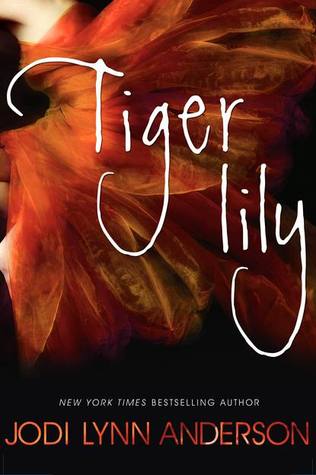
Review: Tiger Lily
A popular YA novel considered "under-rated" but still well-loved by many of my favorite YA bloggers, I can definitely understand - after having read the novel - how it generates so many conflicting opinions in its audience. I was actually just thinking about Revisionism - the literary practice of subverting a previously established story line or character for greater emphasis from a different point of view, basically revising a story to tell a different story - recently, in terms of its ties to the Feminist movements during the Early Twentieth Century.
I presented the genre as a part of a half-hour presentation I had to give in this past quarter's English 336 class, and the topic really stuck out in my head (mainly because my group partner and I kept arguing about whether something like Wide Sargasso Sea - the story of Bertha Mason from Jane Eyre, written by Jean Rhys in 1966 - was comparable to more ground-level works, like fanfiction). During this time period, Revisionism was used to give women greater voice in writing, by allowing them to speak up for women in fiction who might have remained voiceless.
Similarly, Tiger Lily, by Jodi Lynn Anderson, finds itself subverting the familiar stories and characters of Neverland, to better contrast gender role norms, conventional femininity, racial relations, and imperialism, while also touching on topics like sexual assault and suicide. Ironically, the one doing the talking this time 'round, has been famously voiceless in most iterations of the tale: the fairy, Tinker Bell.
The novel follows its titular character, a quiet, mannish young orphan feared by her tribe, but adopted by the shaman, Tik Tok, as she stumbles across one dangerous secret after another on the island of Neverland, from a Englander stranded on its banks, to the mysterious boy in the forest her tribe tells her to fear. Her new-found friendship with the enigma that is Peter Pan could shatter the fragile peace treaty her village keeps with the nearby pirates, and soon the crow-feather girl finds herself dreaming of a life outside the one she's always known... an illusion shattered by the arrival of yet another English vessel, this one bearing a yellow-haired girl, named Wendy.
The story itself is well-written and accomplishes the task of treading its own footprints in a much-traversed landscape: Neverland as seen through unexplored eyes, from the point of view of the oft-seen, but never-heard mute fairy. Tinker Bell proved to be a completely capable and interesting choice of narrator, being that as someone who couldn't speak otherwise, was deeply in tune with the emotions and thoughts of those around her; most particularly, the stoic, reserved Native girl with whom she develops a deep bond.
That being said, the word "Native" is never used; the Natives are only delineated by words like "village" or "tribe." In terms of the depictions of said customs and traditions - clearly taken after Native American heritage, like the original J.M. Barrie novel - I don't know, I felt like Anderson did a half-okay job. She had to have done at least a little research to understand the complexity of the status of "two-spirit" personhood (represented in the characterization of Tik Tok), and I thought that the parts of the narrative dealing with imperialism - with the villagers fearing catching disease from the Englanders, and the ideas of religion that man brings to the village - were handled true to history.
However, you don't grow up next to the Puyallup Reservation your whole life without knowing that taking on issues of Native American race, even one that isn't prescribed to a particular tribe, is a tricky business. I felt it was accomplished with an intermediate degree of success, with major points docked for names like "Bear Claw" and "Stone," and the undefined and indeterminate nature of the transmigration of the English language learned by the various villages (as taught by the Englanders).
(You can find an interesting perspective from a Native American blogger on the subject here.)
With the veritable laundry list of contemporary cultural pressure points listed near the beginning of this blog post being among its hot button issues, it should come as no surprise that the novel gets its strengths from its emotional core, the depths of the contrasts in gender roles, and divisions between the villagers versus the Lost Boys and pirates, ringing home the most. However, in some key territories, the narrative steers a little close to being preachy or heavy-handed, where the text almost screams the injustice at you in a way that isn't even thought-provoking, just obvious. The subtleties present within the work are much more poignant than the glaring "teachable" moments.
Furthermore, the book was advertised to me by its fanbase as being a book that would make you cry, and I can understand where they were coming from, but the novel didn't ever bring me even close to tears. If anything, the novel is dark and hard to choke down in parts, due to the explicitly depicted pain the characters are going through, but it made me wince, not cry.
Final Verdict: Tiger Lily gets its power from an emotionally-driven narrative that provides a series of jumping-off points for further discussion and contemplation of serious topics for today's young adult readers, as well as questions the implicit nature of a coming-of-age story, as told about a girl who never grew up. Revisionism, indeed.
Thursday, January 23, 2014
Review: The Fault in Our Stars
You guys. YOU GUYS.
You know how there's always that one book/movie/TV show episode/etc. that everyone says is going to make you cry? Like, Finding Neverland, or the Prom episode of Buffy? So, I'm that girl who always, always cries at those sorts of things... but never books. I don't know why - they totally used to make me tear up when I was a kid and more likely to get sucked into novels like they were a vacuum cleaner for your emotional stability - but there's little-to-no response from me when a beloved character dies or something tragic happens.
What I'm basically trying to say is, I thought I was strong enough to read this book, but I wasn't.
The Fault in Our Stars is a best-selling novel penned by quintessential Contemporary Young Adult novelist John Green. Detailing the story of a teenage terminal cancer patient living on the borrowed time of a medical miracle, Hazel Grace meets the love of her life, Augustus Waters, at a Cancer Support Group. TFiOS has already wowed readers across the globe, and has a major motion picture adaptation, starring Shailene Woodley, set to premiere this summer.
It definitely has a reputation for being a heart-breaker, but I just wouldn't listen. Both of my younger sisters were rocked to their core, and ended up even scaring our mom a little with their deeply felt emotional reactions. Nearly everyone I've talked to who read this book felt it like a bomb, and for whatever reason, I thought I'd get away clean. Not so: my mom just so happened to walk into the room at the precise moment when my red splotchy face and squinted-up eyes were gushing with tears, in a way that's more akin to what the underbellies of the Titanic must have looked like after the iceberg hit. This book hurts, as it should.
Structurally, it's solid. Narratively, it's perfection. It's got the dual benefit of being an incredibly well-written story with an incredibly interesting and involving plot. I've heard people try and write this off as simply one of the better spectrum of a Contemporary YA novel, but I think it transcends genre conventions entirely. I'd recommend this book to anyone, regardless of the shelf it came off of at Barnes and Noble.
Honestly, it's no use trying to even write a review for this one, because I'll only be repeating what so many have said before me. It's beautiful, charming, and engaging; a tragic romance of star-crossed lovers that still manages to leave you with a little bit of hope. It touches on a difficult subject with a mix of a careful hand and a willful disavowal of the seriousness that has to accompany the topic of dying, creating a loving and fun cushion for the inevitable painful blow that you know is going to be coming from page 1. Seriously, this book is deep, and wide, and worth it.
This book made me both chuckle to myself and cry like the day I was born, and there's essentially no way to talk about it that won't sound cliche or overused. Just, please read this book.
You know how there's always that one book/movie/TV show episode/etc. that everyone says is going to make you cry? Like, Finding Neverland, or the Prom episode of Buffy? So, I'm that girl who always, always cries at those sorts of things... but never books. I don't know why - they totally used to make me tear up when I was a kid and more likely to get sucked into novels like they were a vacuum cleaner for your emotional stability - but there's little-to-no response from me when a beloved character dies or something tragic happens.
What I'm basically trying to say is, I thought I was strong enough to read this book, but I wasn't.
The Fault in Our Stars is a best-selling novel penned by quintessential Contemporary Young Adult novelist John Green. Detailing the story of a teenage terminal cancer patient living on the borrowed time of a medical miracle, Hazel Grace meets the love of her life, Augustus Waters, at a Cancer Support Group. TFiOS has already wowed readers across the globe, and has a major motion picture adaptation, starring Shailene Woodley, set to premiere this summer.
It definitely has a reputation for being a heart-breaker, but I just wouldn't listen. Both of my younger sisters were rocked to their core, and ended up even scaring our mom a little with their deeply felt emotional reactions. Nearly everyone I've talked to who read this book felt it like a bomb, and for whatever reason, I thought I'd get away clean. Not so: my mom just so happened to walk into the room at the precise moment when my red splotchy face and squinted-up eyes were gushing with tears, in a way that's more akin to what the underbellies of the Titanic must have looked like after the iceberg hit. This book hurts, as it should.
Structurally, it's solid. Narratively, it's perfection. It's got the dual benefit of being an incredibly well-written story with an incredibly interesting and involving plot. I've heard people try and write this off as simply one of the better spectrum of a Contemporary YA novel, but I think it transcends genre conventions entirely. I'd recommend this book to anyone, regardless of the shelf it came off of at Barnes and Noble.
Honestly, it's no use trying to even write a review for this one, because I'll only be repeating what so many have said before me. It's beautiful, charming, and engaging; a tragic romance of star-crossed lovers that still manages to leave you with a little bit of hope. It touches on a difficult subject with a mix of a careful hand and a willful disavowal of the seriousness that has to accompany the topic of dying, creating a loving and fun cushion for the inevitable painful blow that you know is going to be coming from page 1. Seriously, this book is deep, and wide, and worth it.
This book made me both chuckle to myself and cry like the day I was born, and there's essentially no way to talk about it that won't sound cliche or overused. Just, please read this book.
Labels:
Bestseller,
Coming of Age,
Loved,
Made Me Cry,
Romance,
YA
Thursday, January 16, 2014
College Fashion Link Up: J. D. Salinger's Franny and Zooey
I'm just going to put this plainly: I am totally having the best day ever. Woke up happy, saw Disney got 8 Oscar noms, it's my Dad's birthday, Psych class had movie day, English class got canceled, so I was done with all of my classes for today at 10:30am, SyFy not only had a new season opener of Face-Off, but it was "Beauty and the Beast" themed, I had a really good turkey burger for lunch, and I've basically been sitting around since then working on blog stuff, planning for the upcoming three day weekend, and listening to the Frozen soundtrack. It's been REALLY good to be me today.
Which is why it hasn't really bothered me that I haven't gotten any comments - positive OR negative - on the College Fashion post for J.D. Salinger's Franny and Zooey that went up yesterday.
The story follows the titular pair of Franny, an ambitious and impressionable college student, and Zooey, her brilliant and hardened older brother. After a mental breakdown compounded with a religious obsession renders Franny sick, and others sick with worry for her, Zooey attempts to strike some sense into his sister with only the kind of brotherly compassion and commiseration that he can bestow.
It's a short novel, actually a compound of the short story "Franny" and novella Zooey, which both originally ran in the New Yorker in the '50s, only to be released in a novel form of their own in 1961. And I think this kind of brevity really suited the strengths of the stories themselves: they didn't put much stock in events or settings, with the main scenes playing out briefly in a train station, a restaurant, and an apartment. The major action was that of the subtle dynamics in the relationship between the protective older brother and his damaged younger sister, and I think that was something really special about the novel.
However, I don't have much more to say about it other than it was written in Salinger's detail-oriented and kind of glib style. The entire ordeal was written with a really tender hand, choosing to emphasize aspects of character development that wouldn't necessarily get much spotlight, like an involved effort to demonstrate intonation (seriously, check out the italics used in here) and emotional output (lots of angst), alongside the same crusade against inauthenticity and selfishness that was championed by Zooey's brother-in-literature, Holden Caulfield.
But I didn't like it. It was interesting, but it was short, and it regurgitated ideology I already found insanely irritating when we were still stuck inside Holden Caulfield's head. But I needed a source of inspiration for College Fashion, and since Seventeen Magazine had thrown it a reference in their back-to-school issue, I figured there was a chance that it might resonate in some fashion (haha, get it) with CF's readers, but alas. It's been exactly a year since my second post on CF, which was about Catcher in the Rye, so at least there's a nice kind of symmetry about all of it.
Even if the book wasn't exactly my fave, that doesn't mean there weren't some cool outfits that came out of it. Here's my favorite look from the article, based on Franny:
Which is why it hasn't really bothered me that I haven't gotten any comments - positive OR negative - on the College Fashion post for J.D. Salinger's Franny and Zooey that went up yesterday.
The story follows the titular pair of Franny, an ambitious and impressionable college student, and Zooey, her brilliant and hardened older brother. After a mental breakdown compounded with a religious obsession renders Franny sick, and others sick with worry for her, Zooey attempts to strike some sense into his sister with only the kind of brotherly compassion and commiseration that he can bestow.
It's a short novel, actually a compound of the short story "Franny" and novella Zooey, which both originally ran in the New Yorker in the '50s, only to be released in a novel form of their own in 1961. And I think this kind of brevity really suited the strengths of the stories themselves: they didn't put much stock in events or settings, with the main scenes playing out briefly in a train station, a restaurant, and an apartment. The major action was that of the subtle dynamics in the relationship between the protective older brother and his damaged younger sister, and I think that was something really special about the novel.
However, I don't have much more to say about it other than it was written in Salinger's detail-oriented and kind of glib style. The entire ordeal was written with a really tender hand, choosing to emphasize aspects of character development that wouldn't necessarily get much spotlight, like an involved effort to demonstrate intonation (seriously, check out the italics used in here) and emotional output (lots of angst), alongside the same crusade against inauthenticity and selfishness that was championed by Zooey's brother-in-literature, Holden Caulfield.
But I didn't like it. It was interesting, but it was short, and it regurgitated ideology I already found insanely irritating when we were still stuck inside Holden Caulfield's head. But I needed a source of inspiration for College Fashion, and since Seventeen Magazine had thrown it a reference in their back-to-school issue, I figured there was a chance that it might resonate in some fashion (haha, get it) with CF's readers, but alas. It's been exactly a year since my second post on CF, which was about Catcher in the Rye, so at least there's a nice kind of symmetry about all of it.
Even if the book wasn't exactly my fave, that doesn't mean there weren't some cool outfits that came out of it. Here's my favorite look from the article, based on Franny:
To find out more, just follow the link to my most recent College Fashion article.
Let me know what you think!
Labels:
Angst,
College Fashion,
Coming of Age,
Fashion,
Meh.
Thursday, January 9, 2014
Review: Lola and the Boy Next Door
It is only Thursday - the fourth day of school this Quarter - and despite the fact that we have yet to officially round out the one week mark (out of ten!) for this school term, I am already desperate for another break. After going to all these new classes and meeting these new teachers and having to find not-weird people to routinely sit next to in all of your new classes... it's been an exhausting week. So, with all of this struggle going on in my day to day, what better way to relax than with a sweet, short romance from an author of whom I am already a fan? Yeah, I finally read Stephanie Perkins' Lola and the Boy Next Door.
The story follows costume-obsessed San Francisco seventeen-year-old Dolores "Lola" Nolan, as what she sees as her uniquely perfect life - hot rocker band guy boyfriend, two loving fathers - comes to a screeching halt, with the reemergence of two figures from her past: Calliope Bell, ice queen (in more ways than just that she's a champion figure skater), and Cricket Bell, Calliope's twin brother, an inventor extraordinaire, who's always been seemingly content to stand in his sister's shadow. However, when it's made clear that not only are the twins coming home for good, but that Cricket's looking to repent for some past misunderstandings, Lola has to figure out which guy is right for her: the boy of her dreams, or the boy next door.
Yes, it's a little sappy and sweet in places, but that's what all good contemporary teen romances are supposed to be, and besides, Perkins does a fantastic job with grounding her romances in a lot of coming-of-age-style personal growth, which is arguably necessary in the novels: growing up is a lot of figuring out how you relate to other people, and it's important to figure out who you are yourself before you get all tangled up in a relationship. Bonus points for the seamless continuation of Anna and Etienne's story from the first novel, too! It's a smart and interesting narrative choice, and I totally love it!
However, despite the fact that this novel was another well-constructed, unique, and engaging, I had a harder time connecting to and understanding Lola and Cricket than I did with Anna and Etienne. It sucks that I feel like I have to make a comparison, because, honestly, it was still a really good book, and had a lot of merits that were different from Anna and the French Kiss, but I still liked the first novel in the series a lot more. I think what it came down to, for me, at least partially, was the integration of the setting as a secondary character in it's own right.
Throughout Anna and the French Kiss, you never once forgot they were in Paris. Stunning imagery and visual direction made the cultural differences have a life of their own, and we learned along with Anna as she explored what became one of her favorite places in the world. As she fell in love with Paris, she fell in love with Etienne; it was almost a natural extension of their blossoming relationship. However, in Lola and the Boy Next Door, you could tell Perkins was really trying to draw out the beauty of California and the Bay Area for you, but it was a lot less susceptible to the Paris treatment. If anything, I think any of the names of the places mentioned could have easily been swapped for a lot of different places in America. It's a good thing to note, then, that Isla and the Happily Ever After takes place, at least partially, in Paris again.
And before I end this post, let me just raise a point really quick: why couldn't we have had the pretty covers in the first place?
I am the kind of person who never, ever likes redesigned covers, but seriously? These are gorgeous! And totally capture the spirit of the books more. This literally has nothing to do with the books themselves, but man, are those covers giving me some feelings.
Anyways, Lola and the Boy Next Door is a great, albeit not perfect, follow up to the precedent of romance and growing up that was so incredibly well done in Anna and the French Kiss. And if you get the chance, by the new editions of both novels, just to tide you over until Isla and the Happily Ever After is released on May 15th.
The story follows costume-obsessed San Francisco seventeen-year-old Dolores "Lola" Nolan, as what she sees as her uniquely perfect life - hot rocker band guy boyfriend, two loving fathers - comes to a screeching halt, with the reemergence of two figures from her past: Calliope Bell, ice queen (in more ways than just that she's a champion figure skater), and Cricket Bell, Calliope's twin brother, an inventor extraordinaire, who's always been seemingly content to stand in his sister's shadow. However, when it's made clear that not only are the twins coming home for good, but that Cricket's looking to repent for some past misunderstandings, Lola has to figure out which guy is right for her: the boy of her dreams, or the boy next door.
Yes, it's a little sappy and sweet in places, but that's what all good contemporary teen romances are supposed to be, and besides, Perkins does a fantastic job with grounding her romances in a lot of coming-of-age-style personal growth, which is arguably necessary in the novels: growing up is a lot of figuring out how you relate to other people, and it's important to figure out who you are yourself before you get all tangled up in a relationship. Bonus points for the seamless continuation of Anna and Etienne's story from the first novel, too! It's a smart and interesting narrative choice, and I totally love it!
However, despite the fact that this novel was another well-constructed, unique, and engaging, I had a harder time connecting to and understanding Lola and Cricket than I did with Anna and Etienne. It sucks that I feel like I have to make a comparison, because, honestly, it was still a really good book, and had a lot of merits that were different from Anna and the French Kiss, but I still liked the first novel in the series a lot more. I think what it came down to, for me, at least partially, was the integration of the setting as a secondary character in it's own right.
Throughout Anna and the French Kiss, you never once forgot they were in Paris. Stunning imagery and visual direction made the cultural differences have a life of their own, and we learned along with Anna as she explored what became one of her favorite places in the world. As she fell in love with Paris, she fell in love with Etienne; it was almost a natural extension of their blossoming relationship. However, in Lola and the Boy Next Door, you could tell Perkins was really trying to draw out the beauty of California and the Bay Area for you, but it was a lot less susceptible to the Paris treatment. If anything, I think any of the names of the places mentioned could have easily been swapped for a lot of different places in America. It's a good thing to note, then, that Isla and the Happily Ever After takes place, at least partially, in Paris again.
And before I end this post, let me just raise a point really quick: why couldn't we have had the pretty covers in the first place?
I am the kind of person who never, ever likes redesigned covers, but seriously? These are gorgeous! And totally capture the spirit of the books more. This literally has nothing to do with the books themselves, but man, are those covers giving me some feelings.
Anyways, Lola and the Boy Next Door is a great, albeit not perfect, follow up to the precedent of romance and growing up that was so incredibly well done in Anna and the French Kiss. And if you get the chance, by the new editions of both novels, just to tide you over until Isla and the Happily Ever After is released on May 15th.
Tuesday, December 31, 2013
Review: Everything is Perfect When You're a Liar by Kelly Oxford
Everyone has their one "quirk" genre in their favorites list. For some, it's something basic, like sports novels, or novels set in a particular place, like Paris or your hometown. For others, it's those mystery series where the protagonist is a cat. Regardless, everyone's partial to their own particular brand of entertainment. My genre is - and probably always will be - comedy memoirs. So when I saw that Kelly Oxford's Everything is Perfect When You're a Liar ebook was on sale for Kindle, I jumped headfirst.
Kelly Oxford is a comedy screenwriter and mother of three from Canada whose internet stardom effortlessly translated into this hilarious memoir book of essays, Everything is Perfect When You're a Liar. Charting her comedic rise, from youthful ambition to stoner teenager-dom, to dodging the life of a widowed waitress, to taking her kids to Disneyland, Kelly just can't stop herself from telling the truth... and while her life may not be perfect, it sure is funny.
The genre of comedian memoirs has its variations. Some are actual, stand-up, on-stage comedians - like Steve Martin - and others found their ground as practiced comedy writers for either television or print - like Tina Fey- and some are even a hybrid of both, like my personal goddesses, Mindy Kaling and Chelsea Handler. Some are funny, like you'd expect them to be, while others choose instead to detail their personal journeys towards humor, which, more often than not, contain a fair amount of tragedy as well. Any and all are beloved by me.
Oxford manages to convey both the sad and the glorious in equal measure, detailing some of the most excruciating, awkward, terrible, train-wreck tragic parts of her life... by telling them in a way that keeps you laughing. (And not just "blowing a little harder through your nose" laughing. I mean full-on "makes people opt out of sitting next to you on public transportation" laughing.)
Everything about these memoirs are flawless. There isn't even a single aspect of her writing style I would have rather done without: her profanity and unabashed fondness for the inappropriate make her sense of humor comparable to Chelsea Handler; however, there's a distinct difference in comedic timing. Oxford's knack for the cramped confines of a well-delivered tweet translates into line after line of simmering humor that boils up to a well-organized story arc for each essay. There's no space wasted with filler or unnecessary material... if you're not laughing, it's because you've died laughing.
However, the book does have its reflective, tender moments, between all of the chuckles. From a call home to her mom from her elementary school office, or the calm of a car ride home with her dad after a wild teenage party, to her brief time spent assisting the elderly, Oxford puts the "art" in "heart" by sneaking the sentimentality in between curse words and anecdotes about poop.
Just read "An Open Letter to the Nurse Who Gave Me an Enema Bottle and Told Me to Do it Myself While I Was High on Morphine," and you'll be hooked. I promise.
Kelly Oxford is a comedy screenwriter and mother of three from Canada whose internet stardom effortlessly translated into this hilarious memoir book of essays, Everything is Perfect When You're a Liar. Charting her comedic rise, from youthful ambition to stoner teenager-dom, to dodging the life of a widowed waitress, to taking her kids to Disneyland, Kelly just can't stop herself from telling the truth... and while her life may not be perfect, it sure is funny.
The genre of comedian memoirs has its variations. Some are actual, stand-up, on-stage comedians - like Steve Martin - and others found their ground as practiced comedy writers for either television or print - like Tina Fey- and some are even a hybrid of both, like my personal goddesses, Mindy Kaling and Chelsea Handler. Some are funny, like you'd expect them to be, while others choose instead to detail their personal journeys towards humor, which, more often than not, contain a fair amount of tragedy as well. Any and all are beloved by me.
Oxford manages to convey both the sad and the glorious in equal measure, detailing some of the most excruciating, awkward, terrible, train-wreck tragic parts of her life... by telling them in a way that keeps you laughing. (And not just "blowing a little harder through your nose" laughing. I mean full-on "makes people opt out of sitting next to you on public transportation" laughing.)
Everything about these memoirs are flawless. There isn't even a single aspect of her writing style I would have rather done without: her profanity and unabashed fondness for the inappropriate make her sense of humor comparable to Chelsea Handler; however, there's a distinct difference in comedic timing. Oxford's knack for the cramped confines of a well-delivered tweet translates into line after line of simmering humor that boils up to a well-organized story arc for each essay. There's no space wasted with filler or unnecessary material... if you're not laughing, it's because you've died laughing.
However, the book does have its reflective, tender moments, between all of the chuckles. From a call home to her mom from her elementary school office, or the calm of a car ride home with her dad after a wild teenage party, to her brief time spent assisting the elderly, Oxford puts the "art" in "heart" by sneaking the sentimentality in between curse words and anecdotes about poop.
Just read "An Open Letter to the Nurse Who Gave Me an Enema Bottle and Told Me to Do it Myself While I Was High on Morphine," and you'll be hooked. I promise.
Labels:
Bestseller,
Coming of Age,
Humor,
Memoirs,
Non-Fiction
Sunday, October 20, 2013
Just Starting Up
Dystopian, to me, is getting a little old hat. Maybe it's the cynical, "everything sucks and will continue to suck so bad that everything is really going to suck one day" nature that today's teen readers have seemingly adopted, or maybe it's the utopian idea of a spring-like renewal that has always pushed youth towards revolution, that made this genre a YA windfall for early adopters... but I'm getting kind of fed up with fiery femmes fighting against Big Brother in hollowed-out shells of former America (see: Divergent, The Hunger Games).
However, while there are some good adapters of this familiar set of tropes, the majority are nothing but cheap and flimsy shells of the genre (Here's looking at you, terribly constructed dystopian world of The Selection). My question is, are there any talented popular-wave-riding writers out there anymore? Where are my pro-status pop-genre-surfers?
Amy Tintera, it seems, is one of them, because Reboot is one significantly bad-ass dystopian extravaganza.
The novel follows Wren Connolly - dubbed 178, due to the number of minutes it took for her body to regenerate after her death, at the ripe age of twelve years old - who is a stoic, efficient robot of a Reboot, now at the age of seventeen, well considered a veteran, being that Reboots don't usually survive nearly as long. But other Reboots aren't Wren, someone who was dead for so long, it's almost as if she lost all threads of humanity along the way. So when Callum, with 22 minutes dead before Rebooting, shows up in the new batch of recruits, no one expects him to last very long, including Wren. But, for whatever reason, she soon finds that she wants him to; in fact, she'd do anything to make sure he isn't eliminated, because he makes her feel so... alive.
Whne it comes to giving the people what they want, Tintera scores a home run with not only a vibrant and dynamic heroine, dystopian future, and typical young-underdog story typical to YA, but with zombies, rigid class systems, super-cool tech, and a swoony guy to fight for (yeah, that's right: she's the one kicking butt here). It's like a smoothie made of all your favorite fruits, but ten times as sweet, because now you're dealing with bounty hunters, mysterious government-controlling corporations, and actual threats of death, instead of gross things, like blueberries.
The pacing is enough to give you whiplash, too, clipping along at a positively breakneck speed, and filling each second with some thing new, exciting, and awesome. That isn't to say that it doesn't develop, however, with actions and dialogue standing in for artistry and development. In fact, the frenetic inner-workings of the novel highlight an equally dynamic shift: Wren's gradual reversion to a vaguely human state, all thanks to the return of one of the most essential things to human life, to her life... Love.
The biggest problem I had with the novel was one I've heard repeated by more bloggers than just me: when the time came to fight some battles, there was a general predilection to kiss instead. I mean, I get romance, but when there's people charging at you with guns, it's time to hustle, kids, not make out. Keep sitting there sucking face, and you might as well kiss your butt goodbye, because I think you're in trouble.
Still, improperly-timed romancing aside, Reboot is a successful and well-constructed dystopian world, unique to it's genre, with perfect pacing and solid build, as well as a very sweet romance nestled in the middle.
However, while there are some good adapters of this familiar set of tropes, the majority are nothing but cheap and flimsy shells of the genre (Here's looking at you, terribly constructed dystopian world of The Selection). My question is, are there any talented popular-wave-riding writers out there anymore? Where are my pro-status pop-genre-surfers?
Amy Tintera, it seems, is one of them, because Reboot is one significantly bad-ass dystopian extravaganza.
The novel follows Wren Connolly - dubbed 178, due to the number of minutes it took for her body to regenerate after her death, at the ripe age of twelve years old - who is a stoic, efficient robot of a Reboot, now at the age of seventeen, well considered a veteran, being that Reboots don't usually survive nearly as long. But other Reboots aren't Wren, someone who was dead for so long, it's almost as if she lost all threads of humanity along the way. So when Callum, with 22 minutes dead before Rebooting, shows up in the new batch of recruits, no one expects him to last very long, including Wren. But, for whatever reason, she soon finds that she wants him to; in fact, she'd do anything to make sure he isn't eliminated, because he makes her feel so... alive.
Whne it comes to giving the people what they want, Tintera scores a home run with not only a vibrant and dynamic heroine, dystopian future, and typical young-underdog story typical to YA, but with zombies, rigid class systems, super-cool tech, and a swoony guy to fight for (yeah, that's right: she's the one kicking butt here). It's like a smoothie made of all your favorite fruits, but ten times as sweet, because now you're dealing with bounty hunters, mysterious government-controlling corporations, and actual threats of death, instead of gross things, like blueberries.
The pacing is enough to give you whiplash, too, clipping along at a positively breakneck speed, and filling each second with some thing new, exciting, and awesome. That isn't to say that it doesn't develop, however, with actions and dialogue standing in for artistry and development. In fact, the frenetic inner-workings of the novel highlight an equally dynamic shift: Wren's gradual reversion to a vaguely human state, all thanks to the return of one of the most essential things to human life, to her life... Love.
The biggest problem I had with the novel was one I've heard repeated by more bloggers than just me: when the time came to fight some battles, there was a general predilection to kiss instead. I mean, I get romance, but when there's people charging at you with guns, it's time to hustle, kids, not make out. Keep sitting there sucking face, and you might as well kiss your butt goodbye, because I think you're in trouble.
Still, improperly-timed romancing aside, Reboot is a successful and well-constructed dystopian world, unique to it's genre, with perfect pacing and solid build, as well as a very sweet romance nestled in the middle.
Wednesday, August 14, 2013
College Fashion Link-Up: Rambling Man
Summer is winding down, and there's no better time than the heat of August for a great summer road trip. I should know; at this time, two years ago, I was scouting out Eastern Washington's colleges, and at this very moment, several members of my family are holed up at a hotel in SoCal, deciding whether my sister, The Cheerleader, could make it a home. (My guess is yes, being that they bisected the straight line traveling between universities with quick trips to Universal Studios and the Winchester Mystery House. I don't think her heart's ever going to leave the state now.)
Then again, while I may be enjoying the time I have left in my beloved Tacoma, I can still take this mental vacation, courtesy of Jack Kerouac, with On the Road.
The story follows the young recent divorcee Sam Paradise, through his cross-country adventures, and his relationship with the hedonistic and un-anchorable Dean Moriarty. Based off of the true 1940s travels of Kerouac and his fellow Beat man, Neal Cassady, the tale was written on a single continuous scroll of typewriter paper in 1951, and is lauded for its lyricism and jazz style, as well as being a manifesto of sorts for the rebellion and exploration of the Beat generation, of which Kerouac became the official mascot when it was published in 1957.
I'm not one to dwell much on the romantic ramblings of quintessential rebellious, moody American Manhood (Here's to spitting in your eye, Ernest Hemingway, the unofficial drunk uncle of this type of literature). The constant sexism masquerading as a lover's temperament was degrading and dulled the first half or so of the book, as well as all of Dean's relationships, and the racial romanticism and ill-depiction of the ethnic representation in the book was stereotypical and served little purpose. This all being said... this was a young guy, an aspiring writer, in a time where behaviors and themes like these were en vogue. Of course he was going to be an overly macho, woman-using, racially insensitive, over-thinking pavement chaser and un-tethered philosophist. This was, after all, the era of the Beats.
I was fully enraptured in, while not what he was saying, the way he was saying it. If you are ever misguided enough to ask me what my favorite style of writing is, I'm always going to say the flighty, floaty dreaminess, yet deeply mentally-focused practice of "Stream of Consciousness" style. While Kerouac was not really a "SoC" writer, he was definitely not one to be confined by typical writing practices of punctuation and grammar. It was as if the fact that he wrote the entire book in three weeks on a constant coffee drip (true story), had granted him enlightenment, in some fashion, and his every word was escaping off the page with his ascent into nirvana. It was, honestly, glorious, and I loved it.
I was so inspired by the prose - the sentences that stretched on like sections of roadway, the paragraphs that lasted as long as road construction in Washington and made just as much sense - that I ended up using the novel for my most-recent article on College Fashion. I even mixed in some of my favorite lines from the novel, as well! While you'll have to follow the link to see it yourself, here's a sneak preview at one of my favorite looks from the piece, involving the personal philosophies of the Beat boys of Kerouac's generation:
Then again, while I may be enjoying the time I have left in my beloved Tacoma, I can still take this mental vacation, courtesy of Jack Kerouac, with On the Road.
The story follows the young recent divorcee Sam Paradise, through his cross-country adventures, and his relationship with the hedonistic and un-anchorable Dean Moriarty. Based off of the true 1940s travels of Kerouac and his fellow Beat man, Neal Cassady, the tale was written on a single continuous scroll of typewriter paper in 1951, and is lauded for its lyricism and jazz style, as well as being a manifesto of sorts for the rebellion and exploration of the Beat generation, of which Kerouac became the official mascot when it was published in 1957.
I'm not one to dwell much on the romantic ramblings of quintessential rebellious, moody American Manhood (Here's to spitting in your eye, Ernest Hemingway, the unofficial drunk uncle of this type of literature). The constant sexism masquerading as a lover's temperament was degrading and dulled the first half or so of the book, as well as all of Dean's relationships, and the racial romanticism and ill-depiction of the ethnic representation in the book was stereotypical and served little purpose. This all being said... this was a young guy, an aspiring writer, in a time where behaviors and themes like these were en vogue. Of course he was going to be an overly macho, woman-using, racially insensitive, over-thinking pavement chaser and un-tethered philosophist. This was, after all, the era of the Beats.
I was fully enraptured in, while not what he was saying, the way he was saying it. If you are ever misguided enough to ask me what my favorite style of writing is, I'm always going to say the flighty, floaty dreaminess, yet deeply mentally-focused practice of "Stream of Consciousness" style. While Kerouac was not really a "SoC" writer, he was definitely not one to be confined by typical writing practices of punctuation and grammar. It was as if the fact that he wrote the entire book in three weeks on a constant coffee drip (true story), had granted him enlightenment, in some fashion, and his every word was escaping off the page with his ascent into nirvana. It was, honestly, glorious, and I loved it.
I was so inspired by the prose - the sentences that stretched on like sections of roadway, the paragraphs that lasted as long as road construction in Washington and made just as much sense - that I ended up using the novel for my most-recent article on College Fashion. I even mixed in some of my favorite lines from the novel, as well! While you'll have to follow the link to see it yourself, here's a sneak preview at one of my favorite looks from the piece, involving the personal philosophies of the Beat boys of Kerouac's generation:
Pretty cute, huh? Unfortunately, I won't give away the thought process behind the outfit; you'll have to journey over to my "Looks from Books: On the Road" article yourself to read it.
While I didn't necessarily love the narrator, or what he had to say, I really appreciated the structure - or is it more like mis-structure? - cadence and pacing of Kerouac's rambling tale, and that's enough for me. Fans of interesting and unique writing styles - as well as philosophical journeys towards what is youth, progress, love, and dependency - this book is a must. Best take it for a spin before school starts, and enjoy it in the remnants of the summer sun.
Labels:
Angst,
Bestseller,
Classic,
College Fashion,
Coming of Age,
Soul-Searching,
Summer
Sunday, June 30, 2013
Oh, Dear
The sun has finally come out again, and I was looking for something a little sunny to read; hence, I picked up this novel - Dear Lucy: A Novel, by Julie Sarkissian - of the top of my recent stack of Advance Reading Copies (ARCs) that have been piling up on my shelves. From the bright, colorful, and quirky cover, it looks like a cheerful, optimistic novel, and guessing from the chicken, it was about a young girl who lives on a farm. However, anyone making that assumption - fulfilling the dreaded adage of "judging a book by its cover," as marketing teams only love to assure that you do - would only be correct for about half of that sentence.
Dear Lucy is told primarily from the viewpoint of a young, mentally challenged girl named Lucy, who is looked after on a farm by two caregivers, named Mister and Missus, who are tasked to tend to her until her mother decides she can once again keep her in her life. Also on the farm is a young, pregnant woman named Samantha, who is equal parts loving of little Lucy, and secretive about her past, as well as several chickens that Lucy loves to oversee, and the left-behind words of Mister and Missus' daughter, Stella. The story follows Lucy, as she tries to make sense of her rapidly-changing world, with Samantha's due date approaching nearer, by attempting to understand universal concepts foreign to her, like the "secret of growing," or why the stories Samantha tells conflict so heavily with what others say is the truth.
The chapters intersperse themselves with the voices of the various characters, instead of just focusing on Lucy, which allows for a more rhythmic measuring and pacing of the slow-burning plot. It was a very calculated move, and kept the character development from getting too condensed, electing instead for special serving sizes of the unique and complex styles of story-telling in the various forms of each of the characters. While, after a while, this got a little too monotonous for me, and I had to fight the urge to jump forward a chapter or two to finally get a grip on the story, I refrained, and in the end, I think the novel was probably the better for it.
The narration styles were also refreshing and carefully constructed themselves, with each new voice coming through as distinctly their own. None of the characters themselves were carefully delineated as either "good" or "bad," and the setting and time period were similarly unmarked (Great Depression? WWII?). These balanced individualistic and ambiguous tendencies of description were both a hindrance and a help to the novel, allowing the reader to form their own opinions, but also making the constant moral weighing and attempts at association more difficult than they needed to be.
The most interesting aspect of the novel, by far, was the primary narrator, the titular Lucy, who is mentally handicapped. The effect is one-hundred-percent successful: it comes off as fully authentic and genuine in its application, completely earnest in sentiment, and allowed the reader to easily access the world of someone of a kind they haven't explored before, with the fuller breadth of outside knowledge to understand the things Lucy, herself, did not.
However, I did feel there was a severe detractor to such elements as the distinctly unique voice, the interesting and deeply morally involving story line, and the severe plights faced by some of the most vulnerable characters in the novel. Going into this book, there was no mention that Lucy was handicapped in any way (it actually takes you at least a few pages to really get the bigger picture). Similarly, the concept art is deceptively not-age-appropriate, and I cannot stress enough, the fact that the subject matter is positively brutal: themes like sexual assault, violence, suicide, etc. and, of course, the difficult topic of mentally handicapped children, populate the major story arcs of our characters, and there's a plot twist at the end of the novel, involving some unearthed facts about Stella, that literally made me throw my book across the room in disgust. In other words, the cover and description both don't explicitly lie about the contents of the novel, but they sure as hell don't tell much of the story, either.
Read this novel if you're looking for interesting voice, genuine characters, and a unique plot... just realize that you're getting a lot more baggage than you bargained for.
Dear Lucy is told primarily from the viewpoint of a young, mentally challenged girl named Lucy, who is looked after on a farm by two caregivers, named Mister and Missus, who are tasked to tend to her until her mother decides she can once again keep her in her life. Also on the farm is a young, pregnant woman named Samantha, who is equal parts loving of little Lucy, and secretive about her past, as well as several chickens that Lucy loves to oversee, and the left-behind words of Mister and Missus' daughter, Stella. The story follows Lucy, as she tries to make sense of her rapidly-changing world, with Samantha's due date approaching nearer, by attempting to understand universal concepts foreign to her, like the "secret of growing," or why the stories Samantha tells conflict so heavily with what others say is the truth.
The chapters intersperse themselves with the voices of the various characters, instead of just focusing on Lucy, which allows for a more rhythmic measuring and pacing of the slow-burning plot. It was a very calculated move, and kept the character development from getting too condensed, electing instead for special serving sizes of the unique and complex styles of story-telling in the various forms of each of the characters. While, after a while, this got a little too monotonous for me, and I had to fight the urge to jump forward a chapter or two to finally get a grip on the story, I refrained, and in the end, I think the novel was probably the better for it.
The narration styles were also refreshing and carefully constructed themselves, with each new voice coming through as distinctly their own. None of the characters themselves were carefully delineated as either "good" or "bad," and the setting and time period were similarly unmarked (Great Depression? WWII?). These balanced individualistic and ambiguous tendencies of description were both a hindrance and a help to the novel, allowing the reader to form their own opinions, but also making the constant moral weighing and attempts at association more difficult than they needed to be.
The most interesting aspect of the novel, by far, was the primary narrator, the titular Lucy, who is mentally handicapped. The effect is one-hundred-percent successful: it comes off as fully authentic and genuine in its application, completely earnest in sentiment, and allowed the reader to easily access the world of someone of a kind they haven't explored before, with the fuller breadth of outside knowledge to understand the things Lucy, herself, did not.
However, I did feel there was a severe detractor to such elements as the distinctly unique voice, the interesting and deeply morally involving story line, and the severe plights faced by some of the most vulnerable characters in the novel. Going into this book, there was no mention that Lucy was handicapped in any way (it actually takes you at least a few pages to really get the bigger picture). Similarly, the concept art is deceptively not-age-appropriate, and I cannot stress enough, the fact that the subject matter is positively brutal: themes like sexual assault, violence, suicide, etc. and, of course, the difficult topic of mentally handicapped children, populate the major story arcs of our characters, and there's a plot twist at the end of the novel, involving some unearthed facts about Stella, that literally made me throw my book across the room in disgust. In other words, the cover and description both don't explicitly lie about the contents of the novel, but they sure as hell don't tell much of the story, either.
Read this novel if you're looking for interesting voice, genuine characters, and a unique plot... just realize that you're getting a lot more baggage than you bargained for.
Labels:
Angst,
ARC,
Coming of Age,
Conflicted,
Controversial,
Family,
Teenage
Tuesday, June 25, 2013
Creepy Kids
It's been pretty gloomy here at home ever since summer really started, and the constant cloud cover has got me pretty bummed. With bookshelves ever serving as a first class ticket to, well, other minds, I decided to take a trip to someone else's head for a couple of days, some one whose mind wasn't overly crowded with discontent like mine. Yet, wouldn't you know it, my subconscious steered me right towards the downright gloomiest book in my bookcase: Ransom Rigg's Miss Peregrine's Home for Peculiar Children.
This novel follows the story of seventeen-year-old named Jacob, from his painfully dull existence in Florida, to a mysterious island off of the coast of Wales, in search of answers for the murder of his grandfather, and the truth behind the strange stories the old man used to tell him... Tales about a boy who was inhabited by bees, a brother/sister duo whose were much mightier than their size would suggest, a girl who could levitate and another who could control plants, and most special still, a girl who could control fire, all living in an orphanage during WWII. However, the reality he finds, is even stranger than the stories, and it soon becomes clear, that in facing the truth, he must also face a future different from anything he has ever known.
The novel was incredibly fast-paced, with nary a dull moment or pause in action, with plenty of suspense pulling the story forward at every step. While the constant movement might have been construed as sloppy or a little too frenetic at key points, the effect was, overall, fitting of Jacob's rapidly changing world view. In fact, that's what this book served as, primarily: not a world-builder, but definitely a world-changer. A lot of it, especially in the middle, assisted in the transition of the construction of Jacob's reality into one of an altered semi-reality... Still, this endless flow of movement and change got a little hectic, and I would have appreciated a little more demonstration of the world than oration of its composition. You know, showing, rather than telling. (Then again, this maybe because it is a YA fantasy, and the length and believability might have been called into questioning on that count).
The characters are incredibly intriguing, the descriptions are vivid (and that's saying something, that Wales and muddy bogs and creeping fog can ever be described as "vivid"), and the plot was very interesting, with multiple layers, and a lot of twists and turns. The ending especially was incredibly suspenseful, but the plot twist was a little too expected and poorly orchestrated for my taste. It was obvious to spot, but it didn't detract from the ending too much.
The best aspect of the book by far was the photos from which the book originated. The fact that the plot was cobbled together from strange snippets and odd photos found at random garage sales and flea markets, was SO COOL, and definitely served as a super unique origin for this super unique story. The best part is, there's even more of the origin story present in the back of my copy...
I was sent this book through Goodreads, as the novel moves forward from it's status as a New York Times Best-Seller in hardcover, into paperback form, in preparation for the release of it's sequel, Hollow City, come next January 14th. This edition of the already-popular novel includes an extensive Q&A with Mr. Riggs in the back of the book, even more creepy pictures - those not used in the novel itself, as well as others hinting at the fates that await the children in their next adventure - and a fairly large chunk of the first chapter of the sequel as well. The extra materials were just as cool as the book itself, as the Q&A detailed even more of the amazing origins of the novel, and that was the part I liked best.
Though maybe a little unsuited for those who don't like overly predictable novels, this is a good, creepy read for the YA Fantasy/Horror types, as well as adults who are willing to sit through some drudge-y info-dumping and teen romance. At the end of the day, it was still a pretty welcome distraction for me.
This novel follows the story of seventeen-year-old named Jacob, from his painfully dull existence in Florida, to a mysterious island off of the coast of Wales, in search of answers for the murder of his grandfather, and the truth behind the strange stories the old man used to tell him... Tales about a boy who was inhabited by bees, a brother/sister duo whose were much mightier than their size would suggest, a girl who could levitate and another who could control plants, and most special still, a girl who could control fire, all living in an orphanage during WWII. However, the reality he finds, is even stranger than the stories, and it soon becomes clear, that in facing the truth, he must also face a future different from anything he has ever known.
The novel was incredibly fast-paced, with nary a dull moment or pause in action, with plenty of suspense pulling the story forward at every step. While the constant movement might have been construed as sloppy or a little too frenetic at key points, the effect was, overall, fitting of Jacob's rapidly changing world view. In fact, that's what this book served as, primarily: not a world-builder, but definitely a world-changer. A lot of it, especially in the middle, assisted in the transition of the construction of Jacob's reality into one of an altered semi-reality... Still, this endless flow of movement and change got a little hectic, and I would have appreciated a little more demonstration of the world than oration of its composition. You know, showing, rather than telling. (Then again, this maybe because it is a YA fantasy, and the length and believability might have been called into questioning on that count).
The characters are incredibly intriguing, the descriptions are vivid (and that's saying something, that Wales and muddy bogs and creeping fog can ever be described as "vivid"), and the plot was very interesting, with multiple layers, and a lot of twists and turns. The ending especially was incredibly suspenseful, but the plot twist was a little too expected and poorly orchestrated for my taste. It was obvious to spot, but it didn't detract from the ending too much.
The best aspect of the book by far was the photos from which the book originated. The fact that the plot was cobbled together from strange snippets and odd photos found at random garage sales and flea markets, was SO COOL, and definitely served as a super unique origin for this super unique story. The best part is, there's even more of the origin story present in the back of my copy...
I was sent this book through Goodreads, as the novel moves forward from it's status as a New York Times Best-Seller in hardcover, into paperback form, in preparation for the release of it's sequel, Hollow City, come next January 14th. This edition of the already-popular novel includes an extensive Q&A with Mr. Riggs in the back of the book, even more creepy pictures - those not used in the novel itself, as well as others hinting at the fates that await the children in their next adventure - and a fairly large chunk of the first chapter of the sequel as well. The extra materials were just as cool as the book itself, as the Q&A detailed even more of the amazing origins of the novel, and that was the part I liked best.
Though maybe a little unsuited for those who don't like overly predictable novels, this is a good, creepy read for the YA Fantasy/Horror types, as well as adults who are willing to sit through some drudge-y info-dumping and teen romance. At the end of the day, it was still a pretty welcome distraction for me.
Labels:
Angst,
ARC,
Coming of Age,
Construction,
Escapism,
Goodreads,
Horror,
Mysteries,
Paranormal
Thursday, May 9, 2013
Life in a Castle
So, confession time: I kind of have a thing for castles. Growing up, I was enamored with every fairy tale you could throw at me. In high school, let's just say I went to America's Hogwarts (and it was awesome). And now, my sorority house is shaped like a castle, too. So, let me just preface this all by saying I really, really love castles.
This novel was recommended for a review in the comments section of one of my very first College Fashion articles, and since I already had the book (thanks to last Spring's trip to Powell's City of Books in Portland, OR), I figured, why not? I mean, it's pretty clearly emblazoned on the cover that J.K. Rowling loves this book, so chances were that I'd love it, too. However, to tell you the truth, I wasn't entirely sure of how it was going to impress me.
And it certainly didn't help that I read the entire book within the space of four hours, confined to a stiff-backed chair in an absolutely silent Business Library, while my Big calmly did her Accounting homework in the seat next to me. That kind of self-imposed torture does affect the way you read... and it certainly helped me identify with a certain later event in the plot line involving Mr. Mortmain and the Tower (read it and you'll know what I mean!).
Alright, before I get too ahead of myself, let me just illuminate the story a little bit:
I Capture the Castle is a classic coming-of-age novel in England, set in the 1930s in between the wars, in the countryside a short distance outside of London. There lies the Castle, old and crumbling under mismanagement, within which resides the Mortmain family, living in genteel poverty, on the royalties their father collects from a best-selling novel he wrote over a decade ago. However, because of Mr. Mortmain's inability to publish anything else noteworthy, Cassandra - our seventeen year old writer-novice narrator - and her sister Rose - beautiful, ambitious, and discontented - as well as their brother Thomas, nude-model stepmother Topaz, and their resident farmhand, Stephen, are all forced to come to terms with... well, not much. Until the wealthy, handsome, American Cotton brothers come to claim their late father's estate, of course. It doesn't take long for the Bronte-and-Austen-obsessed sisters to make a plan for wooing the elder brother, Simon, and pretty soon, hilarity, embarrassment, misunderstandings, betrayals, forgiveness, family, and love are detailed across the pages of Cassandra's many journal pages.
All in all, this emotional journey of self-discovery, acceptance, and inspiration left me thinking long after Sara and I left the Library. It invoked a lot of important questions, like, what does it really mean to be beautiful? The differences between the sisters, Rose and Cassandra, were really what impressed me the most, simply because it reminded me a lot of the dynamic between me and my sister, The Cheerleader. The family depicted in the novel is wholly remarkable for their ability to stand by each other, even when everyone is doing different things and all caught up in their own individual problems, like Rose's relationship, and Mr. Mortmain's inability to write. Other members, like Thomas, factored in as a moral and objective viewpoint, while Topaz figured, for the majority as a form of comic relief... but even so, their personalities were formed by more than mere narrative tropes. Multi-faceted and perfectly flawed, the Mortmain family will probably stand as one of my literary favorites for a long time.
The fact that you could see Cassandra's narrative voice changing over time and journals, was pretty amazing, too, and a narrative form that I haven't really seen before. In terms of simply the structure of the writing, the journal format was interesting, in the way that I too have kept a journal for a long time, and I don't think that my hand would ever stand up to the workouts she impressed upon hers in writing so extensively. Still, it factored in both stream-of-consciousness and narrative stylings in a way that proved very engaging and interesting, and I really enjoyed Cassandra's voice.
And the castle in the story is pretty cool, too. :)
This novel was recommended for a review in the comments section of one of my very first College Fashion articles, and since I already had the book (thanks to last Spring's trip to Powell's City of Books in Portland, OR), I figured, why not? I mean, it's pretty clearly emblazoned on the cover that J.K. Rowling loves this book, so chances were that I'd love it, too. However, to tell you the truth, I wasn't entirely sure of how it was going to impress me.
And it certainly didn't help that I read the entire book within the space of four hours, confined to a stiff-backed chair in an absolutely silent Business Library, while my Big calmly did her Accounting homework in the seat next to me. That kind of self-imposed torture does affect the way you read... and it certainly helped me identify with a certain later event in the plot line involving Mr. Mortmain and the Tower (read it and you'll know what I mean!).
Alright, before I get too ahead of myself, let me just illuminate the story a little bit:
I Capture the Castle is a classic coming-of-age novel in England, set in the 1930s in between the wars, in the countryside a short distance outside of London. There lies the Castle, old and crumbling under mismanagement, within which resides the Mortmain family, living in genteel poverty, on the royalties their father collects from a best-selling novel he wrote over a decade ago. However, because of Mr. Mortmain's inability to publish anything else noteworthy, Cassandra - our seventeen year old writer-novice narrator - and her sister Rose - beautiful, ambitious, and discontented - as well as their brother Thomas, nude-model stepmother Topaz, and their resident farmhand, Stephen, are all forced to come to terms with... well, not much. Until the wealthy, handsome, American Cotton brothers come to claim their late father's estate, of course. It doesn't take long for the Bronte-and-Austen-obsessed sisters to make a plan for wooing the elder brother, Simon, and pretty soon, hilarity, embarrassment, misunderstandings, betrayals, forgiveness, family, and love are detailed across the pages of Cassandra's many journal pages.
All in all, this emotional journey of self-discovery, acceptance, and inspiration left me thinking long after Sara and I left the Library. It invoked a lot of important questions, like, what does it really mean to be beautiful? The differences between the sisters, Rose and Cassandra, were really what impressed me the most, simply because it reminded me a lot of the dynamic between me and my sister, The Cheerleader. The family depicted in the novel is wholly remarkable for their ability to stand by each other, even when everyone is doing different things and all caught up in their own individual problems, like Rose's relationship, and Mr. Mortmain's inability to write. Other members, like Thomas, factored in as a moral and objective viewpoint, while Topaz figured, for the majority as a form of comic relief... but even so, their personalities were formed by more than mere narrative tropes. Multi-faceted and perfectly flawed, the Mortmain family will probably stand as one of my literary favorites for a long time.
The fact that you could see Cassandra's narrative voice changing over time and journals, was pretty amazing, too, and a narrative form that I haven't really seen before. In terms of simply the structure of the writing, the journal format was interesting, in the way that I too have kept a journal for a long time, and I don't think that my hand would ever stand up to the workouts she impressed upon hers in writing so extensively. Still, it factored in both stream-of-consciousness and narrative stylings in a way that proved very engaging and interesting, and I really enjoyed Cassandra's voice.
And the castle in the story is pretty cool, too. :)
Subscribe to:
Posts (Atom)