Showing posts with label Teenage. Show all posts

Thursday, March 7, 2019

BITS OF BOOKS: DRAFTS FOLDER LOVE STORIES


Remember a month or so ago, when I told you all about the treasure trove of unused reviews I had found tucked away into the nooks and crannies of my Drafts folder? Well, they weren't exactly the end of the stack... in fact, far from it!

So, I grouped together a few of those drafts that just so happened to follow a common theme: love stories. Sure, I've only gotten into romance novels recently, but I've had my past with cutesy contemporary YA and NA happily ever afters, too! While they certainly aren't the kinds of things I'd feel prompted to pick up nowadays, it feels a shame to leave them languishing in the dark of Drafts... so, I've decided to share some of them with you.

And besides, it doesn't look like the bad weather is letting up around Washington anytime soon. Might as well find something sunshiny to keep you optimistic while the world around you is thawing!


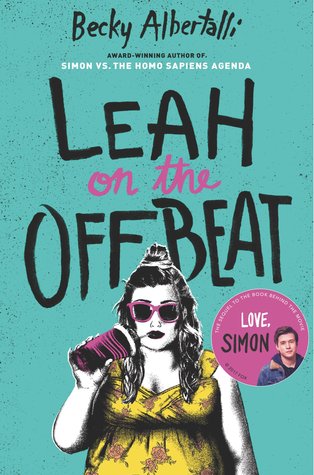
Leah on the Offbeat, Becky Albertalli

31180248
I had a hold placed on this Simon Vs. The Homosapiens Agenda sequel at the library months before it came out last summer. Both self-aware and highly aware of current teen trends, Leah on the Offbeat is a contemporary YA romance in every sense of the term, packed with relatable feelings, current humor and slang, and conversations that feel all to real to anyone who's had to struggle through things like school musicals, epic promposals, and friend breakups.

I'm a fan of Albertalli's other books, but unfortunately, I came away fairly underwhelmed. The excitement I had over revisiting Leah as a character was dashed a little bit by the fact that she is incredibly cynical, sarcastic, and angsty, which is not always a great character frame to inhabit as a firsthand narrator. It was hard to get invested in some of her troubles, especially those between her and her mom, when it felt like her attitude went a large ways in causing them. While I did appreciate some of her attributes, like her fierce protection of her friends, her enthusiasm for drumming and art, and the relatable relationship she had with her weight (curvy main characters, represent!), they were often washed away by her constant snarking and pessimism.

Honestly, my favorite parts of the novel as a whole were often the ones that featured - shocker! - Simon and Bram. 

Now Me: Unfortunately, the more I think of this secondary installment for the Creekwood fan base, the more disappointment I feel at its outcome. I liked Albertalli's other YA foray, The Upside of Unrequited, a lot more, and it had a curvy main character as well. I'd probably opt to reread that selection, rather than this one. 


I Believe in a Thing Called Love, Maurene Goo

31145133An unexpected and fun YA contemporary romance with plenty of hijinks and hilarity to stretch the bounds of what your average high school experience looks like, without sacrificing any of the awkward charm. 

Cheerfully steering clear of the typical high school stereotypes, by swapping out the teen rom-com rulebook for one of her own, Goo creates a unique cast of characters unlike any you've ever met before... outside of a K-Drama, that is. While I don't think I knew anyone in high school quite as high-achieving as Desi Lee before, I think I probably would have liked her: she reminded me of Sarah Strohmeyer's whip-smart heroines from Smart Girls Get What They Want.

Now Me: Everything about this book - from the doodles on the cover, to our quirky main character - were absolutely cute and fun. Goo has another popular YA book out, and another one arriving this summer... maybe it would be fun to take a step back into the mindset of a romantic high schooler again? 


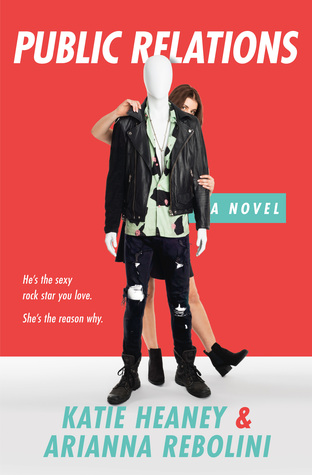
Public Relations, Katie Heaney
31930490
This book was a fun, quick read, that ultimately resembled bad fan fiction a little too strongly for me to fully engage with the plot. 

The attempts at obscuring the inspiration for Archie Fox, the love interest, were almost comically half-hearted, and it kind of made the whole thing come off as a Tumblr "imagine" rather than a fully edited and published novel. That, coupled with a less-than-inspirational heroine, and an unconvincing romantic buildup, rendered the entire thing more suitable for YA shelves than NA. If I was looking for a good celebrity-and-normal-person romance, I'd probably reread something like Meg Cabot's Teen Idol instead. 


Also, this book will absolutely not age well. From frequent mentions of real-life celebrities, to strong social media reliance, to the amount of times the food-ordering service Seamless was mentioned, this book will have exhausted any of its cultural collateral within five years. 


Now Me: Same with Leah on the Offbeat, my opinions of this book have only gotten stronger with time. The litany of narrative issues, coupled with inconstant stereotyping, and the poorly obscured real-life source material, make this one more closely resemble something you'd find on Tumblr than in the real world. 


What kinds of past reads have you been thinking about lately? Got anything buried in your Drafts folder? Let me know, in the comments below!

Wednesday, March 18, 2015

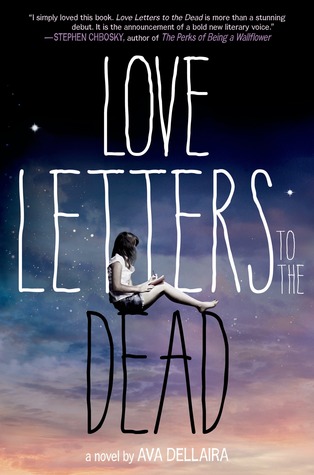
Review: Love Letters to the Dead


Can a recommendation from a non-blogger or YA amateur really yield effective and enthralling bookish results? Or will it be just another dud doorstop in the teen contemporary stack? 

It's always interesting to see recommendations from people who don't specialize in reading YA books. Doing so can yield fairly varying results: they'll say, "it's pretty good for its type," which means nothing, or they'll say, "It's a great guilty read!" in which case I'll most likely love it, but it is in no way a really great book. There are very few that truly mean they love a book when they say they don't usually love YA... and those few are usually indoctrinated John Green followers (God love you people, but damn).

But here's the part where I haven't learned my lesson yet: I thought I could trust Emma Watson's judgement when she tweeted about how much she enjoyed the novel Love Letters to the Dead, by Ava Dellaira, because she does actually have some experience in the field, having starred in notable teen hipster fave, Perks of Being a Wallflower. Additionally, since that same sense of approval was corroborated by some of my favorite book blogs, I even managed to put aside my natural tendency to stay as far away from contemporary as possible.

Unfortunately, I was disappointed, again. Darn it.

Love Letters to the Dead details the life Laurel, a teen girl on a new path after her sister's untimely death makes things too complicated at her old school. Told in an epistolary format, through the letters she writes to dead celebrities like Kurt Cobain, Amy Winehouse, and Amelia Earhart, the novel explores themes of self-discovery, young love, and coming to terms with grief, all leading to the grand revelation that Laurel might be keeping secrets even from the letters she can never send.

I'll shoot it to you straight: LLttD was the same kind of overly-saccharine, dramatized teen novel that I've come to associate with everything annoying about the teen contemporary genre. The narrator's seemingly relatable tone, is completely displaced with terrifyingly possible teenage experiences, that instead of granting the dignities those realities deserved, lost all nuance through their Lifetime Original Movie treatment.

Exploration of sexuality, sexual abuse, divorce, first loves and first times, romanticized alcoholism, death and grieving, drug use... pick one. Or two. At least not all of them. Every single one of these topics - some tropes, some too real, some which need to be explored in the contemporary genre further - were fit in to the novel at the severe expense of its reality.

Because of the somewhat direct approach to all this heavy subject matter, I wasn't surprised to see that one of the first names listed on the acknowledgement page, also highlighted in a blurb on the cover, was Stephen Chbosky himself. The things is, Perks of Being a Wallflower contains much of a similar tone to LLttD, but excels far better in the execution, because he chooses to focus more strongly on the voice of the narrator than the story the character is supposed to be telling, which makes it a lot more believable, and a lot less like an emotional circus.

The novel romanticizes the most extreme dramatics of youth with little-to-no real world ramifications. It has a happy ending, when for most people caught in those situations, there wouldn't be. It encourages the inflection of dangerous behaviors and mindsets into a confusing time, when there's really no need for that much self-destruction.

I can't tell whether this book was made FOR Tumblr, or from it. The entire thing screams for daisy chains and high waisted acid wash denim with a gauzy crop top and a pink-toned Insta filter. There's no way in hell my sister is getting her hands on this book. It would be of no benefit to her... I'd rather buy her another Rainbow Rowell instead.

Final Verdict: A rose-tinted, over-dramatized account of teenage experiences that are all too real and all too dangerous, but are inflicted without restraint and without comprehensive ramifications in a slapdash narrative. Would not recommend to any teenager.

Thursday, January 9, 2014

Review: Lola and the Boy Next Door

It is only Thursday - the fourth day of school this Quarter - and despite the fact that we have yet to officially round out the one week mark (out of ten!) for this school term, I am already desperate for another break. After going to all these new classes and meeting these new teachers and having to find not-weird people to routinely sit next to in all of your new classes... it's been an exhausting week. So, with all of this struggle going on in my day to day, what better way to relax than with a sweet, short romance from an author of whom I am already a fan? Yeah, I finally read Stephanie Perkins' Lola and the Boy Next Door. 

The story follows costume-obsessed San Francisco seventeen-year-old Dolores "Lola" Nolan, as what she sees as her uniquely perfect life - hot rocker band guy boyfriend, two loving fathers -  comes to a screeching halt, with the reemergence of two figures from her past: Calliope Bell, ice queen (in more ways than just that she's a champion figure skater), and Cricket Bell, Calliope's twin brother, an inventor extraordinaire, who's always been seemingly content to stand in his sister's shadow. However, when it's made clear that not only are the twins coming home for good, but that Cricket's looking to repent for some past misunderstandings, Lola has to figure out which guy is right for her: the boy of her dreams, or the boy next door. 

Yes, it's a little sappy and sweet in places, but that's what all good contemporary teen romances are supposed to be, and besides, Perkins does a fantastic job with grounding her romances in a lot of coming-of-age-style personal growth, which is arguably necessary in the novels: growing up is a lot of figuring out how you relate to other people, and it's important to figure out who you are yourself before you get all tangled up in a relationship. Bonus points for the seamless continuation of Anna and Etienne's story from the first novel, too!  It's a smart and interesting narrative choice, and I totally love it!

However, despite the fact that this novel was another well-constructed, unique, and engaging, I had a harder time connecting to and understanding Lola and Cricket than I did with Anna and Etienne. It sucks that I feel like I have to make a comparison, because, honestly, it was still a really good book, and had a lot of merits that were different from Anna and the French Kiss, but I still liked the first novel in the series a lot more. I think what it came down to, for me, at least partially, was the integration of the setting as a secondary character in it's own right.

Throughout Anna and the French Kiss, you never once forgot they were in Paris. Stunning imagery and visual direction made the cultural differences have a life of their own, and we learned along with Anna as she explored what became one of her favorite places in the world. As she fell in love with Paris, she fell in love with Etienne; it was almost a natural extension of their blossoming relationship. However, in Lola and the Boy Next Door, you could tell Perkins was really trying to draw out the beauty of California and the Bay Area for you, but it was a lot less susceptible to the Paris treatment. If anything, I think any of the names of the places mentioned could have easily been swapped for a lot of different places in America. It's a good thing to note, then, that Isla and the Happily Ever After takes place, at least partially, in Paris again.

And before I end this post, let me just raise a point really quick: why couldn't we have had the pretty covers in the first place?


I am the kind of person who never, ever likes redesigned covers, but seriously? These are gorgeous! And totally capture the spirit of the books more. This literally has nothing to do with the books themselves, but man, are those covers giving me some feelings. 

Anyways, Lola and the Boy Next Door is a great, albeit not perfect, follow up to the precedent of romance and growing up that was so incredibly well done in Anna and the French Kiss. And if you get the chance, by the new editions of both novels, just to tide you over until Isla and the Happily Ever After is released on May 15th.

Friday, September 6, 2013

God Help the Girl

There's a distinct difference between "historical fiction" and "period fiction," at least in my mind. "Historical fiction" deals more with ties to the direct historical elements within the context of known chronological time (ie. having a book told from the point of view of a historically-iconic persona, or involved in important historical events), like I just read in Katherine Longshore's Gilt and Tarnish (which I just finished and will be talking about soon!). "Period fiction," however, deals more within conjunction to a time period, without retaining more concrete ties to fact, more than fiction, like The Girl Is Murder series from Kathryn Miller Haines. 

The books follow fifteen-year-old Iris Anderson, as she assists her father in his ace private eye detective business, during the early years of World War II. After the bombing of Pearl Harbor left her father without a leg, and her mother's suicide left her family without any support system, Iris is forced to move from the Upper East Side to the Lower, from a posh public school to P.S. 108, and that's only the start of her troubles.Through her search for clues, she breaks out of the prim and proper, and into a world filled not only the cheating husbands her father tails, but murderers, Nazis, and the seedy underworld of '40s New York. 

There's an additional difference between "historical" and "period" fiction on the part of the reader, one that was highlighted in this series. While in historical fiction, you have to level some kind of an assumption that the author has done their research (lest they incur the wrath of history-nerd readers who actually know what they should be reading about), with period fiction, there is no such reassurance that we won't wind up with anything anachronistic or out-of-place. For a while, this series worried me, being that the 1940s and wartime aren't really discussed outside of the American Girl canon of novels (Molly, my favorite). 

That unique element of the time period is what initially drew me to the novel, being that the '30s and '40s were some of the most interesting periods in American History to me, and it was such a departure from the influx of Roaring '20s YA we've been seeing recently. I feel that the time period was halfheartedly established, and there should have been a little more of an ambiance and mood to the novel. You are, after all, talking about an iconic stock character: the hard-boiled, fast-talking 1940s ace detective, only transplanted into the body of a high school girl. The avenues for successfully pursuing this type of feel would be either making it into that hyper-stylized noir, or an ultra-realistic period drama. Instead, what we mostly got were kitschy slang phrases bantered around with few descriptions of setting, appearance, etc. and little-to-no distinct style. 

The plot was a little on the murky side, as well. Especially in The Girl is Trouble, where the unanswered questions - on both the part of the narrator, and the reader - came aplenty. In some ways, this was rightfully so, because the mystery was one of the puzzle-like variety; unfortunately, not like the shiny, well-fitted, just-out-the-box variety, but like the kind you find in quaint, off-the-beaten-path cafes with low-lighting and spaced-out tables, that usually have half the board missing and the rest miserably chewed up by a long-gone dog. It was old and worn with antiquated plot points, it was holey with questions that were answered by convenience, it was unnecessarily confusing due to the fact that Iris just wouldn't stop jumping to conclusions, and at the end of it all, I still didn't know entirely what I was looking at. It was only when told what I was supposed to be seeing - courtesy of a wrap-up on the part of Iris, her father, and her Uncle Adam (also a detective) - that I got the picture. 

(I consider the first in the series to be much, much better, so I'm tempted to say that this is just a part of the natural "sophomore novel slump," but I don't know.) 

I appreciated the characters, which all had their own individual flaws and functions, and weren't pure products of stock. They didn't act like much less than stock characters - ie. they never did anything that unexpected, their actions were pretty predictable - but at least they all had definable, distinct, personalities and traits that made them unique. Also, the stakes were higher and the suspense more forceful than would be expected, as well, and I love, love, love fast-moving plots in YA. These were what the series did really right, and I appreciated that. 

For fans of 1940s detective movies, wartime intrigue, and simplified story-telling that's big on suspense, read this book. But if you're a mystery enthusiast with a good knowledge of how the game works, without patience in waiting out less-than-efficient story lines, maybe sit this one out. 

Sunday, August 4, 2013

Sugar High

I am an ardent fan of The Hills, as every member of my family now knows, as I have subjected them to MTV's Retro Brunch for essentially its entire run - at the gym, at home, even at other people's homes (think plant-watering and puppy-sitting, not breaking-and-entering) - and the episodes I haven't been able to see quite yet, number well past 30 on our DVR. Because I am such a huge fan of the show, I am also, as to be expected, a huge fan of Lauren Conrad, a.k.a She Who Can Do No Wrong (Except Say No to Paris). Therefore, being the book-lover and Lauren-enthusiast I am, it totally makes sense that I read her L.A. Candy seriesL.A. Candy, Sweet Little Lies, and Sugar and Spice - in three days, while on vacation. (It's totally normal.)

The series follows Jane Roberts, a sweet SoCal transplant into the L.A. scene, as an assistant at a premiere events planning firm, hoping to strike it big as an party coordinator for celebrities, as well as her best friend, Scarlett Harp, a bold, brainy bombshell with a mouth that could run a mile, as well as speak fluent French. Together, these two are velvet-roped into the glittering world of reality television by PopTV superstar Trevor Lord, who knows that they - along with socialite Madison Parker and dim-bulb beauty Gaby Garcia - would make the perfect combination to put him back on the celebrity map. Together, the girls fight and feud with not only each other, but abusive and unhealthy relationships, the machinations of a carefully-constructed business, and those pesky paparazzos, while figuring out that maybe L.A. isn't as sweet as it seems.

The element that first struck me about this book was the technicality of the descriptions of life on a TV show, with particular insight into the realm of reality television. Lauren herself explained, upon the publishing of the first novel, that such descriptions that especially drew my interest - of getting miked, staging shots, receiving direction off0camera, the veneer of artificiality that such shows projected mixed with the imperfections of reality - were basically straight out of her experiences with The Business.

The novels obviously drew comparisons to the show itself: before I had even finished the first book, I had already cast the novel in my head with people from the show, despite pesky details like personality incongruities or differing descriptions. The perky, optimistic, and fashion-savvy Jane Roberts was obviously Lauren Conrad, being the leader of the pack, despite the fact that the real woman never came off as self-doubting or, dare I say it, slightly vapid as Jane. It wasn't personal; it was that the script had changed, but the cast was pre-set, just because this was already territory we had tread with a specific set of people.

It also helped that the novels were, essentially, written for television. Descriptions of action and physical direction took up the space not filled by dialogue, diction was primarily basic language peppered with helpful technical descriptions of L.A. life and witty commentary, and most deeper feelings - when delved into at all - could be conveniently conveyed with the eyes or a smile... just like TV.

For me, this was perfect. It was a reality show airing in my head! Better yet, you could tell that was the intention: to not only give a show, but do so by exposing the show behind the show. If reality television really is as difficult a world as Conrad describes, I can't blame her for wanting to be at the helm; not as director or creator of a tough-to-wrangle world, but as author, where absolutely every element could be subject to her own direction.

For fans of Lauren Conrad, or similarly-minded stories from the West Coast's glittering city, this novel will definitely fill the gap left behind by the show, and maybe give a little more insight into what was really happening in those iconic Hollywood hills when the cameras stopped rolling.

Sunday, July 14, 2013

Going Sometime

Something wonderful has happened to me recently: with the return of the freedom of summer and comfort of home, I now am able to do things like A. exploit the control of the flat screen in the family room at the expense of my family members,  B. eat/make/bake/cook/consume/etc. as much food as I want at any time I want for any reason I want, and C. utilize the public resource of the local library just around the corner.

On my very first visit there since sojourning to Seattle for the school year, I combed the YA shelves for new releases that I had missed in my absence (because a college student just doesn't read YA books in college, regardless of how brain-meltingly saccharine or comfortingly low-comprehension they are). While picking through the stacks, I found Going Vintage by Lindsey Leavitt, which had been making the rounds on some of my favorite book blogs back in March, and I decided to give it a shot. It was packed along with four other books into my library bag, and checked out. (New Haul!)

This novel - which could be renamed Teenage First World Problems in Three Acts - tells the story of a high school kid named Mallory, who discovers that her real-life boyfriend has been cheating on her with a cyber-life wife named BubbleYum on a "Second Life" -esque computer game. In an attempt to release the toxicity of the affair from her system, she purges not only the offending culprit, but all means for such dishonesty - including computers and cell phones - and, inspired by a list of goals from her grandmother's junior year of high school, leads her life by a technological code of ethics that successfully plunges herself back into 1962. During this wild experiment, she must complete tasks written on the list, along with the help of her sister - sew her own homecoming dress, and become secretary of Pep Club at her school, for instance - but the goals she sets to accomplish take her far beyond what she dreamed possible.

Overall, I thought this novel - though with a unique and interesting story line - was pretty true to genre. Quirky and unique female in "distress" (the real-world affect of which isn't so distressing) and offending hunky male, contrivance of strange and ineffective scheme to set everything right, nothing works out the way she planned, bada bing, bada boom, end of story. It was an episode of That's So Raven or Hannah Montana; it was a twee, hyper-snarky Zooey Deschanel short story, written in her younger years. It wasn't boring by any means, just predictable, even down to the voice of the character, and honestly, that's what I've come to expect from most girly Young Adult Romances.

However, that isn't to say that it was strictly a Romance, either. It had all the trappings of a typical one, but instead of going full throttle and charging straight into a relationship with another character, Mallory was given the gift of time and patience and the ability to heal from her wounds, first. She really does grow from the problems that hurt her so badly in the beginning of the novel, which, without stepping into the realm of the moralistic, certainly allows for a lesson to be learned in young readers.

That, as I came to realize after reviewing the book carefully, was the general audience of the novel: young readers. Though the novel itself is written from the point of view of someone entering their junior year of high school, the book is tame enough to enter into territory of "sedate" for anyone around that age, but is perfect for those around 12-15, who have no real knowledge of how such things like high school work. Anyone older would get as bored as I did, and anyone younger wouldn't have any idea of how things were like in the 1960s, so hitting between is really the sweet spot.

Going Vintage was a sometimes over-dramaticized, sometimes over-complicated-yet-under-comprehensive, and always fluffy and sweet young adult novel, written for the younger end of the spectrum.

Sunday, June 30, 2013

Oh, Dear

The sun has finally come out again, and I was looking for something a little sunny to read; hence, I picked up this novel - Dear Lucy: A Novel, by Julie Sarkissian - of the top of my recent stack of Advance Reading Copies (ARCs) that have been piling up on my shelves. From the bright, colorful, and quirky cover, it looks like a cheerful, optimistic novel, and guessing from the chicken, it was about a young girl who lives on a farm. However, anyone making that assumption - fulfilling the dreaded adage of "judging a book by its cover," as marketing teams only love to assure that you do - would only be correct for about half of that sentence.

Dear Lucy is told primarily from the viewpoint of a young, mentally challenged girl named Lucy, who is looked after on a farm by two caregivers, named Mister and Missus, who are tasked to tend to her until her mother decides she can once again keep her in her life. Also on the farm is a young, pregnant woman named Samantha, who is equal parts loving of little Lucy, and secretive about her past, as well as several chickens that Lucy loves to oversee, and the left-behind words of Mister and Missus' daughter, Stella. The story follows Lucy, as she tries to make sense of her rapidly-changing world, with Samantha's due date approaching nearer, by attempting to understand universal concepts foreign to her, like the "secret of growing," or why the stories Samantha tells conflict so heavily with what others say is the truth.

The chapters intersperse themselves with the voices of the various characters, instead of just focusing on Lucy, which allows for a more rhythmic measuring and pacing of the slow-burning plot. It was a very calculated move, and kept the character development from getting too condensed, electing instead for special serving sizes of the unique and complex styles of story-telling in the various forms of each of the characters. While, after a while, this got a little too monotonous for me, and I had to fight the urge to jump forward a chapter or two to finally get a grip on the story, I refrained, and in the end, I think the novel was probably the better for it.

The narration styles were also refreshing and carefully constructed themselves, with each new voice coming through as distinctly their own. None of the characters themselves were carefully delineated as either "good" or "bad," and the setting and time period were similarly unmarked (Great Depression? WWII?). These balanced individualistic and ambiguous tendencies of description were both a hindrance and a help to the novel, allowing the reader to form their own opinions, but also making the constant moral weighing and attempts at association more difficult than they needed to be.

The most interesting aspect of the novel, by far, was the primary narrator, the titular Lucy, who is mentally handicapped. The effect is one-hundred-percent successful: it comes off as fully authentic and genuine in its application, completely earnest in sentiment, and allowed the reader to easily access the world of someone of a kind they haven't explored before, with the fuller breadth of outside knowledge to understand the things Lucy, herself, did not.

However, I did feel there was a severe detractor to such elements as the distinctly unique voice, the interesting and deeply morally involving story line, and the severe plights faced by some of the most vulnerable characters in the novel. Going into this book, there was no mention that Lucy was handicapped in any way (it actually takes you at least a few pages to really get the bigger picture). Similarly, the concept art is deceptively not-age-appropriate, and I cannot stress enough, the fact that the subject matter is positively brutal: themes like sexual assault, violence, suicide, etc. and, of course, the difficult topic of mentally handicapped children, populate the major story arcs of our characters, and there's a plot twist at the end of the novel, involving some unearthed facts about Stella, that literally made me throw my book across the room in disgust. In other words, the cover and description both don't explicitly lie about the contents of the novel, but they sure as hell don't tell much of the story, either.

Read this novel if you're looking for interesting voice, genuine characters, and a unique plot... just realize that you're getting a lot more baggage than you bargained for.

Thursday, January 17, 2013

Bad Attitude

I've never really been one for negativity, barring that one 3-day goth-punk misadventure that occurred in the fifth grade (don't worry, I'm okay now).

Remembering to look on the brighter side is as familiar a concept to me as looking both ways before crossing the street, and when I do reach the other side of the road, I can be assured that my neighbor's lawn is no greener than mine. I always make sure to put on a smile, at the same time I'm putting on my shoes, because I know I wouldn't be fully dressed without either of them. And if anyone tries to rain on my parade, I simply wipe the fog off my rose-colored glasses, keep an eye out for the 9th cloud, and look for the silver lining in the forecast, because I know that, regardless of the weather, the sun will come out tomorrow.

And if all of those terrible cliches can't convince you of my optimism, then here's the proof: I've made it through J.D.Salinger's the Catcher in the Rye for the second time through, and have yet to get a tattoo, a new Tumblr account (in fact, I actually deleted mine!), or a sweet black electric guitar for my all new indie-grunge one-woman-show. Nor have I heard strange voices or attempted any homicides, but those are a little less likely reactions to the apathetic - as well as oftentimes straight-up pathetic - whining present in the novel.

The Catcher in the Rye is told from the viewpoint of 16-year-old East Coast flunkie Holden Caulfield, as he wanders around NYC for three days, to avoid having to tell his parents that he has been kicked out of yet another prestigious prep school. Over the course of the novel, he hires a prostitute - just so he can find someone to talk to - hits on a couple of middle-aged women in a nightclub, ostracizes himself from past friends, and basically takes part in drunken, dissolute behavior over the course of 277 pages.

Did I mention the book was published in 1951?

If I sound condemnatory, I don't mean to. It's easy to criticize this book; in fact, people have been doing it ever since the book was published over 60 years ago. Simultaneously the most-banned and most-read book in high schools across America, Catcher has always had the shadow of offended school boards and all-too-chaste parents hanging over it. People blame it for the suicide of Kurt Cobain, as well as for the homicide (actually, is it more appropriate to say assassination?) of John Lennon. It's really, really easy for people not to like this book, even by looking at the structure of the novel itself: there basically is none. No great lesson-learned at the end, he doesn't die or anything. Nothing happens. And the narration style is considered to be less-than-ideal as well. It sounds simply like you're having a conversation with a teenage boy in a retro time loop.

The thing is, that is my favorite thing about the novel. The fact that, even though the book was written in 1951, even though Holden's nightclubs involved trumpets, jitterbugging, and famous piano players, even though his world involves so much of what is antiquated and obsolete to us, you can still look at Holden, and see a teenage boy. While his surroundings may have changed drastically, he, himself is a universal: who hasn't felt like the world he was living in is superficial and shallow, like he is alone and under-appreciated, like his glory has yet to come? Readers may choose to condemn his frequent expletive-laced language and juvenile tone, but it just makes Holden that much more relatable and recognizable as a kid.

Furthermore, while nothing really happens over the course of the novel, maybe its enduring popularity and praise owes a little to those same feelings that he exhibited with such reality: it's enough just to be with someone who understands you, to be a little less lonely, for a little while. Angst-filled teenage readers have found a friend in Holden for this long, not because he undergoes this magical attitude-transformation, where he finds out he's a wizard and saves the princess from the tower and solves the whodunit mystery while nabbing the dastardly trainrobbers, but because he was someone, who thought like them, and sometimes, it's just nice to be with someone who understands. Like Holden.

So, while I don't feel the need to stage some kind of a demonstration in Red Square or set fire to anything anytime soon, I can't really say I got out of The Catcher in the Rye unchanged. It gives me a new appreciation for those other people crossing the street, those whose sun isn't as determined to shine as mine is. Those people who are just looking for other people like them, like I am.

(to check out my College Fashion post inspired by The Catcher in the Rye style, go here: http://www.collegefashion.net/inspiration/looks-from-books-fashion-inspired-by-the-catcher-in-the-rye/ )


Thursday, December 6, 2012

It's Better to Be Selective

So, we are midway through Dead Week here at the U.W. - so named due to the glazed-over eyes, lackluster pallor, and inability to respond to questions, unless in monosyllables, that students exhibit while in the crunch of studying for last-second grade pick-ups - and I'm feeling unproductive. I am tired of walking through the house, seeing people draped over desks in mental exhaustion, gradually accruing more and more mugs of tea that have already grown cold from waiting for so long, rubbing their tired eyes, pining for bedtime. Granted, this is usually at around 1 am, when my hours-long Pinterest spree has finally reached its half-hearted conclusion, but still. People are freaking, and I'm responding by doing... less than I should be. Hence, the unproductive spirit.

In a desperate attempt to do something of personal benefit, I decided to dig out my Kindle from its months-long exile and order a novel that was cute and fluffy, that I could use as a sweet escape from the bitter tang of a wasted day. This sort of craving usually entails a trip down the romance aisle of YA, but instead, I chose to check out a novel of which I had heard both praise and condemnation: The Selection, by Kiera Cass. Still a romance, but with the mass-market inflection of a dystopian future, the combination of which, the summary promised, was a mixture of "The Bachelor and The Hunger Games". Besides, that cover, I must admit, is pretty damn gorgeous. And if there's the word "princess" anywhere in the description, you can bet that I am going to be all over it. I was actually interested in the story, and excited to read this book. 

I was looking for an ego-boost, which is the typical result of reading YA for me, but I don't think there is anything in the world that is more demoralizing than consuming a novel you thought would be an actual source of entertainment, only to find it was simply another by-product of the radioactive waste pile that is current YA lit.  Simply a mutated mass of woefully misrepresented genres and glinting with the shards of deconstructed and overused plot structures, The Selection hardly strayed above a fifth grader's vocabulary, sloppily wandered through what was either a malformed or a deliberately ambiguous story line, and almost crumbled in several key places due to the sheer unreality the author was attempting to pass off as a convincing universe. I initially thought, even if it was bad, that I would be able to pass this off as a topic of conversation to my 13-year-old sister, but now, I don't think there could be anything in the world worse for her spunky spirit, than a heroine who masquerades as a fiery redhead, when in reality, there was hardly any spark in her attitude at all. 

America Singer - widely lambasted as the worst name to hit pop culture since "Renesmee"'s introduction in Stephanie Meyer's Breaking Dawn - is as just as irritating and ineffectual a heroine as her name is an actual name. Proclaimed to be stubborn, feisty, and inspirational, America is only stupid, flat, and insipid. She bemoans the unjust and strictly enforced caste system in place in her desperately-wants-to-be-futuristic land of Illea, and in particular, the fact that this means she can't marry the prideful and ungrateful boy, Aspen, who she has loved (no, it's really "love," really, she repeats the word, for emphasis, almost once for every time this book gets a bad review on Goodreads) for two years (by the way, she's 17). Then she immediately writes off poor plain Prince Maxon as a snob and a bore because he's in a different caste as well. 

And did I mention that she MOCKS the idea of being a Princess? That she didn't want to be a part of the Selection at all? She only joined in because her constant mood-swing of a boyfriend broke up with her after she gave him the gift of food - which is the LAST THING IN THE WORLD a boy would ever do in response to a girl cooking him dinner, least of all when he is poor and starving - and because her mother bribed her to do it. Also, this dear prince we are supposed to immediately side with, is at times normal, at most other times a robotic being devoid of any capability besides getting irrational or being stiff, conversationally stilted, and essentially unfamiliar as anything resembling a teenage boy. America actually knees him in the groin at one point in the book, which I believe is a fairly natural response to anyone overusing the words "dear" and "shall" to his extent. 

Also, you can't compare something to the Hunger Games, and then have nobody die. That's just misrepresentation, faulty PR work on your part. 

And such incongruencies are not even the worst of it. Such a banal, ridiculous and contrived plot line there has never been before. I can't stand the characters, the vague and abstract threat that this "dystopian" future supposedly holds, and especially the fact that any of what's going on is supposed to inspire any sort of empathy or excitement. The reason I sped through this book in two hours alone probably owes less to my reading ability, and more to the inability of Cass to build the kingdom of Illea up as anything more than a cardboard castle, a forced, stereotypical love triangle, all with a flimsy support system of a lackluster heroine and the feeble, shopworn threat of death - whether it be at the hands of truly unbelievable laws or barbarian rebels that don't seem to cause much damage. 

At any rate, its been a while since I've found a novel that could inspire this much despondent head-shaking, mourning the fact that this sort of manufactured drivel is being spoon-fed into the underdeveloped minds of young, impressionable women. Like my sister. 

Who I am now going to be buying a VERY NICE book for Christmas.

So I guess  I at least did something productive for today. 

Wednesday, November 28, 2012

Don't Eat the Camera Guy

When Twilight hit the New York Times best sellers list all the way back in 2005, it prefaced a major change for the small and cramped Teen shelves of bookstores everywhere. All of a sudden, Young Adult novels were a hot ticket to popularity and literary success (for the sellouts), by way of vampires, werewolves, witches, and monsters galore. The emergence of the Teen Paranormal Romance genre spelled a major boon for children's book companies, and a massive headache for uptight mothers, while many simply questioned the merit of books that essentially capitalized on being creepy.

However, in a decade that witnessed the Rise of the Geek on shows like Glee and Big Bang Theory, it was nice to know that the pseudo-Goths got their share of the locker room glory as well.

As more YA books of this species flew off the shelves, and it became more socially acceptable to proclaim that the lack of a pulse was considered a turn-on, vampires were thrust out of the darkness and into the limelight, and not to burst into clouds of dust as the vampire mythology purists had expected. The all-too-pale inhabitants of Forks, WA, made their on screen debut in November of 2008, and eventually racked up way more than 5 times their production budget, as well as assurance that their saga would continue for longer than had originally been envisioned, both on paper and on screen. However, even though it was only Edward that first sparkled his way into America's heart, the other "things that go bump in the night" were still causing a racket.

A small advertisement on Twitter first caught my eye about two weeks ago...

The City of Bones, the first novel in Cassandra Clare (aka, Judith Rumelt)'s The Mortal Instruments series, follows fifteen-year-old Clary Fray, a young girl with extraordinary power, and a very missing mother, as she discovers the true darkness hiding within the dangerous paranormal underbelly of New York City.

The book involves seemingly every monster in the closet, convoluting the mythology of demons, vampires, werewolves, faeries, and more by throwing whatever a "Shadowcaster" is into the mix. It was released by Simon & Schuster in 2007, and became a New York Times bestseller shortly after its debut.

However, despite all of the positive reviews I have heard about it - "Buffyesque"? Really? - The Cheerleader raves the loudest. Despite my personal feelings towards my sister's reading habits, maybe it deserves to be considered a little differently.

Premiere Date: August 23rd, 2013. 
Starring: Lily Collins as Clary, Jamie Campbell Bower as Jayce. 

That advertisement was followed a few days later, by a trailer - on the Cheerleader's Facebook page, no less - for this movie...

Warm Bodies, the debut novel of Isaac Marion, examines the topic of humanity and living life to the fullest, by way of a zombie named R. R -- who can't remember the rest of his name, just that it starts with an R -  falls in love with a human girl named Julie, and protects her, on her way home to a human encampment, from other zombies, as well as terrifying skeletal entities named "Bonies."

The novel was published in 2010, and gained endorsement from zombie lit lovers everywhere as quickly as it did a movie deal. Praised for its message as much as its plot, the comments for Warm Bodies on Goodreads are as quick to embrace the romance as much as shy away from the gore.

Besides, the actor playing R is currently dating Jennifer Lawrence, so if Katniss approves, you know he's got to be pretty cool.

Premiere Date: February 1st, 2013. 
Starring: Nicholas Hoult as R., Teresa Palmer as Julie. 

And finally, I was lured into this trap by a gorgeous still I found on Pinterest this morning...

Beautiful Creatures is the first novel in the Caster Chronicles, by Kami Garcia and Margaret Stohl. It introduces the quiet Southern town of Gatlin, as well as its newest inhabitant, mysterious Lena Duchannes, her odd and powerful family, and a terrible curse, that threatens to destroy her relationship with Ethan, the boy who thought nothing important would ever happen in a town like Gatlin.

The book was released in 2009 from Little, Brown & Company, and several in the series followed shortly thereafter, gaining progressively impressive amounts of word-of-mouth at my younger sister's middle school.

And the people involved in this cast list are simply too amazing to be overlooked. I mean, Emmy Rossum? Come on!

Premiere Date: February 13th, 2013
Starring: The two lead actors, I've never heard of. But Emma Thompson is Mrs. Lincoln, Jeremy Irons is Macon Ravenwood, and Viola Davis is Amma, so I'm sure they're fine. 

My point is, now that our fang-toothed friend Edward is out of the way at the box offices with the end of the Twilight franchise, maybe it's time to get new perspective on the teen paranormal romance movie. That is, unless Stephanie Meyers changes the game again, with her teen alien romance, The Host (premiering March 29th, 2013; starring Saoirse Ronan as Melanie Stryder, and Diane Kruger as The Seeker). But let's just wait this literary trend out first.

Wednesday, August 29, 2012

Many Adventures

When flipping through the last few pages of The Adventures of Tom Sawyer, by Mark Twain, yesterday afternoon, and preparing to gather my thoughts for this blog post, I had to stop, and laugh for a moment. This book - this precious bundle of pages - is my favorite novel, of all time. Most people who learn this information are a little surprised, expecting something a little more... I don't know... romantic? British? More stereotypically fitting of the "classic" title? No. This book is my most beloved.

And I was laughing because I realized, that the first time I had ever read this book, was exactly a decade ago.

That's right. This little precocious reader first became acquainted with young Tom Sawyer at the age of eight, after having received his book as part of a Scholastic Book Orders (remember those?) bundle the year previously (it's companions being 20,000 Leagues Under the Sea, which I have actually yet to read, and My Side of the Mountain, which I hold in the utmost esteem). Upon my first reading - over a cumulative week of quiet-learning periods at our Montessori summer school - I found myself unfamiliar with about half of the words inside of it... and yet, still safe and snug in the flow of the story. Despite having only just graduated the 2nd grade, I not only followed, but rejoiced in, Tom's escapades, and wound my way through all of St. Petersburg, Missouri, with him, Huck, Joe, and Becky, while my classmates sat coloring, doing math pages, or practicing for spelling tests.

Little did they know what sort of trouble I was up to. Safe inside the pages, I was far from quiet. I was fighting in the forests and in the streets, filling the cat up with painkiller, creeping into graveyards in the dead of night, paying witness to murder, lying, plotting and scheming, running away from home to become a pirate, getting trapped inside a labyrinthine cave, from which I might not ever escape... and none of my desk neighbors would ever know the difference, unless an unchecked laugh made its way through the silence of the class. And so, the daughter of a Sunday School teacher - who was not even allowed to walk through the grocery store alone - found herself a world filled with possibilities, opportunities for behaving badly, and no one could stop her.

I've read this book every summer since. My vocabulary and comprehension have grown, as is to be expected, and my tastes in literature have varied as well, and yet, to me, this book always remains the same.

This book has stuck with me throughout three different elementary schools, middle school, and high school, and has traveled with me to campgrounds, slumber parties, Sun River, and even church camps, over the course of the past ten years. I have read it EVERY SUMMER, without fail, and even a bunch of times interspersed throughout the years as well. Every crack in its spine, ridge in its covers, stain or rip on its pages, marks another trip inside the wonderful mind of Mark Twain, and another encounter with the mischievous champion of childhood, Tom Sawyer. I. Love. This. Book.

And yet, it made me cry yesterday - no, seriously cry - after I was done laughing. I realized that yes, this is a book I've been reading for the past ten summers, since I was eight... but that means, I'm eighteen. I'm going to college in less than a month. I'm growing up, shipping off, moving out... saying goodbye. I'm far passed the age for digging for buried treasure, or believing in witches. I'm trying hard to become an adult now, there's no time for dwelling in the adventures of years past. I've got to be a big girl, no more kidding around. But... does this mean, I've outgrown Tom? Is a book I've spent a decade loving now simply something I have to leave behind?

It was a major Toy Story 3 moment. Looking down at the bent cover, the well-studied artwork, and dented and creased spine, I contemplated my future, trying hard to ignore my past.

Then, with a flick of the pages, I couldn't ignore it anymore, when the crackling, yellowed paper issued the scent of freshly cut grass, reminding me of reading the book on our back patio in the summer sun, while my dad mowed the lawn. Then came the scent of hot sand, when I took Tom along to Long Beach. The scent of strawberries, when the cousins came over for a Fourth of July party and we had strawberry shortcake, and I accidentally spilled a little on a page of my book. I smelled bug spray, and sun lotion, and chlorine from a pool. I smelled the peanut butter sandwiches my mom packed for me the entirety of the 1st grade, and the mix of perfumes from the Stadium girl's locker room. This book has been with me everywhere. If it has already stuck along for the ride this far in my life... why should I give it up now?

So I decided Tom and I were in for another ten years, at least. I can't think of another book that has impacted me in such a way as this novel has. This post isn't a review, and it's not a recommendation either. It's an overly-long post, filled with effusive praise and fond memories, made while reading my favorite book in the entire world.

Thank you Mark Twain, and Tom Sawyer. Happy Tenth Anniversary.

Wednesday, June 13, 2012

This is Not the End.

Well, here we are, so many years later. I'm graduating from high school tomorrow. Unlike other awards or honors you can receive, where you say things like, "I was never expecting this" or "I've worked really hard for this" or even something like "I don't deserve this," completing your education through high school and earning your diploma shouldn't be like that. You should expect it, it should be obvious as to whether you've worked hard for it, and you should definitely not be getting one if you don't deserve it. The only phrase that should be used in both scenarios is this one: "Thank you".

Thank you to my family, for working hard to support me throughout my life, and for staying out of my room and my way when I said that I had serious work to do. Thank you to my friends, for giving me great advice and homework help, someone to talk to, and somewhere to sit. Thank you to my peers, those people who I walked beside every day, and whose close proximity and friendly smiles always made me feel a little less alone. Most importantly, thank you to my teachers, especially those whose work has impacted not only the work I do, but also my decisions, and therefore, my life.

During this reflective time, I've been thinking a lot about how where I've been has affected where I'm going. English teachers, of course, come to mind immediately (and librarians, but that's a little different). And in reflecting on them - the good and the great, the shallow and deep - I've reflected on the works we read WITH them. This has made me realize and understand exactly how long this journey - my high school experience - has taken.

FRESHMAN YEAR- Ms. O. and Mrs. B.
Best: The Odyssey, Ender's Game
Worst: The Secret Life of Bees, Romeo and Juliet
 While The Odyssey was (an) epic, Romeo and Juliet were barely tolerable, or even old enough to be dating in the first place. The Secret Life of Bees was unbearable (one memorable classmate skipped reading all together, and simply saw the movie). Ender's Game was the best, by far, and worth rereading; besides, it helped me find one of my favorite book sub-genres (Sci-Fi Warfare: like Dune, Ender's Game, or soon-to-be-read World War Z).
SOPHOMORE YEAR - Mrs. C.
Best: To Kill a Mockingbird, Jane Eyre
Worst: Fahrenheit 451, Julius Caesar
 The worst possible thing to do to a biblio-freak like me, is to give them a book about destroying books. Now when I read, the terrible notion that all the books in the world may one day be burned, and that I should memorize the one I'm reading to preserve it for the future, has always hung over my head when I am exploring a particularly good book (The Last Book in the Universe had a similar effect). Also, Julius Caesar pales in comparison to a play like Hamlet, which we read this year. Jane Eyre, however, is a book that I not only treasure, but my sister does as well, and To Kill a Mockingbird was a moving portrait of childhood and of injustice, with a strong Southern twang.
JUNIOR YEAR - Ms. W
Best: The Great Gatsby, The Scarlet Letter
Worst: Macbeth, The Grapes of Wrath
First rate teacher - the best I've ever had in this subject, actually. Gatsby introduced me to the fanciful world and frenetic energy of Fitzgerald, while the Grapes of Wrath simply was as dry as the dust the Joad family was trying to get away from. Macbeth was meh, and I'm not going to bother pretending that my enjoyment of The Scarlet Letter wasn't amplified thanks to the movie Easy A.
SENIOR YEAR - Mr. C
This year. My last. One of the best classes I've ever been a student in. And while I should probably have been including the books I read in class with the ones I was counting on my blog, I forgot. Remedying it now:
Best: Hamlet (#31), Pride and Prejudice (#32), Antigone (#33), Oedipus Rex (#34), Heart of Darkness (#35)
Worst:, Their Eyes Were Watching God (#36), The Things They Carried (I actually did remember to blog about this one, but not for a happy reason...)
Hamlet was not so great at decision making, but Antigone and Oedipus Rex didn't exactly succeed as monarchs either. I fell in love with Pride and Prejudice all over again during class discussions, and Heart of Darkness was used as partial inspiration for the Jungle Cruise in Disneyland, so it's all right with me. :)

Anyways, that's my past for years in public school-mandated reading material. I really do recognize the fact that I've come along way, thanks in no small part to the triumph of my teachers. However, I know that I won't ever stop reading or writing, and that their lessons will endure. They laid the groundwork of my education, and provided me with various lenses through which I can view the world around me and the world on the page. 

The end of my high school career by no means marks the end of my education (besides the obvious fact that I'm going to college, and later, graduate school). Literature has always been a part of my life, and it's because my teachers helped instill in me a love of reading that will never fail me. The end of high school is not the end for me... simply because I know that the lessons of my teachers will still be guiding and teaching me throughout my life. 

Thank you, teachers!

Tuesday, May 22, 2012

Princess For a Day

Every girl should feel like a princess at least once in her life. For most of my childhood, I felt like a toad.
However, in middle school, I met people who not only accepted me, but made me feel royal, and now, so many years later, when I'll soon be graduating from high school with those same people, I can't help but feel how lucky I am. A perfect example of this friendship, and its importance to me, is displayed within the preparation for a recent major event in my life: Senior Prom.

Background info: Belle is my favorite princess, possibly ever. It's even on the back of my Daffodil trading card. And yet, it still amazes me when people remember this fact. So when I walked into AP English first thing in the morning about three weeks ago, and all of the lights were off, save for one illuminating a single red rose, suspended within a glass bell jar on my desk, I got excited. When the note next to the display read "Tale as Old as Time, Song as Old as Rhyme, Turn Around and Answer my Question Before the Last Petal Falls..." it got pretty hard to contain the massive smile on my face. And when I DID turn around, and one of my best friends (who is also my official Daffodil escort) was standing there with a bouquet of flowers, and a sign painted to look like a stained glass window that read, "Savvy, Prom?" I pretty much almost started crying. Because it is one of the nicest things anyone has ever done for me, and it did make me feel like a princess, and for that day, I got to be one of those girls who walked around the school with a bouquet of flowers that everyone else smiled at. It was completely unexpected and sweet, and showed a genuine care for things that he knew I'd love.

And it was the perfect way to ask a classic romantic like me to Prom. If you look at my bookcase, there's more than a shelf or two reserved for timeless love stories like Pride and Prejudice and Jane Eyre, and it isn't hard to find that many instances of fairy tales either: The Once Upon a Time YA multi-author series, as well as Peter Pan, Alice in Wonderland, and a hardbound copy of Hans Christian Anderson's tales, can all be found within the cramped space of my book collection (speaking of fairy tales, look out for a forth-coming post about my topic for this year's research essay!).

Anyways, after the sheer wonderfull-ness of the Prom-posal, I felt the need to return to reading this kind of light-hearted fantasy fare... however, with the sun beginning to shine it's face more and more everyday, I wasn't content to simply read your run-of-the-mill romance. I needed action, and adventure. So, I looked around my room, and pulled out William Goldman's The Princess Bride, which I found to be the perfect - wait for it - "mawwaige" of the adventure and fantasy genres. :) 

And it really is. This classic fantasy tale, published in 1973 and made iconic by the 1987 movie (starring Carey Elwes, Robin Wright, and a swashbuckling Mandy Patinkin, to name a few) follows one of the greatest love stories ever written, through such hazardous terrains as the Cliffs of Insanity, the Fire Swamp, and the Zoo of Death, with monstorous creatures like Rodents of Unusual Size, and even more monstrous villains,  like the scheming Sicilian, and the sinister Six-Fingered Man.

Plot-wise, it's reasonably linear - with some slight chronological variance when you reach the climax of the story, you'll see what I mean - and should therefore be easy to follow; however, as in the movie, where the book is read by the grandfather to his sick grandson, the novel is only the "abridged" version, altered from the "original" author - S. Morgenstern - 's by a later storyteller: Goldman. However, in an effort to keep the movie from becoming almost entirely incomprehensible, they left out all of the bits that Goldman, even in his "abridging," had kept in; namely, confusing and silly attempts to set a discernable time period during which the story may occur - like, after hairdressers, and after America, but before Europe, and whatnot. Some of this long-windiness was thoughtful and inventive, and humorously helped explain the background to the story (for instance, the history of the feud between warring countries Guilder and Florin). However, some of it was a little to lengthy for my tastes, and occasionally too dry to swallow good-naturedly.  For the most part, it kept the action at a pretty fast pace, but those few spots where the back story started upstaging the real plot, were a little chaotic.

But that, my friends, was pretty much my only criticism. The small fraction of the story I have a problem with by no means detracts from the work as a whole, and in fact, the book is one of my favorites. Like the Percy Jackson and the Olympians series back in middle school, this novel is openly traded and discussed among my friends, in the hopes that we can all share in it and its story. Because this book is one of the few that holds the trans formative powers that bend space and time, placing you directly in the world of the novel and within arm's reach of the characters.

And as it is a love story - and as I said in the opening of this blog post - because I am one of those that feel every girl should feel like a Princess. <3

#25. The Princess Bride, by William Goldman


Thursday, May 10, 2012

AP Testing: A Half-Hearted Retrospective, aka, Confessions of a Study-Plan Hypocrite

Sweet, glorious freedom was once again mine at 11:35 am this morning, as I closed the AP English Literature and Composition testing booklet, and headed outside with my friends, into the sunshine. Well, not exactly the sunshine: the weather around here's as ready for summer as we are, but still seems to be subjected to some kind of regulation, like we are, so it's stuck in springtime mode (like we are). Anyways, the last AP test of my high school career was today. Now I'm all done. And as I data-wiped months worth of now-useless information from my brain (jk, there was nothing there in the first place :) ) I realized that I could actually read books again! Hooray!

Wait a second, I thought to myself. That sounds familiar.

It was definitely what I talked about in my post-AP test blog post, just last year. (read it here )

After the fact, I realize I messed up a little when it came to AP Prep... but not taking my own advice is probably the most embarrassing mistake. However, I am another year older and another year wiser, and I can definitely tell you that there are quite a few more things that I would have done differently. Which means it's time for my AP Advice, Part Two! (Feel free to participate as is applying to your level of apathy and actual free time. )

1. Read. Read like the Wind! aka, How Your Learning Style Affects Your Score.
I learn best when reading. That's why I got such great scores on my AP US History and AP English last year: I could get by on reading the material and the study guides, studying review sheets, and hand-writing a lot of notes. However, numbers, and how to interpret them, has never been my strong suit, which is why, when it came time to study AP Calc and AP Chem, I was thoroughly overwhelmed. Both of my teachers in those sections operate using a lecture-type method, with minimal handouts or take-home notes. I realized that if I had started taking notes from my study guide alongside the lessons we learned in class, it would have been easier to review the material. Woops. Moral: Study the way you can best benefit from it.

2. Google Counts as a Bosom Friend, aka, Utilize and Be Familiar With All Possible Resources.
There's your textbook, duh. Your class notes. Any other study notes or handouts you get during class.  Study guides available at the library, bookstore, and often, with your teacher. Online databases. Additional notes you can take outside of class. And let's not forget that all of the past free-response questions are available online, too. You just have to take the initiative to explore every possible avenue of prep.

3. Robots Would Be Happy, If They Could, aka, When It's Okay to Stop Caring About Anything but ABC Family Original Movies and Not Studying for AP Calc
There's a point when, if you continue to study, you simply have no room in your brain. Try any harder, and you may start forgetting things, like your address or middle name. This is when you just need to step back, take a breather, and watch mind-numbingly bad TV to make the headache go away. My recommendations? SyFy's Fact or Faked: Paranormal Files, or anything on The CW.

Learn from me!