Showing posts with label Soul-Searching. Show all posts

Wednesday, April 2, 2014

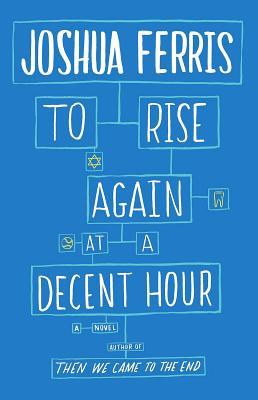
Waiting on Wednesday: To Rise Again at a Different Hour

Waiting on Wednesday is a weekly feature created by Jill at Breaking the Spine, that gives bloggers the opportunity to highlight upcoming releases about which they are extremely excited. 

Getting your identity stolen is a scary thing... and a thing my family is becoming a little more intimate with this year, after the Seattle Archdiocese had its accounts hacked, and someone stole my mom's social security number! With this issue fresh in my brain, I stumbled across this upcoming release, about a man whose online identity, manipulated by a different person, causes him to call into question everything he knows about the divisions between reality and virtuality. Here's Joshua Ferris' To Rise Again at a Later Hour, due for publication this upcoming May 13th. 

18453074

Paul O'Rourke, a complex man who doesn't quite know what to make of his own many contradictions, can't understand the motives behind the mystery, after someone creates multiple social media identities in his name, and begins to impersonate him online. However, it isn't just the flagrant violation of his privacy and rights of his own identity that causes him concern, but the fact that this new, virtual version of himself just might be more interesting than the flesh-and-blood Paul. Now the question comes into play, not only why his identity was stolen in the first place, but what is Paul going to be able to do to get it back. 


Forcing Paul to come to terms with his past problems, present discomfort, and future uncertainty,  as well as his own issues with the internet, To Rise Again at a Later Hour is a hilarious account of one man's grappling with his virtual counterpart and the absurdities of the modern world. 


Why I'm Excited? 
Like I said, identity theft is something I've really got my mind stuck on right now, and growing up with a Dad whose main source of inspiration in this world deals with computers, as well as just having finished the INFO class from Hell last quarter, that explicitly dealt with information systems and social media, I've already got a lot of opinions on this subject matter. I can't wait to see how this one turns out, especially because it's supposed to be very humorously presented, as well. 

What novels are you waiting on this Wednesday? 

Wednesday, August 14, 2013

College Fashion Link-Up: Rambling Man

Summer is winding down, and there's no better time than the heat of August for a great summer road trip. I should know; at this time, two years ago, I was scouting out Eastern Washington's colleges, and at this very moment, several members of my family are holed up at a hotel in SoCal, deciding whether my sister, The Cheerleader, could make it a home. (My guess is yes, being that they bisected the straight line traveling between universities with quick trips to Universal Studios and the Winchester Mystery House. I don't think her heart's ever going to leave the state now.)

Then again, while I may be enjoying the time I have left in my beloved Tacoma, I can still take this mental vacation, courtesy of Jack Kerouac, with On the Road.

The story follows the young recent divorcee Sam Paradise, through his cross-country adventures, and his relationship with the hedonistic and un-anchorable Dean Moriarty. Based off of the true 1940s travels of Kerouac and his fellow Beat man, Neal Cassady, the tale was written on a single continuous scroll of typewriter paper in 1951, and is lauded for its lyricism and jazz style, as well as being a manifesto of sorts for the rebellion and exploration of the Beat generation, of which Kerouac became the official mascot when it was published in 1957.

I'm not one to dwell much on the romantic ramblings of quintessential rebellious, moody American Manhood (Here's to spitting in your eye, Ernest Hemingway, the unofficial drunk uncle of this type of literature). The constant sexism masquerading as a lover's temperament was degrading and dulled the first half or so of the book, as well as all of Dean's relationships, and the racial romanticism and ill-depiction of the ethnic representation in the book was stereotypical and served little purpose. This all being said... this was a young guy, an aspiring writer, in a time where behaviors and themes like these were en vogue. Of course he was going to be an overly macho, woman-using, racially insensitive, over-thinking pavement chaser and un-tethered philosophist. This was, after all, the era of the Beats.

I was fully enraptured in, while not what he was saying, the way he was saying it. If you are ever misguided enough to ask me what my favorite style of writing is, I'm always going to say the flighty, floaty dreaminess, yet deeply mentally-focused practice of "Stream of Consciousness" style. While Kerouac was not really a "SoC" writer, he was definitely not one to be confined by typical writing practices of punctuation and grammar. It was as if the fact that he wrote the entire book in three weeks on a constant coffee drip (true story), had granted him enlightenment, in some fashion, and his every word was escaping off the page with his ascent into nirvana. It was, honestly, glorious, and I loved it.

I was so inspired by the prose - the sentences that stretched on like sections of roadway, the paragraphs that lasted as long as road construction in Washington and made just as much sense - that I ended up using the novel for my most-recent article on College Fashion. I even mixed in some of my favorite lines from the novel, as well! While you'll have to follow the link to see it yourself, here's a sneak preview at one of my favorite looks from the piece, involving the personal philosophies of the Beat boys of Kerouac's generation:

Pretty cute, huh? Unfortunately, I won't give away the thought process behind the outfit; you'll have to journey over to my "Looks from Books: On the Road" article yourself to read it. 

While I didn't necessarily love the narrator, or what he had to say, I really appreciated the structure - or is it more like mis-structure? - cadence and pacing of Kerouac's rambling tale, and that's enough for me. Fans of interesting and unique writing styles - as well as philosophical journeys towards what is youth, progress, love, and dependency - this book is a must. Best take it for a spin before school starts, and enjoy it in the remnants of the summer sun. 

Sunday, July 14, 2013

Going Sometime

Something wonderful has happened to me recently: with the return of the freedom of summer and comfort of home, I now am able to do things like A. exploit the control of the flat screen in the family room at the expense of my family members,  B. eat/make/bake/cook/consume/etc. as much food as I want at any time I want for any reason I want, and C. utilize the public resource of the local library just around the corner.

On my very first visit there since sojourning to Seattle for the school year, I combed the YA shelves for new releases that I had missed in my absence (because a college student just doesn't read YA books in college, regardless of how brain-meltingly saccharine or comfortingly low-comprehension they are). While picking through the stacks, I found Going Vintage by Lindsey Leavitt, which had been making the rounds on some of my favorite book blogs back in March, and I decided to give it a shot. It was packed along with four other books into my library bag, and checked out. (New Haul!)

This novel - which could be renamed Teenage First World Problems in Three Acts - tells the story of a high school kid named Mallory, who discovers that her real-life boyfriend has been cheating on her with a cyber-life wife named BubbleYum on a "Second Life" -esque computer game. In an attempt to release the toxicity of the affair from her system, she purges not only the offending culprit, but all means for such dishonesty - including computers and cell phones - and, inspired by a list of goals from her grandmother's junior year of high school, leads her life by a technological code of ethics that successfully plunges herself back into 1962. During this wild experiment, she must complete tasks written on the list, along with the help of her sister - sew her own homecoming dress, and become secretary of Pep Club at her school, for instance - but the goals she sets to accomplish take her far beyond what she dreamed possible.

Overall, I thought this novel - though with a unique and interesting story line - was pretty true to genre. Quirky and unique female in "distress" (the real-world affect of which isn't so distressing) and offending hunky male, contrivance of strange and ineffective scheme to set everything right, nothing works out the way she planned, bada bing, bada boom, end of story. It was an episode of That's So Raven or Hannah Montana; it was a twee, hyper-snarky Zooey Deschanel short story, written in her younger years. It wasn't boring by any means, just predictable, even down to the voice of the character, and honestly, that's what I've come to expect from most girly Young Adult Romances.

However, that isn't to say that it was strictly a Romance, either. It had all the trappings of a typical one, but instead of going full throttle and charging straight into a relationship with another character, Mallory was given the gift of time and patience and the ability to heal from her wounds, first. She really does grow from the problems that hurt her so badly in the beginning of the novel, which, without stepping into the realm of the moralistic, certainly allows for a lesson to be learned in young readers.

That, as I came to realize after reviewing the book carefully, was the general audience of the novel: young readers. Though the novel itself is written from the point of view of someone entering their junior year of high school, the book is tame enough to enter into territory of "sedate" for anyone around that age, but is perfect for those around 12-15, who have no real knowledge of how such things like high school work. Anyone older would get as bored as I did, and anyone younger wouldn't have any idea of how things were like in the 1960s, so hitting between is really the sweet spot.

Going Vintage was a sometimes over-dramaticized, sometimes over-complicated-yet-under-comprehensive, and always fluffy and sweet young adult novel, written for the younger end of the spectrum.

Sunday, October 28, 2012

On Edge

I beg your pardon for the unjust emptiness I'm sure you've all felt dwelling in the pits of your souls, during what I'm sure has been a very tumultuous time, in my extended absence from this blog. The lack of my constant wit - all but bedazzling and enlightening in an instant - and my well-crafted prose - cobbling the odds and ends of the Universe into a pure pantheon of distinguished ingenuity - must have felt a tremendous burden for these past few weeks. One might only hope, that my exceptionally crafted apologies must alleviate your deep misery, assuage the heart that has grown tender and raw after being subjected to the cruel, slicing pages of books not yet read and recounted by me, and renew the blushing joy you feel in accompaniment with the accelerating swells of your chest, when you see that yes, I have returned, and I have a new blog post.
Unless, of course, you didn't experience such pain? Unless the only pain you're feeling at the moment, is an abject embarrassment in regards to my use of such an obnoxiously effusive and flowery writing, and assumption of deeper emotional connections to trivialities, as is demonstrated above? 

If that's the case, then good. Move on from my temporary struggles in reading and writing, by eliminating the cause of such struggles from this very dialogue. I have finally finished W. Somerset Maugham's The Razor's Edge. 

The novel revolves around a group of friends hobnobbing around Chicago and Europe (and for one of them, India), and takes place, in total, over about forty years. It is one of the new genre that my friend Maggie and I, over a mutual bowl of pomegranate seeds, have dubbed, "the Marathon novel." It's the kind of novel where, upon turning the last page, you are able to salvage some semblances of accomplishment and self-pride, while still feeling numb and exhausted, murmuring to yourself "I can't believe I just did that." (Examples of the "Marathon": The Grapes of Wrath, The Fellowship of the Ring. ) "Marathon" novels typically gain their heftiness from heavy subject matter, nigh-indomitable writing style, and sheer bluntness of force, whether it's the emotional impact of content, or your head smacking against the table once you've fallen asleep. Such is The Razor's Edge. 

First off, the title itself refers to the path to salvation - religion itself being almost a tell-tales sign of a marathon novel - as one of the main characters forsakes all luxuries of life to pursue deeper meaning. Then, upon immediately immersing myself in murky wording, the likes of which I have previously displayed, I should have checked the second red flag. However, it is not until I fully reached the end, that I finally realized the extent to which this book has the capacity to bore someone into a headache.

Ironically enough, the contributing factors to my discontent with the plot line were what I initially appreciated about the novel itself: it's conversational nature and religious pseudo-monologues. 

When I say "conversational nature," I mean it. Not only does the book bank on conversational writing style, flowing in the way only a winding story from a friend can be told - frequently peppered with self-interruptions and mild-mannered observations about the narrator's surroundings - but it is built mainly of the conversations had, or recounted, by others. Initially it was a novel concept to me; however, after coming to the quick realization that no normal person talks like this, not even an well-culture Englishman from the '20s, and to be honest, I don't think anyone should. Ever. 

And when I say "religious pseudo-monologues," I mean it. I understand that the novel focuses primarily on the inner journeys and real travelings of a man seeking the meaning of life in the form of a question he doesn't fully understand, but come ON. It's one guy. And it's not the narrator. So do I really have to sit through ten pages of him borderline-soliloquizing about the nature of faith? (I'm saying "soliloquizing" here because I'm guessing that even after one minute of this guy spilling his heart out, everyone would have stopped paying attention, and it would be almost as if no one else was even there. He's rather self-infatuated for someone who strives to be selfless.) 

However, with that last semi-comment, I do find myself having to make a distinction: it wasn't the greatest book, in my estimation (obviously I'm disagreed with by most critics), but if there was any shadow of greatness within it, it shone forth in the expert crafting of the characters. Well-made, multi-faceted, realistic and all-at-once sympathetic and worthy of hate, I loved how each of the players that walked this stage could have just as easily walked down the street. Maybe it did owe a little something to the conversational presentation, but this book could have easily been a gossip-fest rather than a sermon if fit into a different format. Not an archetype was present, not a stock character in sight. I loved every last detail that went into the ultimate ruin of an almost-martyr and the self-made salvation of a snob. These people were grand, even if the plot was not such, and the styling was too much so. 

Anyways, those are my feelings on a book that has been sitting on my desk, accompanied by class readings and Scantrons, for the past two weeks. How about this time, I pick something a little lighter... :) 


Tuesday, October 2, 2012

Ice Cubes Melt

Pardon me for the lack of updates in the past more-than month or so. Unfortunately, I've been busy making the most of my freshman and sorority experience, which requires copious amounts of laughing, hugging, chocolate-chip-cookie-consuming, belly-dancing, spandex-skirt-shopping, and all around fun (as well as trace amounts of other substances, like sequins, headbands, and crying). So, my work on this blog has been neglected. Now that I'm reasonably settled into my roles as class-goer, homework-doer, weekend-dancer, and new Sigma Kappa (one heart, one way!) member, I actually found the time to crack open a book I did NOT buy bound in cellophane from the basement of the University Bookstore, and relax. Between late-night runs to the kitchen for more apple cinnamon caffeine-free herbal tea, of course.

Now that I've got you all settled into the notion that my life has become some fairy-tale-worthy amalgamation of a Spice Girls music video and a tampon commercial, prepare for the pain, because this book packs a certain emotional "one-two" that left me reeling. Maybe it's because I'm a born-and-bred American living in a new century, one who grew up almost without the concept of skin color as a friendship barrier, or maybe it was the fact that this novel is set majorly within the very limits of the city I now call home. Whatever it was that left me sprawled across the study room couch, fighting back tears, it's not fading terribly fast. Not when I remember having walked across some of the very pavement on which such atrocities were committed.

I knew about the evacuation from the West Coast, and the Japanese internment camps during WWII, because our teachers glossed over what bare bits of it we discussed about our WA state history, all the way back to the first grade. When you stand by the bridge near the Japanese Pagoda at Point Defiance at night, so I was told in whispers, behind the wooden shed on our Montessori-school playground, you can hear the quick patter of ghostly footsteps, of someone fleeing, someone who didn't want to be taken away. They were shot, and now, they'll be forever running. Grave and sinister, for someone so young, but we did what we could to understand that which we couldn't understand, subjecting it simply to the stuff of ghost stories, and moving on (completely dismissing the fact that the Park, and the Pagoda, are definitely closed to the public at night). I grew up side-by-side with those kids, whose parents spoke a different language, liked different foods, dressed a different way, or prayed to a different God, and it was never a problem. We weren't bred to war, so we simply couldn't comprehend. These weren't things we were taught in Molly's American Girl series. It wasn't until public school that I realized just how cruel people could be, and why no one in Tacoma ever wanted to talk about it.

Hotel on the Corner of Bitter and Sweet, by Jamie Ford (Ballantine Books, 2009), is set halfway in the 1940s, when those unjust sanctions against Japanese Americans were enforced, and halfway in the 1980s, when the repercussions of those actions are still being felt, by Mr. Henry Lee, a recent widower with a tenuous relationship with his grad-school son, and leftover memories of a girl named Keiko Okabe. Throughout the novel, the threads unwind to find that Lee had deeper ties to her than his son ever knew, and his son comes to realize that his father was less like his father than he had previously thought. It's a beautiful and moving love story, set across the backdrop of two different timelines, where two different people can find an imperfect love in their own hostile nation, and still feel the effects of that love after all the smoke has cleared.

An imperfect novel as well, as the presence of some anachronisms within the story pointed out. But I'll let 'em slide (still less cringe-worthy writing than my Architecture textbook. Yikes).

Whatever the case, the true takeaway from this novel, for me, was the fact that I was already so familiar with the setting. I've been to the Puyallup Fairgrounds, I've seen where they keep the livestock. Imagining a family of four, trying to live within the bounds of one horse stall? Not pleasant, not easy. Now take this description:

"...the quaint town of Puyallup, a small farming community surrounded by lush acres of daffodils." (Pg 153).

Holy hell. I'm a Daffodil Princess. Our HQ is in Puyallup. We're the Daffodil Princesses BECAUSE of that agriculture in the Puyallup Valley. This is all within a half hour of my house! Oh my gosh! (Describing my train of thought, here.) How horrifying is that? All of this kind of thing occurred within 50 miles (and about 60 years) of my doorstep! Not to mention Seattle... the entire reason my mom had me read this novel is because I'm now LIVING in Seattle as a student! She wants to have a field trip day with me, to go explore some of the real-life inspiration down in the international district, the streets named IN THIS BOOK.

How sad.

I'm not sure what it would be like for those who DON'T live in this city I've grown to care so much about since the advent of higher learning, but for me, it really struck home. Literally. My appreciation for the history of where I came from, and where I am now, is ever-increasing. I love it when a novel can involve you so deeply, that you feel the need to do extra background work afterwards, almost like you don't want the story to end, so you need to find out more of its beginning. I'll definitely be on the lookout for more locally-set works now, and my interest in the racism of WWII isn't dying down either. Sure, awful, truly-terrible, no-good things happened here, in Seattle, but bad things happen everywhere. I'm still just learning to appreciate the past, and how it relates to where I am now. And this novel definitely helped.


Note: Look out for my favorite character, the son, and the quote of his from which this post title was taken. It's been ringing in my head since finishing the novel, and I don't know why. :) 

Friday, August 10, 2012

Three Sisters

Have you ever been almost afraid of a book? I'm not talking about horror... though God knows that I haven't slept with my windows open since reading Bram Stoker's Dracula in the sixth grade (not joking here). I'm talking about the kind of books that describe life in such a brutally honest and relatable way, that you wonder whether their author has been snooping through your diary.

The first instance of this came when I was assigned Annie Dillard's An American Childhood for a summer reading assignment, for our Junior AP English class (I talk about it here.) I intensely identified with her funny, embarrassing, and often poignant anecdotes, about growing up, then moving on, and I've read the book several times in the short, busy years since. The nostalgic, regretful, and yet altogether celebratory nature of her writing helped me get through a very transitive part of my life: her words helped me get past the devastating realization that I wasn't a kid anymore - that I'd soon be saying goodbye to the people, places, and things that formed my first eighteen years - but that those memories would stand by me forever, and the very ideas that helped grow my spirit as a child, would continue to push me towards the sun as an adult. I continue to be very cautious about what sort of people to whom I recommend this book, simply because I feel such a strong connection to it, that in handing it out to just anyone,  I would be revealing very personal emotions, that I feel, in the form of someone else's words. (If that makes any sense to anyone other than me.) The Cheerleader is reading it right now, for a summer assignment, and to be perfectly honest, I'll probably read it once more, before I'm off to Seattle.

Anyways, when searching through the large stack of books my mother lent me at the beginning of the summer, I came across The Weird Sisters, by Eleanor Brown. Usually, my mom and I share a good, healthy admiration and regard for the best of the best (usually American) classics... but this stack is different. I've already voiced some of my apprehensions about this group of novels - handpicked by Mom - and what sort of literature it seems she's recently gone after: the goopy, emotional stuff, grown saccharine sweet and almost over-ripe while resting at the tops of the New York Times lists. Most of them are well-written, though. I guess I'm just trying to tread the line between the World Lit and Teen sections of the local library, without wandering into the hazardous Contemporary Women's Fiction stuck in the middle. It's just skewed towards an older audience than me, and it makes me uncomfortable. Besides, all of these women have problems, and as a soon-to-be college freshman, I'm terrified of the future enough already!

The principle that appealed to me about The Weird Sisters, however, was that the story really was about - and the narrative was really shared between - three sisters, much like those in my family. I (#1 of 3) actually read out the characteristics of the three to the Cheerleader (#2 of 3), and she laughed aloud: the nervous, bossy, borderline-Obsessive-Compulsive eldest; the flirty, fashionable, and essentially self-destructive second; and the flighty, irresponsible, yet still-beloved baby sister. If the title of the novel had ended with (And One Weird Kid Brother), I would have accused Brown of peeping in windows. This is where that whole terrifying-honesty-and-truthful-description-of-life-thing comes into play.

The novel is about, you guessed it, three very different sisters, coming home, and together, to assist their ailing mother in her fight against breast cancer, while attempting to both get their lives on track, and clean up each others' messes as well. The differences between us and them are many (we, for instance, are nowhere near the median age of 30, nor are we likely to allow each other to monumentally mess up our lives as badly as these three have managed); however, hidden between the lines are moving messages on the nature of relationships, especially those with our sisters, that I really identified with. And, of course, the eldest sister was someone I really did pay attention to, as the brief, aforementioned generalization of her character totally applies to me as well, and I could see how someone like me could possibly grow up to be someone like her.

The difference is, I won't. And my sisters and I actually like each other. And there's no way we'd let each other stray so far from the values we were raised on as the incredibly misguided women in this book. However, letting those alone, I felt that The Weird Sisters was a vivid portrait of a flawed, yet functional, family, who come to understand the strengths of their relationships in a realistic way. The real treat for me, is that the occupation of the father -a specialist on the Bard - has impacted the women of the story so much, that they randomly spout his words, and quotes from all of Shakespeare's works are peppered throughout the dialogue.That being said, this book was not my style, and certainly not geared towards an eighteen year old, so my mom is bound to enjoy it more than I did.

The difference is, she grew up with ONLY sisters, and no smelly brother to even it all out. :)

Monday, July 9, 2012

I Just Want to Fly

I'm beginning to reach that point in my summer vacation when I get really restless. When my sunglasses finally emerge from the dark hole I've been storing them in all year, and the heat makes it nearly impossible for me to sleep a single wink, is the annual time when the walls of my room and the comfort of my own home start to become a little... claustrophobia-inducing. You can only travel the same path so many times before it feels like you're walking in circles. I'm in need of a change in scenery, for the sake of my sanity, if not to seek some new inspiration.

While my current travel budget doesn't allow for express trips to Disneyland at my every whim (ah, someday...), or even the local bus fare, the global adventures offered up to me by my waiting bookshelf are always within my reach, and my broke-girl budget. :) Next stop: Scotland, and Iceland, by way of Margot Livesey's New York Times best-seller, The Flight of Gemma Hardy.

Set in the 1950s and '60s, the novel follows orphan Gemma, as she endures the torture of her cousins and cruel aunt at a young age, is sent to a strict, scripture-led boarding school, serves as au pair to a small girl while under the gaze of her mysterious employer (with an equally mysterious past), who tries to marry her, but she runs away and nearly dies, so she lives with... no, no, don't worry. No spoiler alert is necessary. This all may sound familiar, but there's no cause to claim "copycat": the book is, in itself, "a captivating homage to Charlotte Bronte's Jane Eyre," so claims the inside cover.

If there's anything to fall under the gaze of my discerning eye, and raise my (no less discerning) eyebrow, then it's the claim of an adaptation/reinvention/homage/modern-day/fractured/whatever. Because if you mess up one of my favorite books, I will hate you: tromping around and pulling up flowers in a celebrated and widely-known garden, is the equivalent of mucking about in one of the world's favorite story lines with your own "ideas" and "opinions." If enough people liked it the first time to make it a classic, then why would you think you could do it better the second time? (And let's be honest here: almost three-fourths of these kinds of novels end up being no better than fan fiction.)

(Some, however, do succeed: read my review of April Lindner's take on Jane Eyre - by far, my fave Gothic romance ever - here!)

Livesey - in my opinion - did not successfully integrate the Jane Eyre plot with her own direction; namely, her Scottish-Icelandic flavor and mod-times aesthetic. Specific elements, themes, and occurrences within the novel, so integral to Eyre's story, are either underplayed, underutilized, or flat-out missing from Gemma's story, to the point where I felt like it was not a real adaptation of her novel at all... it was a half-hearted homage. If I had even seen more of Jane's character present within Gemma herself, then I may have felt more of a connection between the two, but on the whole, I felt that Gemma was more judgemental, selfish, and unconcious of her surroundings than Jane ever was.

Getting that out of the way, the book is not describable as "bad," by any means. When not viewed as an interpretation of Bronte's classic lit, The Flight of Gemma Hardy stands on its own as a solid, emotion-driven, not-just-romance novel, plentiful with beautiful descriptions and well-crafted imagery that successfully capture the magic of the various landscapes throughout Gemma's travels in a single sentence, or two. While I did not enjoy the book on the grounds of it being an adaptation of Jane Eyre, I did enjoy it simply as one enjoys a good novel, when accompanied by warm sunshine and cool lemonade. :)

Besides, while the novel itself could not truly take me out of the confines of my own home, my family did manage a brief excursion to the majesty of Mt. Rainier for a little hiking...a day trip to tame my restless soul. And so, for the moment, I am content (enough to wait until our journeys to Seaside, Disneyland, and Sun River come August, of course.) :)