Showing posts with label Construction. Show all posts

Wednesday, June 3, 2015

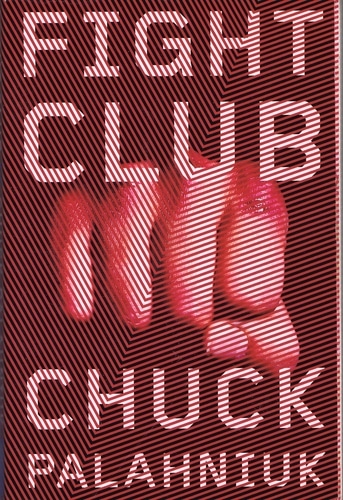
Review: Fight Club

It's like a car accident... an absolutely horrific, brutal reminder of your own mortal state, but there's no way you could think of looking away. Here's why this iconic novel made its way onto my TBR for 2015.

Fight Club, by Chuck Palahniuk, follows the story of a generic worker bee narrator, as he falls under the sway of Tyler Durden, a charismatic and damaged young man with a plan for the future, and a new kind of club, holding secret boxing matches in the basements of bars. This direct violence gives way to greater machinations of destruction, spiraling outwards until it effects way more than just some beat-up guys after work. Soon, our narrator is forced to confront the question, who is Tyler Durden, anyways? 

This prose was fantastic... I'm such a sucker for the stream of consciousness style, and this is probably one of the best examples I could draw from what I've read in recent years of it being really well-done. And the characterizations of every player in it was incredibly unique, too. I don't know if I've ever seen that many incredibly flawed, damaged and dangerous people gathered into one motley crew of a cast before.

To be honest, the first thing I did after I finished it was text my Dad, which just kind of seemed like the appropriate thing to do. Like, everyone's got to read Fight Club at some point? There are a couple of girls in my sorority, particularly my friend Taylor, who've been hounding me to read this guy's work basically since we found out we both like reading... isn't this some kind of social touchstone or something, regardless of age, gender, etc.?

The problem was, there were parts of it that were a little too gendered-out for me to fully appreciate the work as a whole. A part of those texts to my Dad, simply as a knee-jerk reaction to turning the last page of the paperback, was "This is why idiot suburban emo boys threaten to blow up their high schools." For the most part, it came off of as a big round of chest-beating, caveman chanting, which, yes, I get was a part of its satirical bent. Chances are, if something's being blown out of proportion, it's satire, but that didn't make it any less uncomfortable. I just couldn't take the testosterone... and you'd think that people who wanted anarchy so badly would have stopped making up so many damn rules.

It's definitely a novel of juxtapositions. There's all this despicable violence and grime and grit to it, so that you know you should turn away, but that's also what makes it so enthralling and un-put-down-able. Its violent take down of "special snowflake" ideology is brutally anti-individualistic, but almost every Tumblr kid I can think of has read, and loved, it, too. There's a fierce struggle in both the novel and its audience, brilliantly assimilated into the characterizations of its two male leads (*wink wink, nudge nudge*). So it's really no surprise that I'm so torn.

Final Verdict: At the very least, Fight Club should be required reading, because of its impeccable craftsmanship. Any additional ideas about its ideology you formulate yourself, you can go over with your therapist.

Wednesday, May 13, 2015

The Ladies Paradise: Setting as Character

No one can judge me for reading a novel for my Parisian History class with accents of macarons.
(What you might judge me for is the fact that they were purchased from Trader Joes. Oops!) 

To be fair, I knew what I was getting into, when I registered for a "History of Europe : Paris" class last quarter. But I wasn't prepared for exactly how thoughts of the glittering city were going to overtake my life. Nowadays, all I'm thinking about is French food and fashion, as well as all of that history, both the good and the bad sides (which might sometimes be on the same side... I mean, I got to watch the opening three minutes to Moulin Rouge in class yesterday!).

Still, in between all the Wars of Religion and Revolutions and Napoleonic Empire and whatnot, the assigned readings for the class don't really have all that much in common with a history novel at all. Colin Jones' Paris: the Biography of a City aside, we are reading, for the most part, novels.

The first of them, Emile Zola's The Ladies' Paradise, was particularly notable to me, due to its characterizations, not of people - I found the characters in that respect to be a little drab and mopey - but of the development of the modern-day department store. The novel follows the challenges faced by country girl Denise, a young orphan, who, alongside her two younger brothers, moves to Paris to find a better life, eventually leading her to work at a rapidly growing department store, which is sending all of the smaller, specialty stores in the same area out of business. Funny enough, it's the building that captures your attention.

The store itself in the novel - the titular Ladies Paradise - was modeled after Le Bon Marche, which was a noted Parisian retailer in development at the time of the novel's inception (which would, in turn, become Seattle's own The Bon Marche... RIP). While the descriptions and actions of the characters are the deliberate focus of the novel, the presence of the department store really serves as an insight into developing marketing and service practices of the 19th century, whether it was how they decided to organize merchandise, the treatment and social interactions of the men and women who work inside the mammoth store, or how other shops responded to this new superstore, too.

The entirety of the store is described in almost worshipful detail... everything about it sounds glamorous and grand, especially in contrast to the drab and practically prison-like appearances of the other shops in the story. Its sparkling and luxurious ambiance is lovingly transcribed, and gives better exposition to the stakes at play in the interactions with outsider shop owners.

Have you ever read a novel like that before... where the primary character of the novel seemed not to be the people and forces at play, but what setting gathered them all together? Can you think of an example of a book that draws its significance from the surrounding landscape, and not its major characters?


Let me know, in the comments below! 

Thursday, August 7, 2014

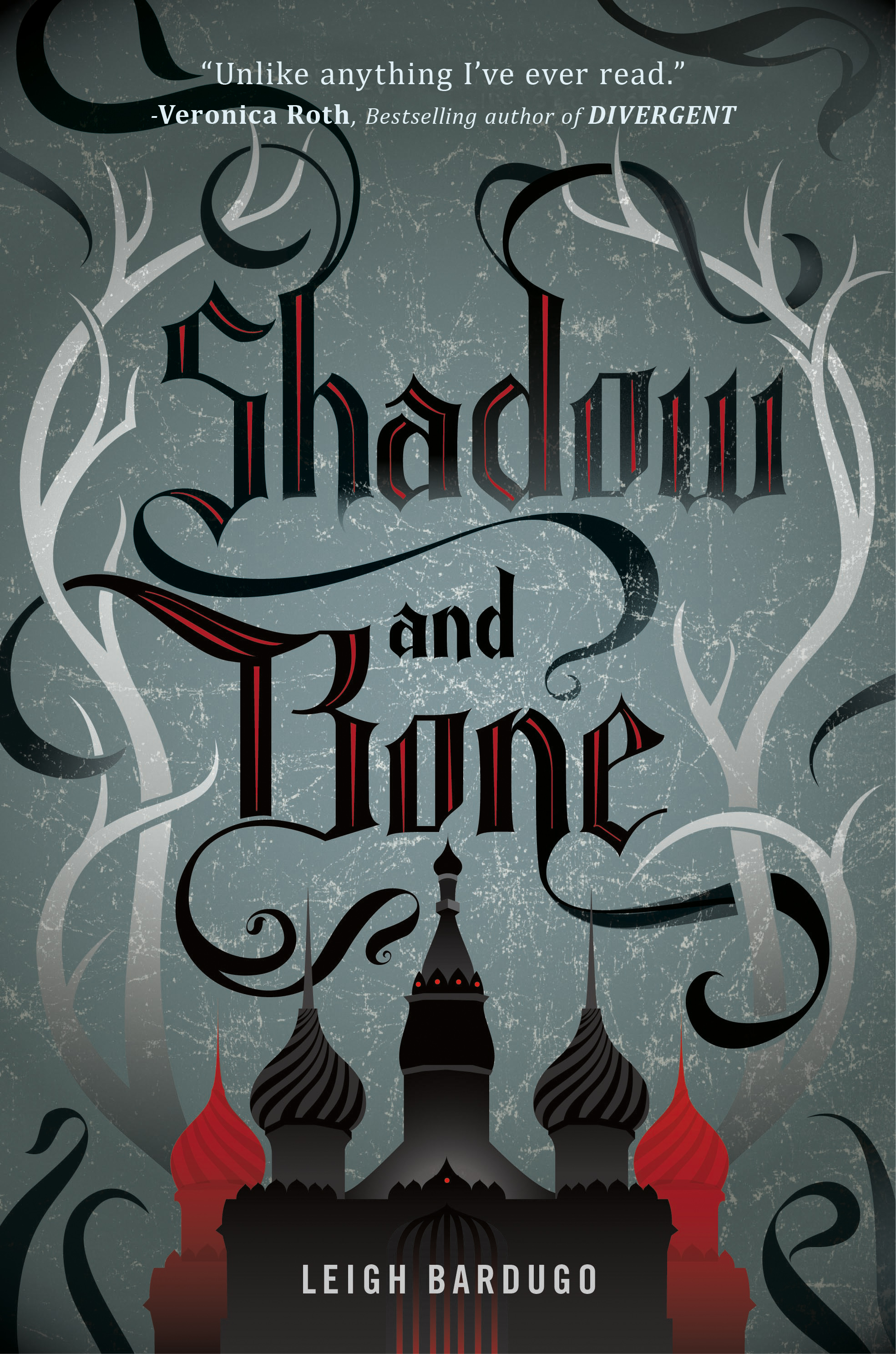
Review: Shadow and Bone (Grisha Trilogy #1)

A lot of people made promises to me about this book - Goodreads pals, my fave bloggers, it even warranted the elusive in-person recommendation of seeing a friend reading it at work - but what struck me the most about it was what the book itself promises for the rest of the series.  

Shadow and Bone, the first in the Grisha trilogy by Leigh Bardugo, follows the story of the orphan Alina, an ordinary girl who finds herself wielding extraordinary powers, after being thrust into a fantastical situation in the Shadow Fold, and saving her best friend with a supernatural force she didn't even know she could harness. After the leader of the Grisha, the Darkling, takes notice of these powers, her life is transformed from one of military obscurity, to living in an opulent palace with others with Grisha talents, but none quite like hers. Alina is tasked with saving the world... but what will that kind of battle require? And who is she really up against?

Like I said, this book is extremely popular, especially with the many YA fantasy fans among whom I count myself a member. At first, I was a little bit daunted by the sheer hype, as well as the fact that in the first 20 pages or so, nothing was coming across as anything outside the typical trappings of a YA fantasy novel.

Let me just spell what came across in those 20 pages out for you: hunky, inattentive best friend; mousy, shy, orphan with low self esteem as a heroine; dark, brooding mysterious character who makes up the third corner of the love triangle... tell me, where haven't I seen these tropes before? Maybe I'm jaded, but this all was starting to seem fairly standard.

However, the levels of detail that went into constructing the setting, as well as a perfectly reasonable, passable amount of info dumping, allowed the world-building to start shining through all that basic plot fodder. Russian-inspired fantasy? That is not exactly a sub-genre you see all the time. And while the intricate amount of minutiae that is drawn into focus by Bardugo's descriptions in forming the palace and its inhabitants goes into pain-staking detail, it's one of the ways you can tell this book was a trilogy from the very beginning: there's so much effort put into making this world a cohesive experience for the reader, it's clear that you're expected to spend a lot more time in it.

What initially annoyed me about character development, was how characters would be described and given very basic personality traits, and then set into the action at very fast paces. At first, it came off as making characters half-baked, but then, as the action progressed, I realized the very basic level of acquaintance the reader had solidified with the characters allowed room for proving motive and establishing relationships, a more showing-rather-than-telling approach to concrete character construction, one that works especially well for a plot-driven YA book.

Final Verdict: An interestingly-constructed fantasy that results in much more than its stereotypical structure would initially reveal, Shadow and Bone is an exciting installment for fans of fantasy, and a stupendous starter for a series. I already have the next book in the series downloaded to my Kindle!

Monday, February 10, 2014

Review: Everneath

Coming off of the YA high that was Marissa Meyer's Cinder - and what a high that was - I wasn't expecting the next book I read to knock me out of the park, simply due to the inevitable comparisons it would raise. But I was also so impressed by the state of that particular YA universe, that I immediately wanted to get my hands on another novel of the same caliber! Well, because that specific book craving, my prediction came true: despite the fact that it was such a well-loved YA novel - I mean, the clamor I heard from bloggers all around in anticipation for the final installment of its trilogy, Evertrue, back in the final stretch of January couldn't just be discounted, right? - it was a huge letdown for me. No matter how much I tried to psych myself up about it, I just couldn't get into Brodi Ashton's Everneath

Everneath follows the story of Nikki Beckett, a seventeen-year-old girl who is just trying to rebuild her life after having been sucked into the underworld the previous Spring by the darkly alluring Cole. The problem is, Cole wants her back, and at the end of six months, she has to return to Everneath, whether she wants to or not, and the difference between whether she returns of her own volition or not, is the difference between a dark eternity in the Tunnels, or a slighter brighter one, as Cole's queen. But what does that mean for Nikki's family and friends... or the love of her life, Jack?

Honestly, after a while, the book came off as one big over-glorified love triangle, and it didn't even make the distinction of playing outside the typical pattern of how that trope operates. There was Cole, this dark, brooding underworld figure, like Hades Lite, contrasted against the All-American boy Jack, a football player who dates against his mother's orders and gets an eyebrow piercing to show the pain of a broken heart. It was all just a little basic: the good guy, the bad boy, and the girl torn between the two because it's true love versus hot lust. It's not like this territory hasn't been tread before. 

The pacing and general plot also reminded me a lot of how I felt about Beautiful Creatures: kind of like the entire book was just a countdown to this specific event, a whole lot of uncompelling suspense and stalling, with little emotional payoff. There's this six-month period that Nikki has until she has to go back, and that fact is a hard one, stated in the very beginning, so it's basically as if the whole plot has a giant ticking alarm clock hanging over it, that makes what happens between Point A and Point B a little superfluous, because you know that whatever happens, it's really only that specific moment that's going to define the book as a whole. 

However, I'm not saying that the book was bad! The construction was actually quite good; Ashton integrated a really well-done disconnected flow of narrative that managed to maintain interest without becoming disjointed or unmaneuverable. The writing was good, the inspiration behind it - the Greek mythology - was integrated fairly well, and I think the characters - especially Nikki's relationship with her dad and brother - were very well-depicted, emotionally.

All in all, I was pretty disappointed with Everneath, which I thought lacked action, and relied to heavily on tropes of the genre. I thought the romance was a little overdone, but if you're really into that sort of thing, this book may just be a godsend for your shipping fleet. I just don't think it was for me. 

Tuesday, December 17, 2013

Review: Timebound by Rysa Walker

(This novel was purchased through Amazon's new Kindle First feature, which allows for editor's picks of upcoming ebooks to be purchased prior to their release date. Timebound will be available on January 1st.)

So, I mentioned recently that I went on a bit of a book-buying binge a couple of weeks ago, as a means of distracting myself from Finals preparation. Now that I've gotten over those woes and am on Winter Break, I can finally read those books (and no worries about my classes... I 4.0'd English and got a 3.8 in Fairy Tales)! I was most excited about Timebound, by Rysa Walker, so I decided to give that one a go first, out of the many books I have on my Winter TBR list, because, honestly, with 3 weeks off of school, a lack of time was no longer a problem for me.

Timebound (first in the "Chronos Files" series) details the story of sixteen-year-old Katie Pierce-Keller, a normal girl with divorced parents, who finds out, one day, that she's never existed. Well, not in this timeline, anyways. But if that's true, then it means everything her grandmother has told her, about the organization CHRONOS and the genetically-determined ability to travel through time, is true. Suddenly, Katie has to cope with a present where her best friend is part of a cult, her mother was never born, and her new boyfriend is the guy who took her place when she disappeared. But when it comes down to it, can just a normal teenage girl make the difficult decision, of which time stream is correct... and which one is right?

I initially approached this novel with no small amount of trepidation, due to the typical tricky nature of building a cohesive and fully-integrated world oriented around the concept of time travel. There's a lot of rules to explain, fundamental issues to address (um, why are things randomly disappearing?), and we can't forget the tweaks to the time-old idea that makes the concept individual... and it's difficult to make such a popular plot device your own.

Ultimately, all of my questions about how, exactly, this was going to work were answered; however, in citing the age-old adage of "actions speak louder than words," I wish there had been a little more demonstration than info-dumping. The benefit of having a clueless protagonist who is learning information at the same rate as the reader is that there's the opportunity to explain... I just wish it had been done in a less drawn-out and monologue-like fashion.

To be real, I almost DNF'd at around 25% of the way through the novel. I just found the pacing uneven, the constant descriptions to be pretty droll, and the relationships too unrealistic (not because of the time-travel thing, but because of the whole insta-love thing). The novel - though containing a lot of interesting historical factoids - was unfortunately written in a more basic style as well. Probably a good choice, due to the already confusing nature of what is being discussed, but boring. And honestly, for a novel that builds up to the 1893 Chicago Worlds Fair, they sure took their sweet time in getting there.

However, once they did, things finally got interesting. Really interesting, actually, and really quickly. The plot - finally straightened out and fully operational after all of that exhausting and extensive back story - takes off with a bang, and the stakes are made clear. The endless pages dedicated to the construction of, well, everything, form a complexity of interwoven webs in the time stream where, all of a sudden, we jet directly to the action, and it's nothing but a race to the finish line.

The book was hard to get through in a lot of places, but in the end, I really enjoyed it. Walker tackled a subject that's both been overplayed as well as over-hyped and wrote a book that utilizes the topic of time-travel in a totally new and engaging way. The book leaves off at a pretty interesting moment, and it's primed and ready for the next book in the series to completely blow us away, like the second half of this first book did. Walker took her time building the car... now let's just see how fast it can drive.

For fans of historical and science fiction for the YA set, as well as evil cult-ish religions manipulated for secret purposes and lots of Princess Bride references, I would recommend Timebound, if just for the adventure that's clearly in store with the next novel in the series.

Sunday, September 22, 2013

Thrillers and Killers: A Genre Discussion

In a Top Ten Tuesday post from a while ago, I discussed how I wasn't a fan of thriller novels.

I got a little backlash for it: for instance, my Dad said that it was that kind of attitude that would cause me to miss out on some really good authors (though, to be honest, I think he considers it his personal life goal to get me to read Hunter S. Thompson and Tom Wolfe, who I dismissed for their connection to the cringe-inducing topic of drug use). He said I should take a second look at those genres I was so quick to dismiss.

However, the true catalyst for this further bookshelf exploration came when, in an additional attempt to sway my opinion, a good friend challenged my distaste for thrillers, in particular, and tasked me with reading a book from one of his favorite authors, Tom Clancy. Suddenly confronted with a genre with which I haven't had much success, I entered into a deeper evaluation, of not only my personal reader-response, but what exactly about this genre makes these kinds of books so popular, anyways.

WHAT I THOUGHT


First, let me explain what about these thriller novels ostracized a reader like me so quickly in the beginning. To me, I associate thrillers with the bold black-and-red, brick-shaped novels sold slightly above the candy bars at the end of the checkout line at QFC. They populated my dad's bookshelves in the den of our house, and he told me I couldn't read them until I was much older. When I finally was old enough to read them, I finally understood why this specific set of books was held off limits for so long.

They were full of hurting people. It's not a topic I love to read about. There were violent men toting guns and lacking morals, there were helpless prostitutes getting killed on every dark street corner, and there were druggies who shivered and shook on stoops in the night only to be used as mules, enslaved by those who produced the very drugs that ensnared them.  In fact, a lot of the same reasons I didn't like about thriller novels are other topics that I listed disliking in that same Top Ten Tuesday post, or essentially, anything that was involved in Steig Larsson's The Girl with the Dragon Tattoo (I actually regret having read that book, which isn't something I say, ever).

In terms of the foundation of the storytelling itself, my experience with thrillers was that they primarily sacrificed construction for the sake of action. They were mass-produced, ready-made worlds occupied by the standard stock characters and tropes, with questionable motivation and murky back stories, left unexplained at the expense of story integrity, just so they could fit in one more car chase, one more dead hit man, one more head-whipping change of direction.

And, let's face it: I've never felt that I ever was the ideal demographic for the majority of this kind of writing. I'm a nineteen-year-old college girl... tragic things befall people like me in these kinds of books. Who wants to read about stuff like that?

WHAT I LEARNED


Now, I'm not saying I entirely dislike them. There's definitely some aspects of the novel that are specifically geared towards the sort of things I really enjoy. 

For instance, in between the sniper shooters and Big-Brother-esque organizations, and drug mules, and swooning, useless female counterparts, there's a semblance of the grand romantic pattern. The underdog who proves himself, the man who recovers from immense tragedy to fight the battle anew, the knight in rusty armor: he's the kind of guy to be found saving the world in thriller novels. Saviors and heroes, hope and triumph... there's dragons to slay, and a damsel to save. It's not an exact match, but there's enough comparable material that I can say that there's a correlation between the two writing forms, of the thriller and the fantasy. 

And the same writing elements that make fantasy such a successful genre, are here as well: the foundation of fantasy isn't the unbelievable nature of magic and mayhem, but the fact that humanity can be transposed into such a radically different reality. We didn't love Harry Potter because he was a wizard, we loved him because he was, in most ways, just like us, but placed in such amazing and different circumstances. Similarly, we don't love the thriller hero just because he can kick butt and take names like no one we've seen before, but because of what motivates him to do so: love, honor, sense of civic pride and familial duty, the heart of gold. The world the thriller operates in is gritty and real, to be sure, but it is simultaneously exaggerated and extravagant... a world wholly unreal to us, but carrying elements that are completely real and relatable, as well.

WHAT'S CHANGING

The interesting thing is, there's more to thrillers than just the standard setup and familiar tropes I found so two-dimensional... there's a lot that has changed, and is changing, in this genre.

For instance, thrillers can still be found in the checkout lines of supermarkets, but that says a lot more about the dedication of their fan base than the quality of their components. They are still considered a "mainstream" material, but that's because their fan following is singularly immense. This fan dedication serves as quality control... if they don't like something, then they're going to tell the author exactly how they feel and what they think. The high standard these fans hold the books to ensure that they are constantly upheld to the status at which they were originally read. No one's allowed to be lazy when you've got two million copies to move on your first printing.

Similarly, those same tropes that I held to be true, aren't the only viewpoint in the thriller genre. "Big, strong man saves hopeless girl while shooting some things and blowing up others" isn't the only premise that drives these books. Case in point: Sue Grafton's Alphabet series, starring Kinsey Mallone, has entranced readers from A through W (W is for Wasted is the most recent title), and her heroine isn't the only cool girl on the block. Janet Evanovich's Stephanie Plum series, which started off with One for the Money in 1994, has amassed a massive following as well (and while I'm still not a fan of this series, I am, however, a huge fan of absolutely terrible Katherine Heigl movies).

It's getting pretty meta out there, too. For instance, fans of Castle on ABC have been treated to the works of the TV show's lead character, the fictional author, Richard Castle, through the Nikki Heat novels Heat Wave, Naked Heat, Heat Rises, and Frozen Heat, with a fifth novel, Deadly Heat, set to be released this year. The novels are published in the world of the show, and the lead character of the novel is based off of Castle's love interest, Kate Beckett. The actual, "real life" author of the novels is a closely-gaurded secret, though fans of the show have their own guesses: James Patterson, Micheal Connelly, and Dennis Lehane have all had cameos on the show as friends of Castle's. And the books are held to similar caliber as the works for which those men are responsible.

WHAT I THINK

In the end, I'm left to collect my own opinion on the matter. They may not make it to the top of my To-Be-Read list, but like the Agatha Christie mystery novels I've been collecting since I was in the sixth grade, these are novels that definitely belong on people's bookshelves.

My distaste for some of the rougher elements of the genre is simply similar to why I don't like watching CSI, NCIS, or most other procedural crime dramas on TV. They just aren't what I'm interested in. But that doesn't mean that there aren't elements of the genre that do actually interest me. In fact, there's a couple of books in the genre that I feel are especially worth reading, whether you're a fan of it, or not:
The Firm, John Grisham, which made me kind of want to be a lawyer, for at least five seconds in my sophomore year of high school.
Without Remorse, Tom Clancy, which reminded me of why some of my friends like Homeland so much.
Gone Girl, Gillian Flynn, a New York Times best seller that topped seemingly everyone's summer TBR list.
and The Cuckoo's Calling, J. K. Rowling, which justified my use of Harry Potter as a reference earlier in this post.

So, hopefully, my Dad and my friend feel at least a little bit justified. They were right: there are thrillers out there, that are actually really cool, and that I think I'd enjoy. And, let's be honest, they're probably the only people who made it all the way through this mountain of writing. Thank you Dad and Steve. :) 

Saturday, July 6, 2013

Name of the Game

Summer is really the best time to sink your literary teeth into a new fantasy epic, in my opinion. Past years have seen me undertaking such new world's as Frank Herbert's Dune and Isaac Asimov's Foundation series, both epics in their own right (though, if you've read my past views on the matter, one was clearly superior). So, when the weather started heating up and Seattle hit its high point - temperature-wise - for the year, you can only guess what I grabbed off of the top of my ARC pile: something dense and immense, with some serious intensity, that would also allow me to soak up as much of the blissful air conditioning in the house as I possibly could.

Django Wexler's The Thousand Names follows the timely topic of a country in revolt, led by the people of the Khandarai, religious zealots attempting to drive out their usurping overlords - the Vordanai - back to their homeland. Their plan is primarily successful, until the arrival of a new Vordanai colonel changes the tide of war, and the history of the country, by using secretive and unusual powers, the likes of which no one has ever seen...

The set-up adheres pretty closely to the standard set by most contemporary science fiction: a land, foreign and strange, thrust into turmoil; warring factions of uncivilized natives versus the more organized and developed foreigners; new languages; mysterious artifacts; magic and myth; etc. However, even though the world's tropes were pretty standard to the genre, the construction was flawless. Science fiction doesn't come with an IKEA set of instructions; even with the standard gear and moving points, it is still a difficult genre to develop correctly, and Wexler managed that to perfection.

Furthermore, even though some elements to the novel were pretty standard, they were presented through an entirely new scope and scale: I've seen rebellion, revolution, and the unseating of monarchs, in too many epic fantasy/ sci-fi masterpieces to count (for example, the most often used, "depose the evil ruler(s) by returning the rightful heir to the throne" bit that I am too tired of and don't want to see ever again), but this time, it was done in a new, fresh way, through the scope of colonialism. The side was not with the natives, an aggressive and religiously-oriented group of "gray skins," but with the "pale-faced" usurpers.

The characters were pretty standard to the genre as well, with the focus of the narrative being extracted primarily from the ranks of the opposing war forces - both of them, though primarily the Vordanai military organizations - and hence, the majority were also men. There were a few standout female characters in the bunch, which I was immensely happy to see, but I was also a little bit disappointed in their treatment (most of them honestly might as well have been guys, too).

The fact that the book is approximately 75% descriptions of tactical army maneuvers was surprising to me, being that I'd never experienced that in a book before, and instead of being too monotonous or boring, it was actually pretty cool. After looking into the subject in more detail, I found that it was an entirely new sub-genre of science fiction to me: martial fiction, detailing the movements and lives of those in the armed forces (but for this example, think less of The Things They Carried, and more of Ender's Game). It was interesting to learn about a new kind of writing style, but after about 450 pages, I was pretty worn out from all the canons and guns and line formations. Still, it's always fun to learn new things, and maybe I'll learn more about the genre once the beating feet from all the marching has faded out of my head.

Overall, it was an interesting, fresh, yet classically constructed piece of epic science fiction, that is definitely worth notice by the fans of the genre. And it's so rare that I really get to read good sci-fi. :)

NOTE: My copy was uncorrected proofs, so this all could change. Distribution started a few days ago, in hard cover, from ROC (a division of Penguin).

Tuesday, June 25, 2013

Creepy Kids

It's been pretty gloomy here at home ever since summer really started, and the constant cloud cover has got me pretty bummed. With bookshelves ever serving as a first class ticket to, well, other minds, I decided to take a trip to someone else's head for a couple of days, some one whose mind wasn't overly crowded with discontent like mine. Yet, wouldn't you know it, my subconscious steered me right towards the downright gloomiest book in my bookcase: Ransom Rigg's Miss Peregrine's Home for Peculiar Children

This novel follows the story of seventeen-year-old named Jacob, from his painfully dull existence in Florida, to a mysterious island off of the coast of Wales, in search of answers for the murder of his grandfather, and the truth behind the strange stories the old man used to tell him... Tales about a boy who was inhabited by bees, a brother/sister duo whose were much mightier than their size would suggest, a girl who could levitate and another who could control plants, and most special still, a girl who could control fire, all living in an orphanage during WWII. However, the reality he finds, is even stranger than the stories, and it soon becomes clear, that in facing the truth, he must also face a future different from anything he has ever known.

The novel was incredibly fast-paced, with nary a dull moment or pause in action, with plenty of suspense pulling the story forward at every step. While the constant movement might have been construed as sloppy or a little too frenetic at key points, the effect was, overall, fitting of Jacob's rapidly changing world view. In fact, that's what this book served as, primarily: not a world-builder, but definitely a world-changer. A lot of it, especially in the middle, assisted in the transition of the construction of Jacob's reality into one of an altered semi-reality... Still, this endless flow of movement and change got a little hectic, and I would have appreciated a little more demonstration of the world than oration of its composition. You know, showing, rather than telling. (Then again, this maybe because it is a YA fantasy, and the length and believability might have been called into questioning on that count).

The characters are incredibly intriguing, the descriptions are vivid (and that's saying something, that Wales and muddy bogs and creeping fog can ever be described as "vivid"), and the plot was very interesting, with multiple layers, and a lot of twists and turns. The ending especially was incredibly suspenseful, but the plot twist was a little too expected and poorly orchestrated for my taste. It was obvious to spot, but it didn't detract from the ending too much.

The best aspect of the book by far was the photos from which the book originated. The fact that the plot was cobbled together from strange snippets and odd photos found at random garage sales and flea markets, was SO COOL, and definitely served as a super unique origin for this super unique story. The best part is, there's even more of the origin story present in the back of my copy...

I was sent this book through Goodreads, as the novel moves forward from it's status as a New York Times Best-Seller in hardcover, into paperback form, in preparation for the release of it's sequel, Hollow City, come next January 14th. This edition of the already-popular novel includes an extensive Q&A with Mr. Riggs in the back of the book, even more creepy pictures - those not used in the novel itself, as well as others hinting at the fates that await the children in their next adventure -  and a fairly large chunk of the first chapter of the sequel as well. The extra materials were just as cool as the book itself, as the Q&A detailed even more of the amazing origins of the novel, and that was the part I liked best.

Though maybe a little unsuited for those who don't like overly predictable novels, this is a good, creepy read for the YA Fantasy/Horror types, as well as adults who are willing to sit through some drudge-y info-dumping and teen romance. At the end of the day, it was still a pretty welcome distraction for me.

Friday, June 21, 2013

Will in the World

While the past week and a half, serving as the advent of my summer vacation, have allowed me to fully recover from the horror of Finals Week, and celebrate the end of my freshman year at the University of Washington. Hooray! And yet, I find that I am still mildly hungover on the subjects of Spring quarter... most particularly, the ENGL 274 class I took on Shakespeare, Post 1603. 

The class itself was not terribly stimulating; if anything it was a class I very rarely attended (And that's not an exaggeration). Still, I ended up getting a 4.0 in the class, because it was a subject that interested me greatly. While the in-class discussions were nothing to bother about, the three main papers we had to turn in struck me as most important, and while I ended up getting excellent grades on all of them (96, 98, and 100 percents, and yes, I feel fully entitled to brag), the one that was the most fun for me, was, of course, a book review. (It received, ironically, the worst grade of the three). 

We had to select and review a book on the Bard, and the winner, for me, was Stephen Greenblatt's Will in the World, which offered an in-depth analysis of the people, landscape, art, and culture that shaped William Shakespeare, from one of the many sons of a rural glove maker and town figure, into one of history’s most iconic Londonites, and the most prolific playwright in the world. Traveling through the personal history of this iconic man - from the Latin-centric educational system that taught him to appreciate and manipulate words in equal measure, and the religious turmoil that might have played a part in his aversion to theology, to the monarchs that would write his paychecks and pave his career, and the city that would make his name synonymous with the stage - Stephen Greenblatt unearths the more complete origins of the distinctive literary voice of Shakespeare from historical quagmires of murky facts and probable theories, resulting in a more complete understanding of an exceptionally talented member of the echelons of England’s literary history.

Will in the World is unique among the many, many non-fiction works based around the life of the playwright, being that, while it does adhere to the many previously existing facts known about his life, it also clarifies the unknown, dark portions of blank history, without adding in some recently unearthed factoid, document, or piece to the puzzle: no new information on Shakespeare has surfaced in the writing of this book, and yet, it serves to elaborate on pre-existing knowledge of who this mysterious man was, by exploring not deeper personal connection, but the context in which Shakespeare himself presented his work, and the culture that shaped his perceptions of love, art, family, nature, comedy, and drama.

In some areas, such speculation detrimentally affects the validity of Greenblatt’s claims; for instance, a chapter on the possibility of a friendship between him, and English Catholic martyr and saint Edward Campion, came off as widely theoretical and boldly claimed, with almost no proof to back it up, these events having “potentially” occurred during what are Shakespeare’s lost years. However, even such theoretical musings served a greater purpose: to provide a greater understanding of the wider context of the religious climate in England at the time of Shakespeare’s formative years, and explaining what background he had in the conflicting principles (and royal governances) of Protestantism and Catholicism.Thereby does the unique approach, of filling in Shakespeare’s history with supposals and potentialities, unburden the Shakespeare scholar with the boundaries to his personal life of which to strictly pertain, and granting a less limited amount of source material, to explore the context and construction of the stories behind his plays, as well as William, the man.

Overall, Will in the World has fared well with readers, both on the wider market scale, as well as in the opinions of critical reviewers. It currently averages 3.92 out of 5 stars on popular book-sharing site Goodreads, and also garnered some very favorable personal opinions within that same forum. Its printed media supporters include the likes of Time, Newsday, The New York Times, and The New Yorker, as well as The Guardian, from Shakespeare’s own home base across the pond. It was also on the New York Times Bestseller List for Nonfiction for nine weeks straight, and was a finalist for the Pulitzer Prize the same year it was published (which would be 2005). 

I was so inspired by this incredibly interesting book, that I used it as inspiration for this past Wednesday's "Looks from Books" for College Fashion, as well! Here's the link:  

Hope everyone's enjoying the beginning of their summer! :) I know I am. 

Tuesday, November 13, 2012

That's So Punk Rock

Yes, I know it's not Monday. But it's this week's Monday, which is what I really meant, of course. If it counts for anything, I've just finished a rather exhausting annotated bibliography for my English class, and yet I'm still taking the time to write this. Well, because I care.

Speaking of English class, I love it when the books you read for assignments actually overcome the enormous burdens of reading logs and papers on the topic of thematic elements, and overturn the conventional status that a book you read in school will forever carry the bitter tang of education. Novels that can outlast the arduous efforts of your teachers to pick apart every string and stitch that holds the bindings of the book together, and cement themselves as a still-standing, solid journey. I love those.

Jennifer Egan's A Visit from the Goon Squad - though but a recent national bestseller and winner of both the N. Y. Times Best Book, as well as a little honor called the Pulitzer Prize, in 2011 - was a favorite of our ENG 111 TA, and found its way onto our syllabus simply on the grounds that it would provide insight into more contemporary literature, instead of a dust-covered something-or-other from the 19th century. While I was initially a little put off by his disregard for the classical works that I so enjoyed, I quickly understood his viewpoint upon reading the first few chapters: the book itself has no regard for chronology, either.

Let me explain: Egan's novel is an ensemble piece, focusing on the lives of two broken and brilliant New Yorkers, Bennie and Sasha, as well as the people who make up key parts of their lives. However, instead of following a linear or chronological pattern when discussing the interlocking group, Egan threads their stories together across the boundaries of time, traversing months, days, years and decades, to explore exactly how this seemingly unrelated cast came together. It's as if the entire book is a love letter to those six degrees that separate us from Kevin Bacon. It reinforces each of those chain links between us, that we may take for granted, and reminds us that strangers - or employees and bosses, girlfriends and one night stands, husbands and brothers and especially terrible fathers - may end up mattering more to us than we think, and we may still matter more to them.

In other words, if there was ever a book to remind you that every person you pass on the street has a past, a story, a family, a best friend, and especially a future, it's this one.

If I haven't already expressed the utter amazement I felt in traveling through the interlocking webs within this novel, then let me make myself abundantly clear: I love, love, love this book. It's real... the people within it are recognizable. That makes it a little scary sometimes, especially when these characters that you relate to and find familiar, do something terrible. Everyone is broken is some way, and each of the characters within the novel demonstrate some of those habits and issues that plague us all. And yet, instead of dwelling in darkness for the full novel, the end notes that tinge each story are not simply defeat, but instead, hopefulness for the future, and, if you're lucky, even a happy ending or two.

And when you're stuck cramming for multiple mid terms, you take whatever hope you can find, whenever you can get it.

So, with attitude, realism, and a kick-ass punk feeling, Egan traverses generations, to craft the hope for a better tomorrow, by way of an ensemble cast you could meet on the street. Even a series of absolutely horrific essay prompts couldn't take that away. If only the book we were reading now - Jay Z's Decoded - wasn't so easy to kill. :)

Wednesday, September 5, 2012

In the Beginning

I was raised by a man with a healthy and enthusiastic regard for the super.

Under his guidance, Spiderman was the first PG-13 movie that ever became my favorite, and the first hero I ever fell in love with. As a kid, he had connected to Peter Parker's less-than-cushy upbringing, and the idea that power can come without want or warning, and yet, should still be wielded with the utmost care and wisdom. In Peter's story, the iconic radioactive spider - by which he was bitten, and transformed into the superstar web-slinger overnight - serves as a demarcation between the nerdy, bullied high-schooler, and the wisecracking, wall-climbing wonder kid. There wouldn't be a Spiderman at all, if it weren't for one tiny bite, from one tiny spider.

For Batman, it was the bats, the murder of his parents, and his nearly-unlimited bank account, that assisted in the creation of his superhero status. For Ghost Rider (Johnny Blaze), it was the attempt to save someone he cared about, by means of an all-too-costly deal, that formed the basis for his flaming counterpart. And Superman's an alien, for crying out loud.

I realize that this intro, when paired with the above photo, may cause a little confusion. However, the point I'm driving at is this one: there's a reason why those superheroes are all so amazing. It's the same reason why Cinderella made such a great princess, and why Genesis is one of the most-quoted chapters of the Bible. It's that nothing beats a great origin story.

And like those superheroes of legend which we were just discussing, the books discussed in Celia Blue Johnson's Dancing with Mrs. Dalloway: Stories of the Inspiration Behind Great Works of Literature, have achieved a iconic status in their own field.

In this carefully-curated collection, of some of the most compelling geneses of the world's most beloved stories, you can find the likes of Cervantes' Don Quixote sharing space with Capote's Holly Golightly (from Breakfast at Tiffany's), and Tolkien's hobbits pages away from Lewis' Susan, Edmund, Peter and Lucy. Here, Johnson relates the flashes of lightning, or the slow-smoldering embers, that sparked the creative flame of some of the world's best storytellers, leading them to craft such places, people, and things, that could capture the hearts of people around the globe.

For some, like Mary Shelley's Frankenstein, it was a game: her monster was born form the idea of horror itself, his bits and pieces belonging to an overheard conversation on the topic of the reanimation of bodies. For others, like Arthur Conan Doyle's Sherlock Holmes, the steps of the cerebral sleuth had been tread by another, as the masterful detective was based off of - at least partially - a one time medical professor of Doyle's. For C.S. Lewis' Narnia books, the inspiration came at the age of sixteen; the final product, at forty. For Robert Louis Stevenson's Treasure Island, he knew the geography and topography of the tropical island before he even began to think of its inhabitants.

The book itself is clear and well-written, which allows the magic of the stories BEHIND the stories to really shine through. When dealing with a lot of layers, its sometimes best to just stick to what's most easily understandable, and for this collection of brief anecdotes, the simple presentation allows for full comprehension of the information it relates. Which is helpful, and interesting.

And, seeing as though it is a book about what inspired books, I'm glad to hear about Johnson's own origin story: after a repeat re-read of Woolf's Mrs. Dalloway, she was intrigued by the underlying history, and this interest led to a veritable scavenger hunt through literature, to find out how some of her favorite books came to be. It shows to me, that the enjoyment of reading is improved immensely, when you get to know it a little better. :)