Showing posts with label Book Versus Movie. Show all posts

Friday, January 25, 2019

Book Versus Movie: Dumplin'


I have a slight confession to make: I do not like movies. "But how?" you cry. How can someone dislike an entire form of media?

The short answer is that I don't have the patience for it. The long answer has a lot more to do with what I feel are shortcomings of the genre - stuff like how limiting the scope of two hours' worth of visuals are as a narrative format, or how the portrayals of characters onscreen as constrained by stereotypical beauty and aesthetic standards damages plot - and the fact that sitting around for that long is just plain boring. I can lounge in one spot and read a book cover-to-cover over the course of several hours... but ask me to do the same for a movie (or television!), and I'll probably cry.

(Notable exceptions include Beauty and the Beast, ParaNorman, Black Panther, Treasure Planet, The Godfather, and the second half of the Fast and the Furious franchise, but that's a whole other thing.)

Why am I telling you all of this? You're on my book blog, which means my movie preferences are probably not why you're here. But it all explains why, when it comes to movies, there is a particular subset I handle with a whole lot of scrutiny: Movie Adaptations.

I've done it before for Love, Simon last year, and even Wild the year before that. So, I'm taking on one of my favorite YA novels of last year, and it's Netflix counterpart, to see how both stack up!


the story

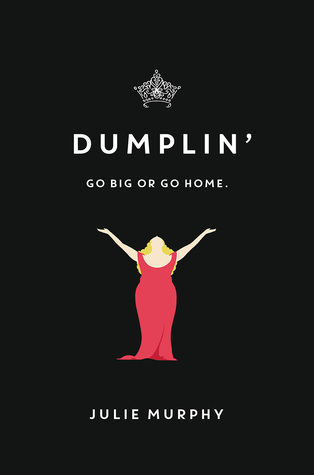
Julie Murphy's Dumplin', originally released in 2015, follows the story of Willowdean Dixon, a fat girl growing up in a small town in Texas. Her mother, Rosie, is a faded star of the local beauty pageant - Miss Teen Bluebonnet - who can't seem to let go of that past, choosing instead to help run the pageant every year, famously wearing the same gown she won in every time she crowns a new winner.

Willowdean has never seen herself reflected in the lifestyle of her mother, but after the untimely death of her beloved aunt, Lucy, she feels compelled to change that. Joining the pageant as an act of rebellion, Will finds herself joined by a whole new group of cohorts, eager to challenge the status quo.

Meanwhile, she juggles not just school, but a job at a local burger place, as well as the affections of two boys, who couldn't be more different. As tensions rise, and Will begins to wonder how confident she is in her own plan, she's forced to question whether she's as comfortable in her own skin as she really thought... especially after her beautiful best friend Ellen joins the pageant, too. 


the book
18304322
The figure of "the fat girl" is easily tokenized in YA literature, but Dumplin' soars past those boundaries with glee, as well as the stereotypes typically ascribed to other body definitions in fiction.

Willowdean is not perfect, nor shy... far from both. The front-runner of the pageant, Bekah, is skinny, blonde, and beautiful, but also incredibly kind and humble. None of the "outsiders" Will befriends were meek or otherwise wallflowers, and one of them was even widely a pain in the ass, including to her fellow friends. They talked frankly about sexuality. They had flawed relationships with parents who refused to recognize their body as something that is a part of them, rather than something outside and separate from themselves. The characterizations allowed them to be both fully-formed and full-figured, instead of being relegated to stereotypes of "the jolly best friend" or the "juvenile weirdo."

Because these classifications are so unique and relatable, it doesn't allow the reader to brush the book off as an attempt to settle a score, or present a "Big Topic" kind of narrative. Willowdean's entire objective isn't that she's doing something to stick it to the man, it's so that she can do it for herself, and the same goes for her friends. There's an emphasis on the fact that it sucks that something that is somehow normal for other people shouldn't be normal for her, just because of her size. It's something she tries to explain to her ex-beauty queen mom, to no avail.

Here's the bottom line: representation is SO important. I read this book in a way that I know my two younger sisters never will be able to.


Notes from the Field 
  • Loved the small-town Texas perspective, something I've never read before but want to look out for in the future. It's far outside the realms of what I'm used to experiencing in my daily life, and I thought it was communicated really well through both description and characterizations of its inhabitants. 
  • A lot of background male characters who were also interesting, instead of only the two love interests, and that included a diversity in male rep as well as female.
  • Naturally, the book meant a little more to me, too, because I myself was in a pageant when I was in my senior year of high school (one that got its start in the 1930s, no less!). Granted, it was not your average pageant - while others give the excuse of being "a scholarship thing," ours literally was a community service type thing, and we rarely wore our gowns - but the experience still meant a lot to me, so when Willowdean described the fervor over things like preparing for interviews, or the bonds she formed with the friends she took part in the pageant with, I totally got it.


the movie

As is typical for any movie adaptation, Dumplin' - released by Netflix on December 7th, 2018 - streamlined elements of the book narrative for greater concision, but did so without losing any of its heart. 

Granted, this meant relying a little more heavily on character stereotypes, while also punching up some of the thematically-oriented moments for greater emotional payoff (kind of like what we saw with the Love, Simon movie). However, it is a fair adaptation of a contemporary YA novel, that never felt like it was dumbing down its source material for its audience; if anything, it made some of the foundational aspects of the novel shine.

There were different objectives in play, of course: reorienting what could ostensibly be defined as a romance-centered novel, into the greater frame of a coming-of-age story, the movie focused more on Willowdean's development, especially in terms of how her relationships with her friends, her crush, her late aunt, and her mom, intersected with her self-perceptions of confidence and worthiness. This lead to a near-expulsion of almost all named male characters, which to me, made the film really unique.

This choice of focus made the movie an exercise in realistic portrayals of teen lifestyles, and the overall production design really strove to drive that point home. The wardrobe of the entire cast is really darn exceptional, defining aspects of character background like socioeconomic class, occupation, and objectives in a subtle way that you can't get from a written description. Director Anne Fletcher (also responsible for The Proposal, praise be) did a great job with making everything look very down-home and authentic, painting the portrait of a small Texas town with a broad brush of rural Americana that feels recognizable. Danielle McDonald was a perfect casting choice as Willowdean, as was Jennifer Aniston as Rosie.

Overall, the whole thing really set the standard for quality of content that I expect out of Netflix these days. 


Notes from the Field 
  • The soundtrack - which, despite the fact that some are remixes and plenty have features from other artists, is made up exclusively of Dolly Parton songs that she helped produce - is far, far better than anything I could have ever expected. It even got a nom at the Golden Globes!
  • It's difficult to portray hero-worship in a way that makes sense through visual media without going overboard, but I thought that it must have been a little difficult finding the right amount of Dolly fixation when she's also one of your movie's producers. Like, we all love Dolly, but... it's a lot! 
  • This casting was stupendous! I could not have been more impressed. Especially the supporting cast: 
    • Dove Cameron (whom my family adores from her work on Disney Channel, and off-Broadway) struck a perfectly sweet note as pageant front-runner Bekah, 
    • Odeya Rush (from another family favorite, the 2015 Goosebumps adaptation) was a great girl-next-door Ellen, 
    • Maddie Baillio (Tracy Turnblad in NBC's Hairspray Live) was the Millie sent from Heaven that we all desperately needed, and 
    • Bex Taylor-Klaus killed it as Hannah, who was actually one of my least favorite characters from the book, but played the role with such sincerity that it made her feel more real, and less stereotypical. 
    • Even Luke Benward - who plays Willowdean's handsome work crush, Bo - hit the right intersection of being both approachable, yet vaguely unattainable, that was so fundamental to their relationship. 


the verdict

At the end of each of these kinds of posts, I choose which of the two formats I felt delivered a story better. However, this is going to be the first to divert from that pattern... because I thought both shared different versions of the same great story, and were so varied in their approach, I can't award any kind of outcome that would evenly match them.

Instead, I think that each different medium, served a different need.

 The book, carrying the responsibility as both the original format, and the more complete narrative - giving background, development, and explanation in a more nuanced way than the visual nature of a movie could - might be for those looking for a deeper dive into an engrossing story. Not only is the cast of characters much larger (even including a second love interest!), but they are more fleshed out, while the narrative still gave room for more interior thinking from Willowdean.

On the other hand, the movie only took out what was necessary for a more cohesive and concise plot, one that maintained all of the emotion, while only losing minor plot elements. The aeshetics and production design make for a beautiful viewing experience, one that truly transports you in a way that simply dreaming up the setting and characters yourself might not. It kept some of the book's breakout moments more subtle (such as Ellen's relationship with her boyfriend Tim, or Hannah's big reveal at the end of the pageant), in order to put greater emphasis on others (getting to know Aunt Lucy, or Will's resolution with her mother). In total, the movie felt like more of a feel-good experience, and even offered more plot resolution at the end: instead of leaving the winner of the pageant ambiguous, they announce the name!

I can honestly say that I personally enjoyed both, and would recommend them. If you're asking me which is your best option, I genuinely believe in both. It just depends what you're looking for! At any rate, figure out which medium suits you best right now, and if you enjoy it, make time to try the other.


Have you seen or read Dumplin'? Which version was your favorite? Let me know, in the comments below!

Thursday, August 30, 2018

My Year with Harry: Goblet of Fire


My new year started off with a bang - not unlike the ones heard during a game of Exploding Snap in the Gryffindor common room - when I decided to make it one of my 2018 resolutions to reread every book in the Harry Potter series. Since then, I've not only had traveled back in time through Harry's first three years, but have also celebrated a Potter Party movie marathon of the first two... and now, with another reread of the fourth novel, it was time for another! 


personal history 


Harry Potter and the Goblet of Fire was published on July 8th, 2000, and the movie was released on November 18, 2005. In terms of how I reacted to these occurrences in real time, I was growing conscious of not on how much I enjoyed the books and movies, but also, how significant the publications and premieres of these books and movies were to wider pop culture. I began to recognize that it wasn't just me loving them and thinking they were cool, and others in my peer group agreeing with me, but instead, huge release parties held in bookstores that were shown on the news, and repeatedly finding Emma Watson's face on the magazines my friends eagerly read. 

I think this might be a bit of an unpopular opinion, but the fourth installment in the series was never really my favorite. I liked Harry's regular school schedule, I liked the action that revolved around his friends and classes and school activities... but between the World Cup and the Triwizard Tournament and the rather shocking ending, it just felt like an aberration.

I wasn't really looking forward to reading this one again... which might explain why, out of all of the books so far, this one took the longest. But while others took weeks, this one required quite a bit more forceful reading, with the end of it necessitating set deadlines and daily page counts in order to get the book completed.

Over two months later, I finally finished it! 


the reread 


Almost all of the Harry Potter books so far have resulted in some kind of personal perspective shift while reading it, whether it was having greater consideration for how well it lays out the plots of further novels, or how it allowed its characters to develop and grow up in a realistic way. For Goblet of Fire, I didn't have many moments of epiphany or sudden enthrallment like I did in those other rereads.

I think that was primarily a result of the issues I already outlined - the interruption in the regularly scheduled programming - but also that the book itself is a turning point in the series: [spoiler alert] by the end of the novel, Voldemort, the Darkest Wizard of the Age, a being so utterly reviled and feared that people didn't dare speak his name for over a decade after he'd vanished, whose destruction of both wizarding and muggle lives plays directly into the foundation of the tragic legacy of Harry Potter himself, has returned from the edge of oblivion, regained his past power and form, as well as a large mass of dedicated and murderous followers, all ready to do more damage. 

Needless to say, it gets real dark from here on out. 

Maybe it's the news these days, maybe it's the fact I already know where the story goes from here, and it goes real heavy, but it's like I couldn't read the novel slow enough, as if it would somehow prevent the rise of Voldemort himself. 

I could have used that advice from Hagrid: "What's coming will come, and we'll meet it when it does." I couldn't put off the end of this book, more than I could give up on this resolution. 

Some other thoughts I had: 

  • Rita Skeeter. How - how? - was this woman allowed near children? Obviously she eventually gets banned from the Hogwarts grounds, but why was she permitted in the first place? The Daily Prophet is set up as the one viable, objective wizarding newspaper, but she's not only running puff pieces, but they're not even true. Like, I have issues with the NYT Opinion section sometimes, but this is on another level. 
  • This book really did me wrong with the fractured friendships of Harry and Ron, then Hermione and Ron. One of the linchpins to the enduring legacy of the series is the solidity of the Golden Trio, and how I'm pretty sure we all wish we had friends like that growing up. And yet, a lot of this book's plot engages negative emotions between the three! 
  • I had significant issues with the crying/ overly emotionally responsive nature of both Mrs. Weasley and Hermione in this one, and I do mean specifically. Hermione grows overwhelmed when the boys make up after their fight, walking off in a teary huff, and Mrs. Weasley is so worked up by what she reads from Skeeter, that it results in deliberate unkindness towards Hermione (which Harry has to intervene in, in order to quell). Both of these female characters have otherwise been held up as pinnacles of objective rationality for one, and unrestrained caring for the other, and yet it feels like those attributes were somewhat abandoned at points, in favor of stereotypes. 
  • For the first time, I really recognized the hypocrisy in the incorporation of inter-species wizarding relations: the house-elves are seen as weak and to be pitied, while giants are obviously to be feared (as is evidenced by the uproar surrounding Hagrid's employment at the school as a half-giant), and even Voldemort's ties to the dementors are established as inherently negative (which also begs the question, why are they in charge of patrolling Azkaban?). All of these conflicting relationships and classifications grow especially frustrating when it comes to considering Fleur as being part veela, as well. And what differentiates those kinds of creatures, from things like the mermaids in the Lake, or the leprechauns that repped for Ireland at the Cup?
  • Just further emphasis that literally none of these teachers should be employed by this school... or any school, for that matter. This is especially in reference, like I've mentioned before, to Severus Snape, who warranted severe reprimand - if not termination - at numerous places in this novel. (But also, see: Filch, who possesses no traits that would make him an effective caretaker, and he can't even get the ghosts to listen to him; Binns, who is not only dead, but also a demonstratedly bad teacher, as he can't get anyone to concentrate in class; Trelawney, who repeatedly upsets students and essentially accepts all of Harry and Ron's fabricated homework as acceptible). 
  • This was the first book so far to actually make me cry. Believe it or not, I thought it would have come sooner, as a result of nostalgia, but in actuality, [spoiler alert] the loss of Cedric, and the acquaintance of Harry with the fractured remains of his parents, made me weepy. 


favorite quotes


“Don't talk to me."
"Why not?"
"Because I want to fix that in my memory for ever. Draco Malfoy, the amazing bouncing ferret...” 


“Time will not slow down when something unpleasant lies ahead.” 


“Remember, if the time should come when you have to make a choice between what is right and what is easy, remember what happened to a boy who was good, and kind, and brave, because he strayed across the path of Lord Voldemort. Remember Cedric Diggory.”


the party! (part two) 


 As you might remember from my second send-up to the iconic movie franchise, my brother and I threw a "Potter Party" for two, so that we could enjoy rewatching Sorceror's Stone and Chamber of Secrets complete with a feast fit for the Great Hall.

Well, we did that again for our second Potter Party, complete with herb-roasted chicken and potatoes, buttered peas and maple carrots, and, naturally, Flying Cauldron Butterbeer. For dessert, we had a chocolate frog - leftover from our excursion to Universal Studios this time last year - as well as chocolate-dipped pretzel wands, and a homemade treacle tart (because it's Harry's favorite!).

Rewatching the movies was a lengthy task to undertake - both movies are approximately two and a half hours long - so we had to block out the whole afternoon to watch them both.

(Also... I don't know where else to add this comment in this post, but it is required: the weird separation of genders into the aggressively homogenous Beauxbatons and Durmstrang schools is not at all reflective of the qualities either school has in the novels. There are boys in Beauxbatons, there are girls in Durmstrang. Even if the movie had kept their strange classifications of one being flighty, sighing and shiny, and the other having all the social niceties of the Wildlings in Game of Thrones, they could still have bridged those rather appalling imbalances of gender reflection with appropriate casting. I would have loved to see a flaxen-haired, sharp cheekboned Beauxbaton boy in those incredibly stupid blue hats, as much as I would have loved a hulking girl thunking that massive Durmstrang staff on the ground.) 


the end 


But beyond the weird gender politics of the movie franchise, and the absolutely ridiculous amount of time it took me to reread Goblet of Fire, I think I really enjoyed this iteration of my Year with Harry journey. It was a real time investment, but I got through it, and the reward at the end of it sure was sweet! 

However, we had definitely turned a corner in the series, and things only get darker from here. I'm trying to finish Order of the Phoenix and Half-Blood Prince by around mid-October, so I can have another Potter Party during Halloween season, but it's honestly difficult to invest in that kind of gloomy storytelling when it's so bright and hot outside, like it is right now. 


What do you think of my second Potter Party? When was the last time you reread Goblet of Fire? Are you a mood reader? Let me know, in the comments below!

Friday, April 27, 2018

Book Versus Movie: Love, Simon

So, what feels like a million years ago, I used to have a recurring series on this blog called "The Novel and The Movie," running through various book to movie adaptations, and determining between the two which I thought was superior (Spoiler alert: Between The Maltese Falcon, Bridget Jones' Diary, and Wild, the movie came out on top once!). 

Of course, these posts weren't the only times I've talked about movies on this blog - like in last summer's exploration of the Twilight legacy - but they were unique in that they pitted two different mediums of the same story against each other. When my siblings and I recently saw a movie that led us to consciously make those same kinds of judgments, well, I knew I had to bring the series back! 

(And yes, I'm very aware that this post jumps on board the hype train a little late, as the movie came out March 16th. I'm excusing it, because Albertalli's newest book, Leah on the Offbeat - which focuses on the character of Leah from Simon's story - just came out a few days ago!) 


THE SIBLINGS

If you do remember the Twilight post that I just mentioned, then these two might seem a little familiar!

While I read Simon vs. the Homosapiens Agenda all the way back in 2015, and have been telling everyone how much I love it ever since, neither my younger sister, Delaney, or youngest sibling and only brother, Beaumont, had ever got around to reading it. Naturally, I mandated that before anyone got to see the movie adaptation - Love, Simon, which premiered this past March to a Rotten Tomatoes score of 92% positive - they would have to do so.
  • Delaney is a college senior and soon-to-be graduate, with a passion for HR, and a legacy in Greek life, serving as both Chapter President and Panhellenic President. Despite having been a cheerleader for all four years of high school, and coming out as a lesbian to our parents in college, she has somehow never seen the the seminal LGBT film, But I'm a Cheerleader.
  • Beaumont is a high school sophomore, and member of the Knowledge Bowl, Jazz Club, and School Band, as well as Crew for the annual Spring musical. He loves watching Jeopardy with his family, and would like to make sure this profile mentions his beloved pet hedgehog, Beignet.
Delaney read the book quickly over Winter Break - after I gave it to her for Christmas - and Beau did it in the Spring, finishing up just a day before we saw the movie. 


THE BOOK


Simon vs. the Homo Sapiens Agenda, by Becky Albertalli, follows the story of Simon Spier, a teenager who keeps his sexuality hidden from everyone... except for the stranger from his high school, Blue, that he's been messaging online. After he mistakenly leaves his email open in the library, and is subsequently blackmailed by geeky Martin into helping win over his friend Abby, Simon's junior year gets a lot more complicated. Can he juggle friends, family, the school musical, and this huge secret? More importantly, can he do so, while winning over Blue? 

For Delaney, this story meant a lot, due to her own high school experiences. "As a closeted teen I read most of my LGBT+ books secretly, either not mentioning the plot at all or shuffling the novel amongst the straightest YA fictions you could find," she told me. "In fact, Simon vs. The Homosapiens Agenda was the first LGBT+ book I’ve read since coming out. I can easily say I was not disappointed. The plot was juicy, well thought out, and came from a place where, while I knew the author herself was straight, I trusted her with the characters." 

Beau was a lot more new to the sub-genre, but still went in with high expectations. "While I've read books with LGBT+ characters before, they've never been contemporary or romance... if anything, almost all have been in the fantasy category. I read Simon vs. Homosapiens Agenda because it came highly recommended by both of my sisters, and I wanted to read it before seeing the movie. I really loved the characters, because they were very realistic, and it was funny, emotional, and very dramatic, and overall, a good, solid read." 


Notes from the Field (courtesy of my siblings)
  • Delaney hates it when teen-speak is incorporated into YA novels, especially when it comes to things like Internet slang or social media-specific lingo. Understandably, it was important to the plot - as the school's gossip Tumblr, creeksecrets, plays an important factor - but that doesn't stop the language itself from being somewhat cringe-inducing. 
  • In fact, Delaney couldn't help but flinch at some of the email conversations between each chapter from Blue and Simon, "not because they weren’t as valuable as the story itself, but because they reminded me too much of my own relationships and conversations in high school, and it honestly made me uncomfortable. " 
  • Beau just scoffed at the idea of lengthy chains of email responses back and forth. "There are plenty of other ways to message people." 
  • Beau thought some of the pop cultural references were well-integrated into the plot, but others were awkward, and even automatically dated the novel. "Some, like Harry Potter, will stand the test of time, but others that are really funny now, might not last as long." 


THE MOVIE


The movie follows the same plotline as the book, to a fairly impressive degree, in terms of a film expectations for an adaptation of a YA novel. They were especially successful is maintaining the sense of personality that Simon imbues throughout the story, as well as creating realistic characters portrayed with emotional depth. However, the changes that were made, were definitely noticed. 

Delaney said that overall, some of her favorite moments of the movie involved Simon's parents, played by Jennifer Garner and Josh Duhamel. "I thought they captured Simon’s parent’s reactions beautifully in the movie... I could feel such sincerity in both of their small scenes individually addressing Simon’s coming out. I will always see Jennifer as my second mom." 

One of the other elements of the movie that my family really enjoyed included the depiction of the various emailing sequences throughout the movie. Depending on which person Simon was currently guessing at being Blue, the actors playing the mysterious correspondent rotated, all with a blue filter saturating the screen. Delaney said, "Using the Blue filter over our mystery email boyfriend adds a sense of mystique, especially when partnered with the changing characters filling the screen and voice over as Simon’s suspicions change." 

Additional elements that generated rave reviews? The addition of Ethan, an out-and-proud boy at Simon's school, as well as the inclusion of some of Simon's quirks from the book, like his affinity for Oreos. One of the funnier family conversations we had in anticipation of the movie, was whether they'd have anything Harry Potter-related in the film, which generated even bigger laughs when they actually did. 

Of course, they can't all be positive. Certain changes were made to the movie in order to generate a different thematic tone than what was possible through a movie, versus book, translation. Emotional responses were bumped higher and bigger, the cast of characters was streamlined or changed, and plot points were exaggerated or blown to a larger scale in order to convey a grander sense of drama. 

Personally? I missed the Tilt-a-Whirl ending, and it's clear from my conversations with my siblings that I'm not the only one. In the movie, the entire climactic action - of Simon meeting Blue for the first time - was made much more public and "celebrated," which was probably a deliberate tonal cue the movie wanted to hit, being that it was intended for teens... the problem is, the ending in the book is much more subtle and personal, and reflected more of the interiority of Simon that we get from his firsthand narration. Have a crowd of kids below him on the Ferris Wheel, watching him as he waited, and putting a lot of pressure on his Blue, just didn't hit that emotional point for me. 


Notes from the Field 
  • No one warned me that this soundtrack is so good. Like, it's really good. As in, something we all talked about after the fact. 
  • Great casting choices all around, but mainly in Nick Robinson, who plays Simon, and - of course - the always-glorious Jennifer Garner. Both pulled significant emotional weight through some of the film's most vital moments, and conveyed sincerity and authenticity in a narrative that really warranted it. 
  • All of the characters in this film must be loaded, because these houses are positively huge... particularly Simon's, whose digs look like the setting for a West Elm catalog photoshoot. If you're a fan of immaculate home sets, you'll be in heaven. 
  • The school musical has been changed from Oliver to Cabaret. Beau thought that change was not only a little unnecessary, but also highly unlikely, as a school would rarely actually elect to put on something as risque and subversive as Cabaret. It was like they wanted something that screamed "musical theater" more, and their eventual pick was a super unlikely one. 


THE VERDICT

Despite the fact that all of us siblings truly enjoyed both the book and the movie, and understood the necessity of the alterations made between the various mediums, at the end of the day, we couldn't help but feel one tells the story just a little bit better.

As Delaney put it, she prefers the book to the movie, "because of its ability to deepen the plot in a way that the movie isn’t able to. I like the dynamic of his family a little better in the book, maybe because it more closely reflects my own."

However, she insists on emphasizing that the movie is incredibly important viewing. "In no way is this the best movie you will ever see, but I’ll be damned if I’m not exceedingly happy that I’ve seen it. Whether you are LGBT+ or straight, you will see a bit of Simon in yourself, and that relatability is what helps make this movie so personal. While it is no Brokeback Mountain or Moonlight, Love, Simon owns what it is - a little silly and a lot heartwarming - and that is why it now owns a part of my soul."


For Beau, the changes between the two ended up being the deciding factor. "Both the movie and the book follow the same general plot, however the movie made several changes... and these changes are probably my biggest problems with the movie as I felt they were unnecessary, and even detracted from the plot.

However, like Delaney, he also really enjoyed the film. In fact, something else the two both agree on, is what order in which to take in these two story mediums: Delaney recommends reading the book first, then seeing the movie, like all three of us did. "In the case of having already seen the movie first, then you should still read the book!"

"It’s a positive way to see each form of content as a separate interpretation." 

Regardless, we hope it's clear that this is a story we all truly enjoyed and loved, and the likes of which we hope to be seeing grace the big screen again soon. Only, after we read the book, first! 


Which do you prefer, the book or the movie? When did you see Love, Simon in theaters? Have you read any of Albertalli's other books? Let me know, in the comments below!